



Keletso Thobega
Gaborone (Botsswana) – Jul 04, 2026 – 06:00CEST
Bonolo Selelo and Tsholofelo Kumile are preparing the arguments they will present on July 14 and 15 before six judges of Botswana’s High Court to argue that their marriage must be legally recognized. If they succeed, the two women will have helped make Botswana the second country in Africa — after South Africa — to allow same-sex marriage. The couple, who met in 2022 and became engaged in 2024, are seeking the same rights enjoyed by any heterosexual married couple
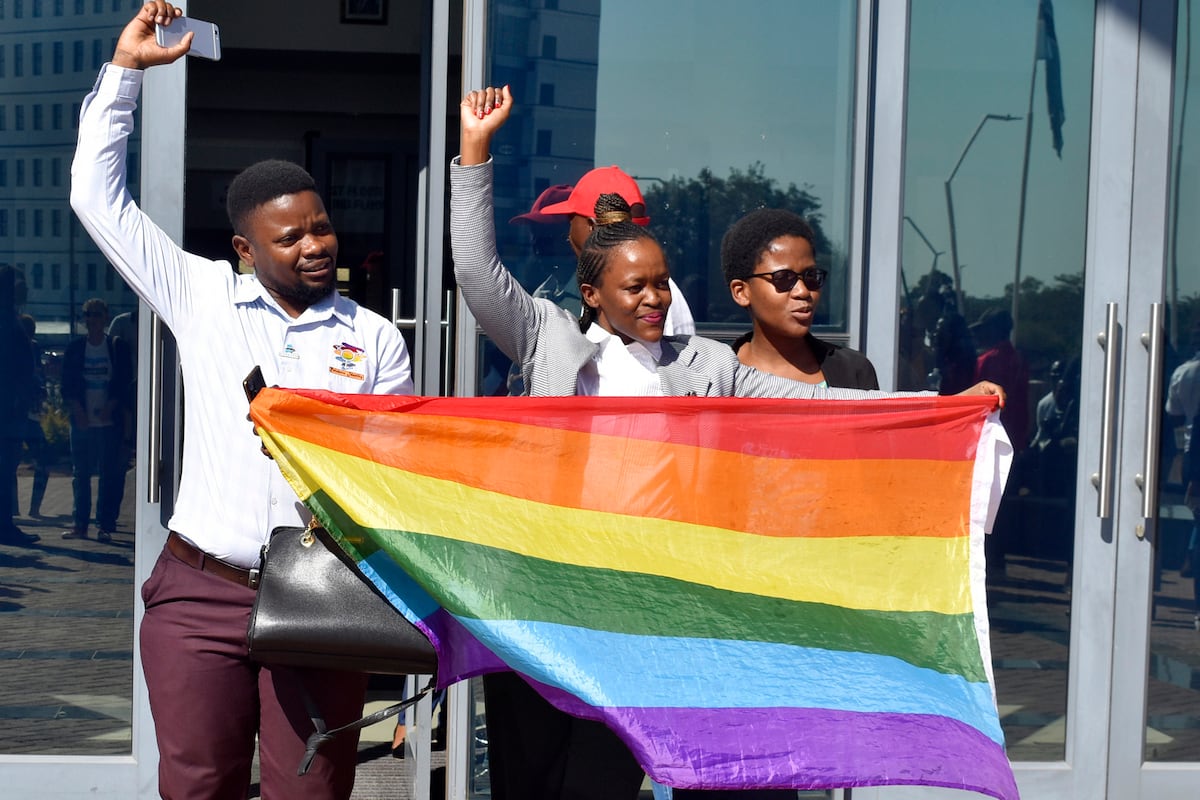
In March, Selelo, 41, and Kumile, 39, sat in the front row of Botswana’s High Court, offering each other gentle smiles and reassuring hand pats. It was the opening hearing for the couple’s potentially landmark case. According to LGBTQ+ organizations, no Black, lesbian couple had ever challenged a marriage law anywhere on the continent until Selelo and Kumile submitted their case last December
Clare Brown, legal and policy adviser at The PRIDE Center, explains that “all over Africa, queer people have been taking cases to court to claim their rights — usually their rights of freedom of expression, or to challenge colonial-era criminalization of same sex intimacy.”
But she stresses that this case “is unique in its courage and ambition.” “It is the first we know of since South Africa where a couple is litigating for their right to marry; and the first black lesbian couple to take such a case on the continent,” she says
This legal battle is unfolding as other African countries roll back LGBTQ+ rights. In mid-June, Niger’s military junta introduced a new penal code that criminalizes homosexuality with prison sentences of between five and 10 years. In late May, Ghana’s parliament approved a bill that would impose prison terms of up to three years on people who identify as lesbian, gay, bisexual, transgender or queer. Senegal has also tightened penalties for homosexuality this year
Although roughly half of Africa’s 54 countries have legalized consensual relationships between same-sex partners, South Africa remains the only country where gay marriage can be legally performed on the continent. That ruling was initiated by a white, female couple who sued the government for the right to marry in 2005
The legal challenge brought by Selelo and Kumile has met resistance from the government, which has argued that, as a matter of law, it is not possible to recognize a same-sex marriage and that prohibiting such unions does not violate constitutional rights. The case has also faced opposition from religious and conservative groups. On the day of the preliminary hearing, around 100 protesters gathered outside the courthouse carrying placards declaring that same-sex marriage is un-Christian and against the country’s traditional culture.
“We believe that same-sex marriages undermine cultural norms, family values and the oral framework that governs life in Botswana,” said Pastor David Seithamo, president of the Evangelical Fellowship of Botswana, that day. The group filed an amicus curiae brief — a document in which third parties not involved in the litigation present their views to the judge — opposing the case
A matter of rights
Kumile set out the couple’s position at a press conference ahead of the March hearings: “Every citizen of Botswana deserves to have their personal freedoms respected and protected by law.” She spoke as a mix of anti-same sex marriage protestors, LGBTQ+ activists, and curious members of the public looked on
The couple met at a party four years ago and have been together ever since. In late 2024, they wanted to take the next step, so they got engaged
However, when they tried to register their union, both the Gaborone district commissioner and the Ministry of Labour and Home Affairs turned them away. Two individuals of the same gender cannot get married, because Botswana’s marriage law explicitly refers to parties entering marriage as “husband” and “wife.”
Ver esta publicación en Instagram
Una publicación compartida por Bonolo Omphile Selelo (@mizb.ee)
Selelo, an attorney, decided to submit the legal challenge herself. “My fiancée and I seek to formally create a family through marriage. We seek to enjoy the same rights, dignity and recognition as heterosexual couples in Botswana, in relation to solemnising our marriage,” her submission to the court read
Without legal recognition, the couple is excluded from basic rights related to inheritance and medical decision-making, and the prohibition perpetuates stigma against same-sex romantic relationships, the couple argued
“Botho does not discriminate; it does not hate those who are different from you, but accepts diversity, which in turn contributes to the development of society as a whole,” says Bradley Fortuin, program director at Southern Africa Litigation Center, which has provided legal advice both in the battle for decriminalization and in the current fight for legalizing same-sex marriage
A 2018 study found that 42% of gay people in Botswana say they experienced physical violence. In 2025, a young man was beaten and burned to death in a suspected hate crime in Maun, a town in the country’s northwest
Opponents of same-sex marriage in the country often argue it’s “un-African,” but that ignores the diverse gender identities that existed across African societies, even long before colonial rule, says Nozisiwe Ntesang, the CEO of Lesbians, Gays and Bisexuals in Botswana (LEGAGIBO)
“What could be considered foreign are the laws that criminalise these identities; therefore marriage equality forms part of a broader project of reclaiming African dignity, plurality and humanity,” says Ntesang
Online harassment
“We don’t hate same-sex couples, but we are against their lifestyle, which goes against our culture. We believe in family, and a family is built by a man and a woman,” says Grace Silver, a spokesperson for the Dingwetsi Association, a local non-profit that promotes traditional marriage values
At the March hearing, members of the group showed up in traditional shoulder and headscarves and chanted slogans against same-sex marriage
“LGBTIQ+ people still face multiple levels of exclusion, hate speech and hate rights violations. Online harassment is widespread, and the limited laws have major legislative gaps,” Fortuin warns
The next big test comes in July. After the hearing, Selelo and Kumile will have to wait a few weeks to receive the ruling. In the meantime, they cling to a simple certainty: “We love each other, and that is all that matters. Our desire to get married is a manifestation of love.”
Archived In
- Africa
- Planeta Futuro





