There are moments in the life of a people when history draws a clear line. Once that line is crossed, there is no honest way of pretending that the line didn’t exist. The Southern Cameroons crossed such a line on October 1, 2017. Whether one supports the declaration of independence or opposes it, whether one identifies as an independentist, a federalist, or a unionist, no serious observer can deny that 2017 fundamentally altered the political trajectory of the Southern Cameroons. It marked the culmination of a political process that had begun decades earlier. That is precisely why the recent calls for an All Anglophone Conference (AAC III) are not simply confusing—they are politically contradictory.
The first question every Southern Cameroonian should ask is simple. What exactly is AAC III seeking to continue?
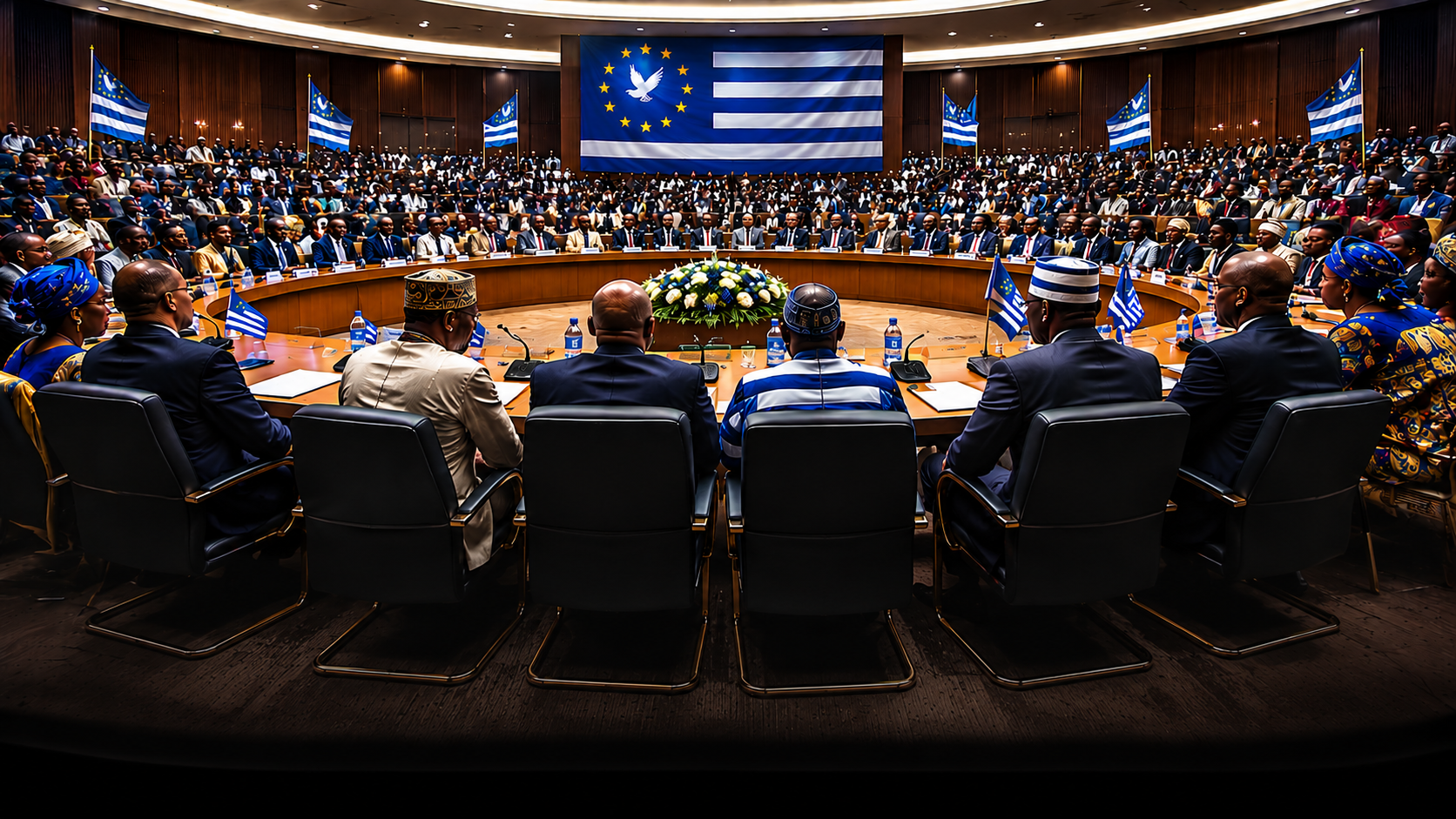
Its organizers, who met in a Zoom meeting, deliberately invoke the history and legacy of the All Anglophone Conferences of 1993 and 1994, hoping to wrap themselves in the legitimacy of those historic gatherings. But history has a stubborn way of refusing to be rewritten. The first conference in Buea sought the restoration of the two-state federation that existed at independence in 1961. The second conference in Bamenda became significantly more decisive. Delegates concluded that time was running out for dialogue. They produced what became known as the Bamenda Proclamation and the accompanying White Paper, warning the government in Yaoundé that if the federal arrangement of 1961 was not restored, the Southern Cameroons would have no choice but to restore its own independence.
That was not a casual declaration. It was a solemn political commitment made before the people. Yaoundé ignored it completely.
For twenty-three years, Yaoundé treated that ultimatum with contempt. Nothing resembling the restoration of the federation was initiated. Instead came increasing centralization, political exclusion, marginalization, and eventually outright repression.
When the lawyers and teachers took to the streets in 2016, they were not launching an entirely new struggle. They were reopening a chapter that had never been resolved. As the crisis deepened and the government’s response became increasingly militarized, Southern Cameroonians concluded that the condition set out in Bamenda had finally been fulfilled. Cameroon had rejected federalism. The logical consequence, according to the very roadmap adopted in 1994, was the restoration of independence.
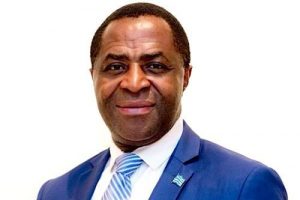
That is exactly what happened in 2017, that is, 23 years after AACII. Millions of Southern Cameroonians rallied behind the declaration of independence. Sisiku Julius Ayuk Tabe became its most recognizable face.
Ambazonia became the chosen name of the new state. Whatever one’s political opinion of that declaration, one fact remains impossible to dispute: the final step envisioned by AAC II was finally taken. The political sequence that began in Buea and matured in Bamenda reached its conclusion in 2017.
History moved forward, which brings me back to today’s AACIII proposal. If AAC II culminated in the declaration of independence, what exactly is AAC III building upon?
Has Ambazonia Been Abandoned?

No one seems prepared to answer the question yet. Instead, the public is asked to believe that this is merely another conference in the same historical tradition. But that simply cannot be true. One cannot logically continue a political process whose stated objective has already been implemented. Unless, of course, the intention is to quietly reverse that objective without openly admitting it.
That is why many Southern Cameroonians view AAC III with deep suspicion. What makes the matter even more troubling is the identity of some of those championing it. Many of them were among the loudest voices supporting the declaration of Ambazonia in 2017. They celebrated Sisiku Ayuk Tabe as the symbol of the restored nation. Many defended the very independence that emerged from the Bamenda ultimatum. Today, those same individuals return under the banner of an All Anglophone Conference, as if to say the declaration of independence never happened.
Why? Has Ambazonia been abandoned? Has the declaration of October 1 been withdrawn? Has the Bamenda Proclamation been repealed? Or are Southern Cameroonians simply expected to erase an entire chapter of their history because political circumstances have changed?
The Problem with “All Anglophone Conference”
These are not uncomfortable questions. They are necessary ones. There is absolutely nothing wrong if federalists are organizing themselves. In every democracy, political tendencies have the right to meet, debate, organize, and campaign for their preferred constitutional arrangements. If those who believe the future lies in a federal Cameroon wish to convene a conference to refine their proposals, they are perfectly entitled to do so. Likewise, if supporters of one Cameroon wish to meet and develop their strategy for engaging a post-Biya government, that is their democratic right.
The problem arises when such a gathering is marketed as though it will represent all Southern Cameroonians. It does not.
The very title, All Anglophone Conference, immediately excludes a significant segment of the population. It carries the language, assumptions, and political aspirations of the early 1990s. It belongs to a period when the dominant objective was constitutional reform within Cameroon. The Southern Cameroons has since travelled through a decade of armed conflict, unimaginable suffering, massive displacement, and a declaration of independence that fundamentally altered the political vocabulary of the struggle.
Today, millions no longer primarily define themselves simply as Anglophones. They identify as Southern Cameroonians or Ambazonians. That evolution cannot simply be wished away by resurrecting an old conference label.
Names Matter in Politics
Names matter in politics. They communicate intent. Reviving the AAC brand inevitably sends the message that Southern Cameroonians are preparing to retrace their steps. It suggests that the declaration of independence is no longer the defining political reference point. It creates the unmistakable impression that the struggle is quietly being redirected back toward negotiating Southern Cameroons into La République du Cameroun under a new constitutional arrangement. Whether the organizers admit it or not, perception matters. Ironically, I have an easy solution here.
My Simple Prescription
If the genuine objective of AACIII is to assemble every political tendency within the Southern Cameroons, then why not simply call it the All Southern Cameroons Conference (ASCC)?
That single change would transform the entire conversation. A Southern Cameroonian who believes in federalism remains a Southern Cameroonian. A Southern Cameroonian who supports one Cameroon remains a Southern Cameroonian. A Southern Cameroonian who believes in full independence remains equally Southern Cameroonian.
The identity unites everyone, regardless of political persuasion. An All Southern Cameroons Conference would therefore be truly inclusive because it asks no participant to surrender his or her political convictions before entering the room. It simply acknowledges a shared homeland while allowing competing constitutional visions to coexist under one roof. AAC does precisely the opposite, and it is a step backward, not forward.

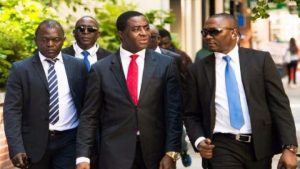
AAC resurrects an obsolete political framework whose historical mission has already run its course. It attempts to continue a journey whose destination was reached nine years ago, in 2017. In doing so, it risks becoming not a conference about the future but an exercise in political nostalgia—one that many will understandably interpret as an attempt to quietly walk Southern Cameroonians back into the very constitutional arrangement they rejected after decades of failed negotiations. It is a meeting of those who seek to redefine Southern Cameroons‘ future within the framework of La République du Cameroun.
There is nothing illegitimate about that position. What is illegitimate is presenting it as though it speaks for everyone. History deserves greater honesty than that.
The Bamenda Conference left Southern Cameroonians with a promise. That promise eventually became the declaration of Ambazonia. Whether history ultimately vindicates or rejects that declaration is a debate for another day.
If Southern Cameroonians are to gather again in conference, let them do so honestly. Let them begin from where history actually stands, not from where some wish history had stopped. Because nations do not move forward by pretending yesterday never happened. They move forward by confronting today’s realities with courage, clarity, and intellectual honesty.
And today, the reality is that anything built around the obsolete banner of AAC is not a continuation of history—it is an invitation to reverse history.