African dust crosses the Atlantic to deliver phosphorus to the Amazon; 27.7 million tons are estimated to reach the basin each year
Trending TopicsBenjamin Netanyahu
Israeli dentist
Omani co-pilot
Donald Trump
South Korea Energy Deal
African dust crosses the Atlantic to deliver phosphorus to the Amazon; 27.7 million tons are estimated to reach the basin each year
Saharan dust travels across the Atlantic to the Amazon, carrying phosphorus and other minerals that help replenish nutrients in rainforest soils, revealing a remarkable link between two distant ecosystems.
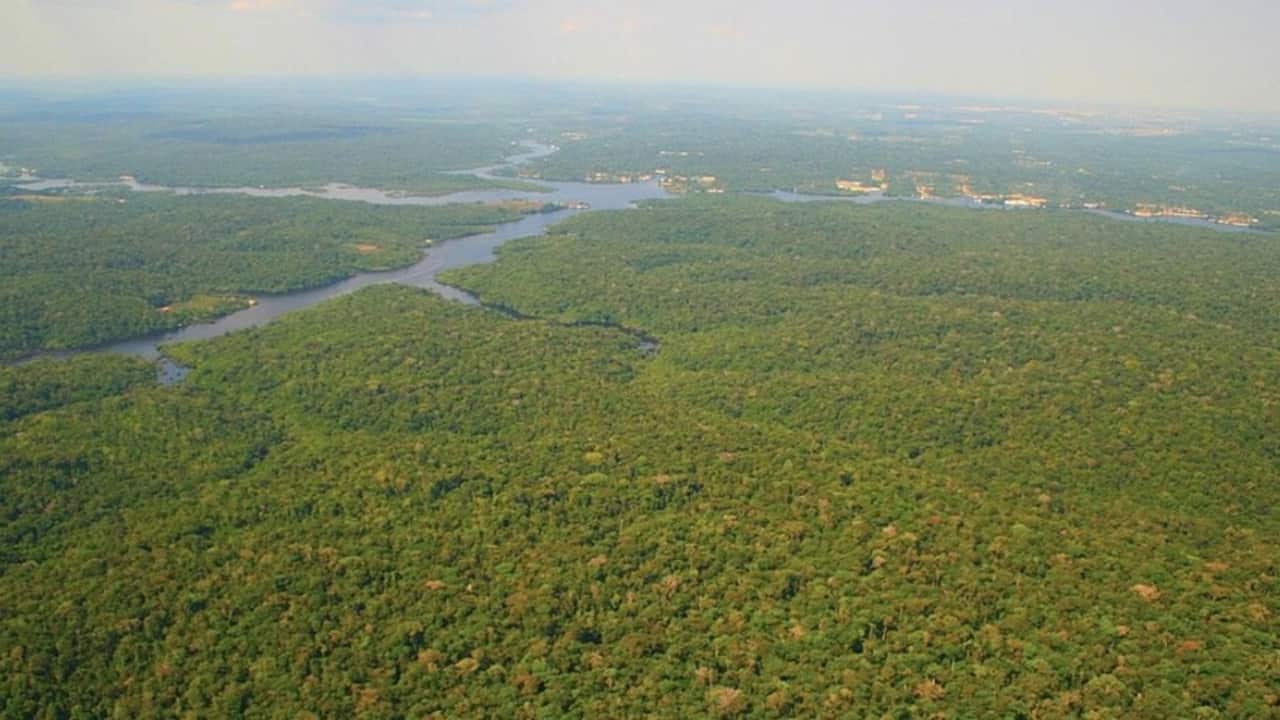
Aerial view of Amazon rainforest. Image credits: Wikimedia Commons
Amazon rainforest and the Sahara appear to be poles apart, wherein one boasts dense tropical flora, the other boasts arid deserts. But each year, winds blow tons of dust from North Africa through the Atlantic Ocean into South America. The mineral phosphorus is important for plants, but is present in small amounts in most soil in the Amazon region; it is carried by that dust.
A 2015 satellite study suggests that up to 27.7 million tons of dust from Africa blow into the Amazon Basin annually. The estimate came from NASA’s CALIPSO satellite, which tracked the dust plume in three dimensions as it travelled across the Atlantic.
Story continues below Advertisement
Remove Ad
How an ancient African landscape became part of the story
One of the most interesting aspects of the association was the geological history of North Africa. The Bodélé Depression located in Chad is one of the main producers of dust from the Sahara. The sediments in the region contain materials deposited by the now dried-up Lake Mega-Chad, making this region very rich in fine mineral dust.
Since phosphorus can be found in some of the sediments from the region, scientists have long considered this location crucial in studying how African dust affects ecosystems thousands of miles away. NASA’s description of the CALIPSO research noted that scientists used material collected from the Bodélé Depression, along with other measurements, to estimate the phosphorus content of the transported dust. While early papers focused heavily on this single ancient lakebed, advanced satellite tracking has since broadened the geographical map of the dust’s origins.
Satellites revealed the scale of the trans-Atlantic dust journey
In their 2015 paper, The fertilizing role of African dust in the Amazon rainforest, published inGeophysical Research Letters, Hongbin Yu and colleagues in 2015, studied seven years of data on 3D aerosols from CALIPSO from 2007 to 2013.
Their calculations provided 27.7 million tons of dust deposition per year in the Amazon basin, with an uncertainty margin of 8 to 48 million tons. This number was often rounded in general reports by NASA to 28 million tons per year. A much larger amount of dust was observed by satellites to leave northwestern Africa; about 182 million tons passed the western side of the Sahara Desert.
Additionally, the same study suggested that imported dust was responsible for carrying approximately 22,000 tons of phosphorus annually into the Amazon Basin, within a wide uncertainty range of 6,000 to 37,000 tons. The researchers observed that the phosphorus from African dust is similar to the quantity lost from the Amazon Basin due to natural processes like precipitation and runoff.
This does not mean that most of the Amazon’s phosphorus comes from African dust. The rain forest ecosystem also recycles its nutrients internally using biological processes. Thus, according to the researchers, the African dust is an important external
The amount of dust reaching the Amazon also varies from year to year. Yu and colleagues found significant interannual variation and a negative relationship between dust deposition and rainfall in the Sahel during the preceding year. This means the Africa-to-Amazon dust connection is not a fixed annual conveyor belt delivering precisely the same quantity every year.
Later research changed the picture of where the dust comes from
In 2020, the science became a bit more complicated, as Yan Yu and associates reconsidered theas the PrimaryGeophysical Research Letters
Satellite observations and trajectory modeling showed that dust from the Bodélé Depression is not as effective at traveling as far as dust from another large North African desert, El Djouf. The researchers’ simulation revealed that dust from the latter location has more favorable trajectories to travel across the ocean, whereas most of the dust from the Bodélé Depression is deposited much closer to where it originates.
This finding fundamentally challenges the popular “ancient African lakebed fertilizes the Amazon” narrative. Even though the Bodélé Depression continues to be a significantwhen it comes to transporting dust across the Atlantic, the former takes second place behind El Djouf
There is also some ambiguity over exactly how much dust arrives. A separate 2020 study by Joseph Prospero and colleagues, published in Global Biogeochemical Cycles, used data from French Guiana recorded between 2002 and 2017, along with atmospheric modeling. They found African dust depositing into Amazonia was around 8 to 10 million tons each year, significantly lower than the 2015 CALIPSO estimate.
Nevertheless, the central connection remains clear: dust blown across the Atlantic from Africa deposits minerals, such as phosphorus, into the Amazon region. Scientists can now quantify this massive movement of atmospheric materials through satellite imaging, whereas other research has provided more information about the origin and quantity of the dust.
Moneycontrol International
first published: Oct 1, 2026 08:00 pm
Discover the latest Business News, Sensex, and Nifty updates. Obtain Personal Finance insights, tax queries, and expert opinions on Moneycontrol or download the Moneycontrol App to stay updated!