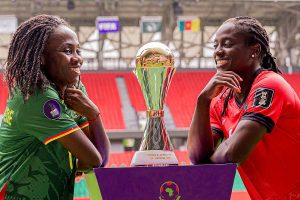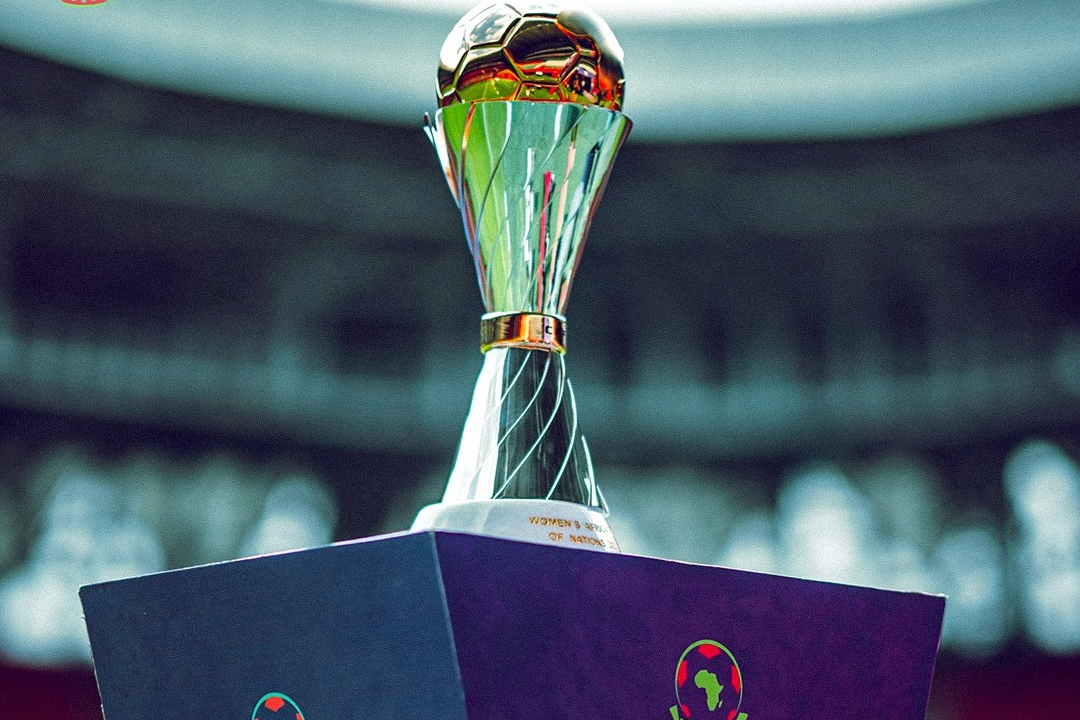
YAOUNDÉ, Cameroon (ABS News) — Cameroon woke up Monday with something it had never possessed before: the Women’s Africa Cup of Nations trophy.
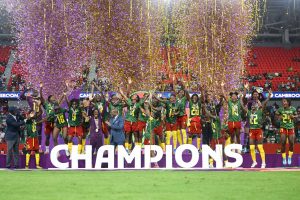
The Indomitable Lionesses defeated Malawi 3-0 Sunday night in Rabat, Morocco, winning the 2026 Women’s Africa Cup of Nations and securing their first continental title after losing three previous finals. The victory capped a remarkable tournament for Cameroon, which entered the competition as one of the teams added after CAF expanded the field to 16 nations.
For a country accustomed to celebrating football as national religion, the achievement should ordinarily have produced one of those familiar scenes at Unity Palace: victorious players filing into the presidential compound, medals around their necks, trophy held high and President Paul Biya waiting to congratulate them.
There is only one problem.
The Lionesses have found the cup. Cameroon still cannot find its Lion.

Biya, 93, left Cameroon on June 7 for what the presidency described as a brief private stay in Europe. More than 70 days later, he has not returned. The government has acknowledged that he is in Switzerland, while providing no firm date for his return. His prolonged absence has fueled public debate over his health, his ability to govern, and whether Cameroon is effectively being administered by remote control.
The contrast could hardly be more striking. On Sunday evening, Cameroon’s women were visible before an entire continent: running, fighting for every ball, scoring three goals and finally lifting a trophy that had eluded generations of Lionesses.
Their president remains invisible.
Biya has for decades been associated with the political imagery of the lion. During earlier election campaigns he was branded “Lion Man,” and political commentary has long referred to him as the “Lion of Mvomeka’a,” after the southern village where he was born. The image was meant to convey strength, endurance and political invincibility.
Today, that symbolism has acquired an uncomfortable irony.
Cameroon’s Lionesses have demonstrated precisely what the lion is supposed to represent: courage, resilience, presence and victory.
But the nation’s political lion has been absent from his den for more than two months.
The comparison becomes even more poignant when placed against Biya’s own history with Cameroonian football.
After the men’s Indomitable Lions won the 2017 Africa Cup of Nations, Biya personally received the team at Unity Palace, congratulating the players and declaring that nothing could stop Cameroon. The presidency publicized the ceremony as a national celebration, with the head of state positioned at the center of the country’s sporting triumph.

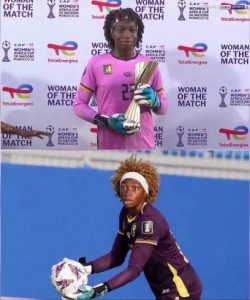
Now another Cameroon team has conquered Africa. But who receives them? Who stands at the palace door? Who speaks for the presidency?
A national football victory traditionally allows presidents to demonstrate connection with their people. Cameroon’s first WAFCON championship should have provided precisely such a moment.
Instead, it has unintentionally sharpened the central political question confronting the country.
The Lionesses are coming home carrying Africa’s most prestigious women’s football trophy.
The streets can celebrate them. Supporters can sing for them. Cameroon can finally call its women champions of Africa.
But somewhere between Rabat, Yaoundé and Geneva hangs a question no trophy can answer:
When the Lionesses arrive home with the cup, where is the Lion who is supposed to welcome them?
For now, Cameroon knows where its champions are.
It still does not know when its president is coming home.