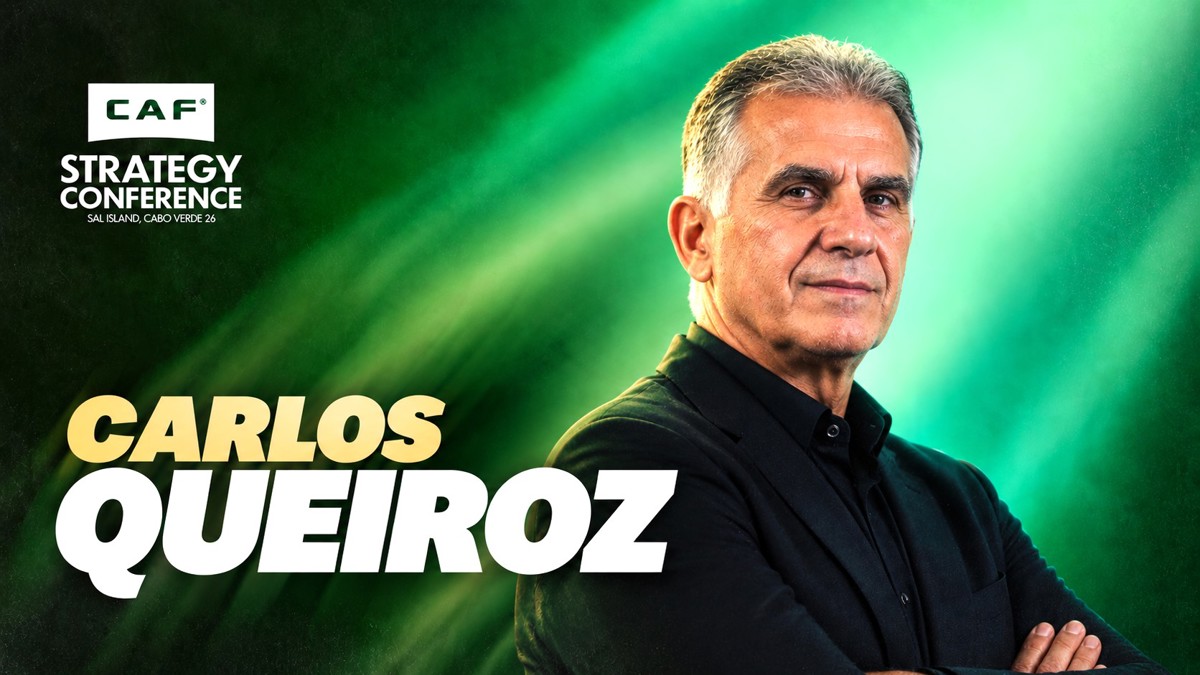
CAF Strategy Conference: Carlos Queiroz – five World Cups and a Ghana campaign with lessons for Africa
Carlos Queiroz will arrive at the CAF Strategy Conference in Cabo Verde only days after his spell as Ghana coach came to an end, but carrying with him another chapter in one of international football’s most travelled coaching careers.
The 73-year-old mutually ended his agreement with the Ghana Football Association on 1 October, just weeks after being handed a new mandate following the FIFA World Cup 2026.
Despite leaving the Black Stars, Queiroz will still attend the Conference in Sal to share the experience of guiding Ghana through one of the most demanding groups at the World Cup and into the knockout stage for the first time since 2010.
His contribution will therefore come from a particularly fresh perspective: a coach who has just completed a full World Cup cycle with an African team, dealt with the pressure of a major tournament and then experienced the immediate demands of rebuilding for the next phase.
Queiroz’s journey is also relevant because few coaches attending the Conference possess comparable World Cup experience.
Ghana in 2026 represented his fifth World Cup as a head coach, following Portugal in 2010 and three tournaments with Iran in 2014, 2018 and 2022. FIFA notes that only two other coaches have led teams at five World Cups.
That experience, combined with his long career in African, European, Asian and international football, makes Queiroz an important voice as CAF examines what its 10 World Cup representatives learned in 2026 and how those lessons can shape the road to 2030.
A career built at the highest level
Born in Mozambique when it was still under Portuguese rule, Queiroz first built his reputation through youth development.
His early success came with Portugal, where he guided the country to consecutive FIFA U-20 World Cup titles in 1989 and 1991.
Those victories helped establish him as one of the most respected development coaches of his generation and launched a career that would eventually take him across several continents.
Queiroz later coached Sporting CP and Real Madrid, while also serving two spells as assistant to Sir Alex Ferguson at Manchester United.
His international career has been even more extensive.
He has managed Portugal, <a href="https://absafricatv.com/marnus-makes-timely-ton-as-aussies-prepare-for-south-africa-icc-world-test-championship/" title="Marnus makes timely ton as Aussies prepare for South Africa | ICC World Test Championship”>South Africa, Iran, Colombia, Egypt, Qatar, Oman and Ghana, giving him experience across several football cultures and competitive environments.
Africa has also been an important part of his coaching journey.
Queiroz guided South Africa to qualification for the 2002 FIFA World Cup before leaving the role ahead of the tournament, while he later took Egypt to the final of the TotalEnergies CAF Africa Cup of Nations 2021, where they lost to Senegal on penalties.
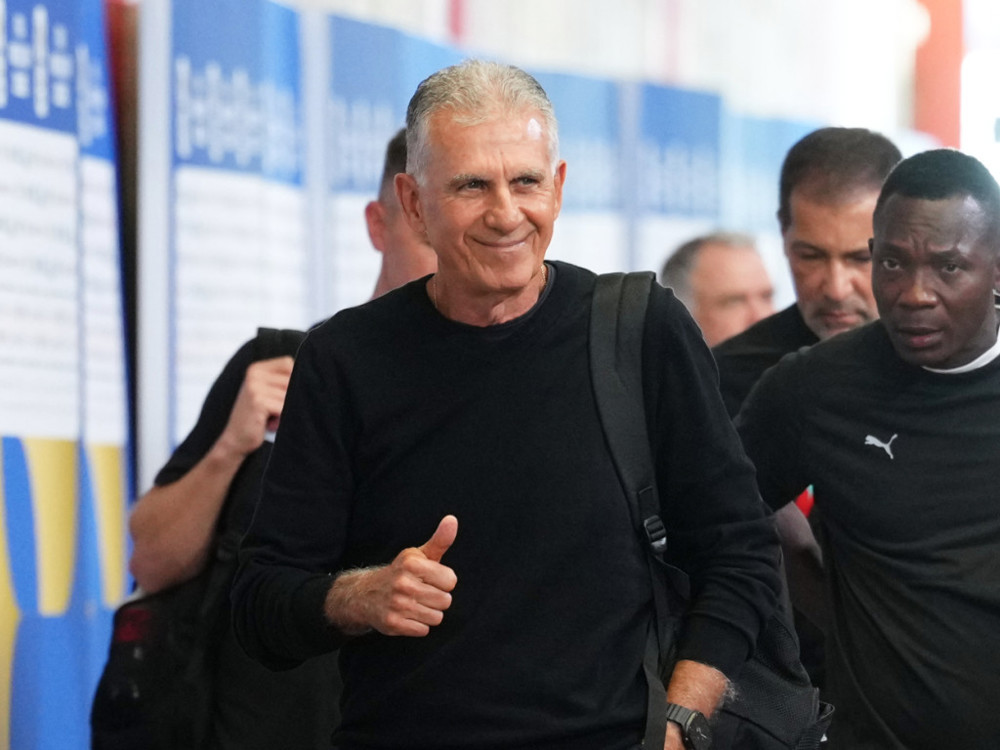
Taking Ghana with only weeks to prepare

Queiroz’s appointment as Ghana coach came in April 2026, less than three months before the World Cup.
The Ghana Football Association turned to his experience after Otto Addo’s departure, asking the Portuguese coach to stabilise the team and prepare the Black Stars for a difficult Group L containing England, Croatia and Panama.
The timing made the assignment particularly challenging.
Queiroz inherited a squad with very little preparation time, meaning much of his early work centred on organisation, tactical discipline and quickly establishing a clear structure.
His World Cup experience proved valuable.
Ghana began the tournament with a dramatic 1-0 victory over Panama in Toronto, Caleb Yirenkyi scoring deep into stoppage time to secure three important points.
The Black Stars then produced one of their most disciplined performances of the competition against England.
Queiroz organised Ghana into a compact defensive structure that frustrated Thomas Tuchel’s side throughout a 0-0 draw in Boston, with goalkeeper Benjamin Asare and the defence repeatedly denying the European heavyweights.
A 2-1 defeat by Croatia followed in the final group match, but Ghana had already accumulated enough to progress as one of the best third-placed teams.
For the first time since their famous quarter-final appearance in South Africa in 2010, the Black Stars were back in the World Cup knockout stage.
A fifth World Cup ends against Colombia
Ghana’s tournament eventually ended in Kansas City against Colombia.
Jhon Arias scored the only goal after 14 minutes as the South Americans won 1-0 in the Round of 32.
Queiroz’s side remained competitive until the end but struggled to create enough clear chances against an experienced Colombian team.
The defeat brought an end to a short but significant World Cup assignment.
Queiroz initially announced his departure after the tournament, describing his time with Ghana as an honour and saying the team had restored respect and credibility to the Black Stars on the world stage.
But that was not the end of the story.
A return – and another quick change
In September, the Ghana Football Association announced that Queiroz had agreed to return for a new mandate ahead of the TotalEnergies CAF Africa Cup of Nations 2027 qualifiers.
The decision was presented as an attempt to maintain continuity following Ghana’s World Cup campaign.
That second spell proved short-lived.
On 1 October, Queiroz and the GFA announced that they had mutually agreed to terminate his contract.
Queiroz said the decision followed discussions conducted in a spirit of mutual respect and that both sides believed ending the professional relationship was the appropriate course of action.
The timing gives his appearance at the CAF Strategy Conference added relevance.
Rather than attending as Ghana’s serving coach, Queiroz will arrive as the man who led the Black Stars at the 2026 World Cup and who has only just completed his latest African coaching assignment.
Five World Cups, several football cultures
Queiroz’s greatest value to the Conference may be the range of experiences he can compare.
He has coached at five World Cups, worked with national teams across Africa, Europe, Asia and South America and operated within some of the world’s biggest football institutions.
At the 2026 tournament, he became only the third coach to lead teams at five World Cups.
His methods have long been associated with tactical organisation, defensive structure and preparing teams to compete against opponents with greater individual re
Those qualities were visible in Ghana’s draw against England and in the way the Black Stars navigated a difficult group despite Queiroz having only weeks to prepare them.
That experience can contribute directly to the Conference’s central discussion: how African national teams can improve preparation, maximise available talent and consistently survive the demands of World Cup football.
Lessons beyond Ghana
Queiroz’s presence in Cabo Verde will therefore be about more than reviewing Ghana’s four matches.
His career provides a wider perspective on coach education, youth development, tournament preparation and the importance of building competitive structures around national teams.
He can also offer comparisons between African football and the different systems he encountered with Portugal, Iran, Colombia, Egypt and other national teams.
For CAF, those comparisons matter.
The Strategy Conference is intended not simply to celebrate Africa’s record World Cup performance but to examine what worked, what did not and what Member Associations can do differently before 2030.
Queiroz’s Ghana showed what could be achieved through organisation and experience even with limited preparation time.
The Black Stars beat Panama, held England, reached the knockout stage and competed with Colombia in the Round of 32.
His Ghana tenure may now be over, but the lessons from that campaign remain relevant.
And when Africa’s football leaders meet in Sal, few participants will be able to draw on a World Cup history as extensive as Carlos Queiroz’s.