About IFAWNewsconservationwildlife conservationPress releases
Conservation leaders mobilise in Africa for threatened wildlife

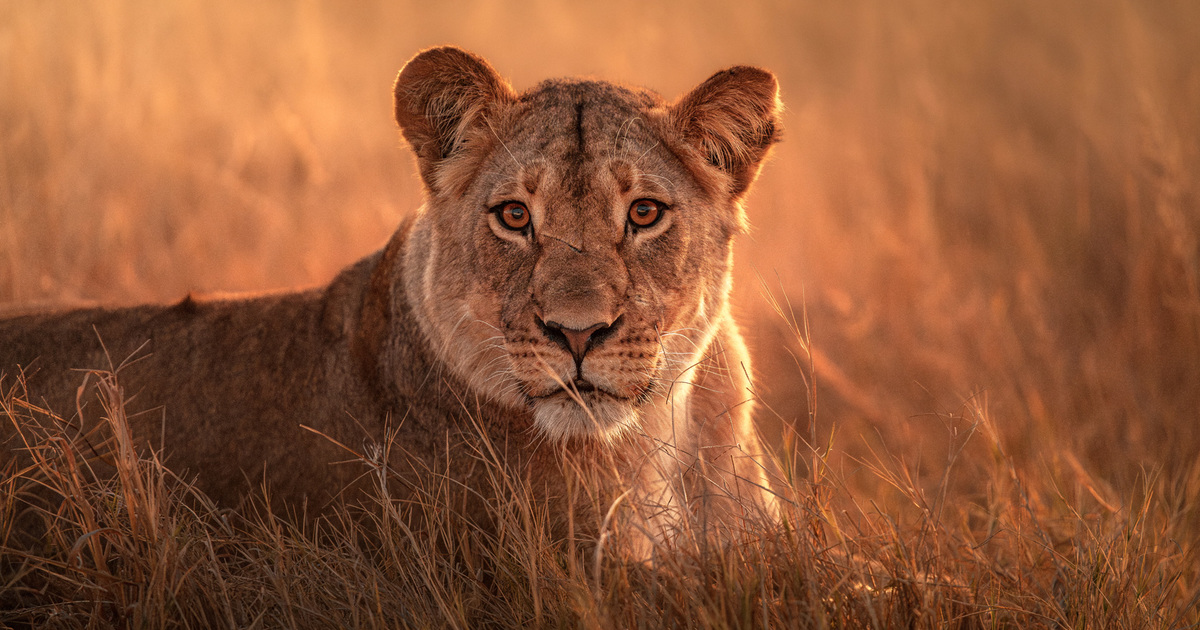
Lion in Hwange National Park, Zimbabwe.Photo: Naudé Heunis / © IFAW
(Nanyuki, Kenya, 23 September 2026) —Conservation leaders, scientists, species experts, policymakers, and partners are gathering in Nanyuki to strengthen efforts to protect Africa’s threatened wildlife and ecosystems.
The series of meetings convened by the International Union for Conservation of Nature (IUCN) Species Survival Commission (SSC) brings together expertise from across Africa and beyond. Participants will examine some of the most pressing challenges facing species conservation and identify opportunities to translate scientific knowledge, partnerships, and investment into action. The meetings include the IUCN SSC Philanthropy Council Meeting, the Third IUCN SSC Steering Committee Meeting, and Africa Species Day.
“We have the science, experience, and local knowledge, but conservation challenges are not solved overnight,” said Azzedine Downes, President and CEO of IFAW. “They require long-term partnerships, sustained investment and the commitment to stay the course—to see solutions take hold and translate into lasting impact for wildlife and the people living alongside them.
Africa’s wildlife faces interconnected pressures ranging from habitat loss and fragmentation to climate change and the illegal wildlife trade. The discussions in Nanyuki will examine the opportunities and challenges facing species conservation in Africa, the role of science and assessment in driving conservation action, and conservation financing.
Members of the IUCN SSC Philanthropy Council are examining opportunities to increase investment in species conservation, identify innovative financing mechanisms and agree on priority actions for the year ahead. Downes, a member of the Council, will also participate in the open-session panel “Financing Africa’s Species Ambitions.”
“Species conservation needs to be ambitious, but ambition must be matched by resources,” Downes said. “Funding conservation is not about responding when a species reaches crisis point. It is about investing early and consistently in the people, science and systems that can prevent that crisis in the first place.”
Vivek Menon, Chair of the IUCN Species Survival Commission, said the meetings provide an opportunity to connect the IUCN SSC’s global network of expertise with African leadership and conservation priorities.
“Africa is home to extraordinary biodiversity, but also to an extraordinary depth of conservation knowledge and leadership,” Menon said. “One of our goals is to connect that expertise across species, countries and disciplines, and ensure that knowledge leads to action. By bringing together scientists, governments, communities, conservation organisations and those able to invest in impactful solutions, we can build stronger pathways from assessment to recovery.”
Africa Species Day, taking place on 24 September, will focus attention on the continent’s biodiversity and the people working to protect it, with discussions spanning vertebrates, fungi, plants, marine and freshwater species, invertebrates, and national-level conservation priorities.
The meetings are important to explore how stronger collaboration among governments, conservation organisations, researchers, communities, donors and other partners can help translate conservation knowledge and ambition into lasting action for Africa’s species.
Jacqueline Nyagah
IFAW Communications East Africa
m: +254 722 607640
e: jnyagah@ifaw.org
IFAW is a global non-profit helping animals and people thrive together. We are experts and everyday people, working across seas, oceans and in more than 40 countries around the world. We rescue, rehabilitate and release animals, and we restore and protect their natural habitats. The problems we’re up against are urgent and complicated. To solve them, we match fresh thinking with bold action. We partner with local communities, governments, non-governmental organisations and businesses. Together, we pioneer new and innovative ways to help all species flourish. See how at ifaw.org
With over 11,000 members in 186 territories, the Species Survival Commission (SSC) is the largest of the seven expert Commissions of IUCN and enables it to influence, encourage and assist societies to conserve biodiversity by building knowledge on the status and threats to species, providing advice, developing policies and guidelines, facilitating conservation planning, and catalysing conservation action. The IUCN SSC has been recognised as “the world’s largest volunteer conservation-science network” by Guinness World Records®. Learn more at www.iucn.org/ssc.
How education is shaping the future of conservation in Amboseli
Six elephants collared in the Hwange landscape
Conservation works better when communities help write the rules
Our work can’t get done without you. Please give what you can to help animals thrive.