



Home/Magazine/Features
Features
Fela Kuti is more famous today than ever – what’s behind his global power
By Music In Africa Foundation


By Alaba Ilesanmi
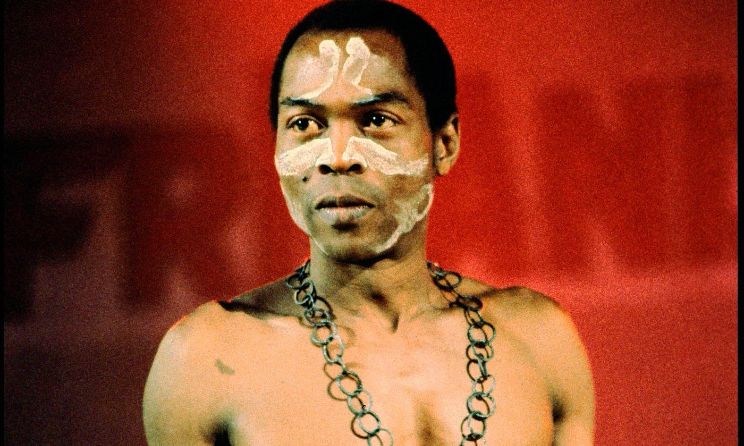
Almost three decades after his passing in 1997, Fela Anikulapo-Kuti, the legendary Nigerian musician and activist who created the Afrobeat music movement, remains the subject of global obsession
The self-proclaimed “Black President” is everywhere, like an omnipresent deity. His presence is felt, and his legacy is honoured, through contemporary showcases from Lagos to London, Bonn to Brazil
Among his many afterlife manifestations are reissues of his music, like the 2024 Fela Vinyl Box Set #6 curated by British actor and DJ Idris Elba; the display of his life, activism and music at the Rébellion Afrobeat exhibition in Paris in 2022–23; the inclusion of his most famous song ‘Zombie’ in US rap star Jay-Z’s Songs for Survivalplaylist for the 2016 Black Lives Matter protests; the 2014 documentary Finding Felaby US Oscar-winner Alex Gibney; and his 2008 revival in the Tony Award-winning Broadway musical Fela!.
Fela’s 1969 album The ’69 Los Angeles Sessions marks the beginning of Afrobeat, a genre that has further kept his legacy alive, with contemporary Afrobeat bands emerging from Brazil to Japan. It continues to be a powerful expression of pan-Africanism and political activism
Even the globally popular Afrobeats (with an “s”) pays homage to Fela and the sound he created through its appropriation of the Afrobeat name and sampling of his music
My PhD research as a scholar of music in Africa investigates these post-mortem manifestations, Fela’s influence on contemporary global Black cultures, and what this collective cultural obsession means
This widespread fascination is a sign of the issues his songs addressed that remain relevant, like colonialism in Africa, the impacts of Western imperialism on African cultures and values, and the challenges facing African governance. Fela’s lasting impact is also a result of how he idealised himself and how we have come to mythologise him, warts and all

Politics and Afrobeat
Fela Anikulapo-Kuti was born in 1938 into the prominent Ransome-Kuti family, described as “the Kennedys of Nigeria”. In the 1982 biography This Bitch of a Life by Cuban academic Carlos Moore, Fela claimed he was the reincarnation of a child called “Hildegart” who was born to his parents in 1935 but died shortly after. He believed he was sent to preach “Blackism and Africanism, the plight of (his) people” and could not bear the coloniser’s name (Hildegart) given to his previous self by a German missionary in Nigeria. Called “the Abami Eda” (the mystic one) by his fans, Fela was an enigma, but his reincarnation claim is supported by Nigeria’s Yoruba belief.
Indeed, a lion cannot birth a goat. Fela comes from a lineage of activists and musicians. His mother Chief Olufunmilayo Ransome-Kuti was a human rights activist, nationalist and feminist. She led protests against traditional monarchs and British colonialists. His musical heritage spans generations, with his grandfather, Canon Josiah Jesse Ransome-Kuti, and father, Reverend Israel Oludotun Ransome-Kuti, being protestant religious figures and musicians
The Fela that is most often projected is the “political Fela”. But Fela wasn’t always a political musician. He sang about women and sex, often perpetuating sexist views. Nigerian academic Tejumola Olaniyan wrote in his book Arrest the Music! Fela and His Rebel Art and Politics that Fela “gave many boys of (his) generation a popular language of sexism and made that sexist language extremely musically pleasurable”
Fela is revered for creating the Afrobeat sound, drawing from diverse Afro-musical inspirations and genres. However, as he clashed with Nigerian military regimes, his music became more political. He was beaten, bruised and imprisoned, sealing Afrobeat with sweat and blood. To perform Afrobeat is to enter Fela’s arena, and performing the genre without addressing political issues is almost sacrilege

Continuing relevance
Fela is often described as a prophet, mainly because his songs reflect today’s post-colonial challenges. Songs like ‘Colonial Mentality, ‘Vagabonds in Power’ and ‘Why Black Man dey Suffer’ reveal this
His activism resonates across times and societies. His 1978 song ‘Sorrow, Tears and Blood’, for example, was recorded after the Nigerian Army attacked and burned his commune in 1977. It predicts the bloody end of the youth-led 2020 #EndSARS protest against police brutality in Nigeria when soldiers massacred peaceful protesters. In the song, Fela also references the massacre of young South Africans during the 1976 Soweto uprising
Shaping the myth
The world celebrates Fela for his activism, suffering and creativity. However, memory of him is also shaped by his own efforts to create a larger-than-life persona and by our collective romanticising of ideals about him
Fela was a master of self-promotion. Before the attack on his commune, he was shooting his autobiographical film The Black President. Fela wrote, acted in and directed this autobiographical film. As the phrase goes, he was “the man, the myth, the legend” to himself
He is an ideal candidate for myth-making, famous for marrying 27 women in one ceremony, giving interviews in his underwear while smoking marijuana and sporting a great sense of humour in songs like ‘Expensive Shit’ and ‘Alagbon Close’
Fela created his own myth, and his fans continued to build that mythology over the decades. The films, plays, books, celebrity endorsements and exhibitions continue to help build the bridge between his self-idealisation and our mythologising of ideals about him. Fela!the musical and Rébellion Afrobeat cast him as a divine figure. The annual Felabration festival held across the globe to honour his legacy continues to attract new fans
In these many complex ways, Fela continues to influence Black life and global culture through his legacy
Alaba Ilesanmi is a PhD candidate in musicology at Florida State University. This article first appeared in The Conversation

#afro beatFela KutiLegacyMusic and politicsNigeria’
Most popular
Ringing cancer’s bell: How Umjondi became a story of friendship, grief and hope
26 Jun 2026
Dwin, The Stoic: Master of ballads, architect of connection – part 2
26 Jun 2026
Tycoon releases ‘Art of Love III’ ft. Kabza De Small, Kelvin Momo
26 Jun 2026
Morocco: ElGrandeToto expands ‘SALGOAT Vol. 2’ with extended edition, new international collabos
26 Jun 2026
Kabza De Small tops 2026 SAMAs nominations
26 Jun 2026
Deezer launches Remix Lab, allowing fans to create authorised song remixes
25 Jun 2026
Sponsored
Take this space
SupaFuse
Digital distributors
Mwendamberi
Bands /groups
Fay Fay ZM
Solo artists
Lagos Noir
Composers, arrangers & songwriters
Asiama
Composers, arrangers & songwriters
Ntelabi
Other
Disclaimer: Music In Africa provides a platform for musicians and contributors to embed music and videos solely for promotional purposes. If any track or video embedded on this platform violates any copyrights please inform us immediately and we will take it down. Please read our Terms of Use for more





