



Lake Chad has become Africa’s biggest refuge for waterbirds – Earth.com

07-02-2026

Lake Chad has become Africa’s biggest refuge for waterbirds, despite years of conflict
BySanjana Gajbhiye
Earth.com staff writer
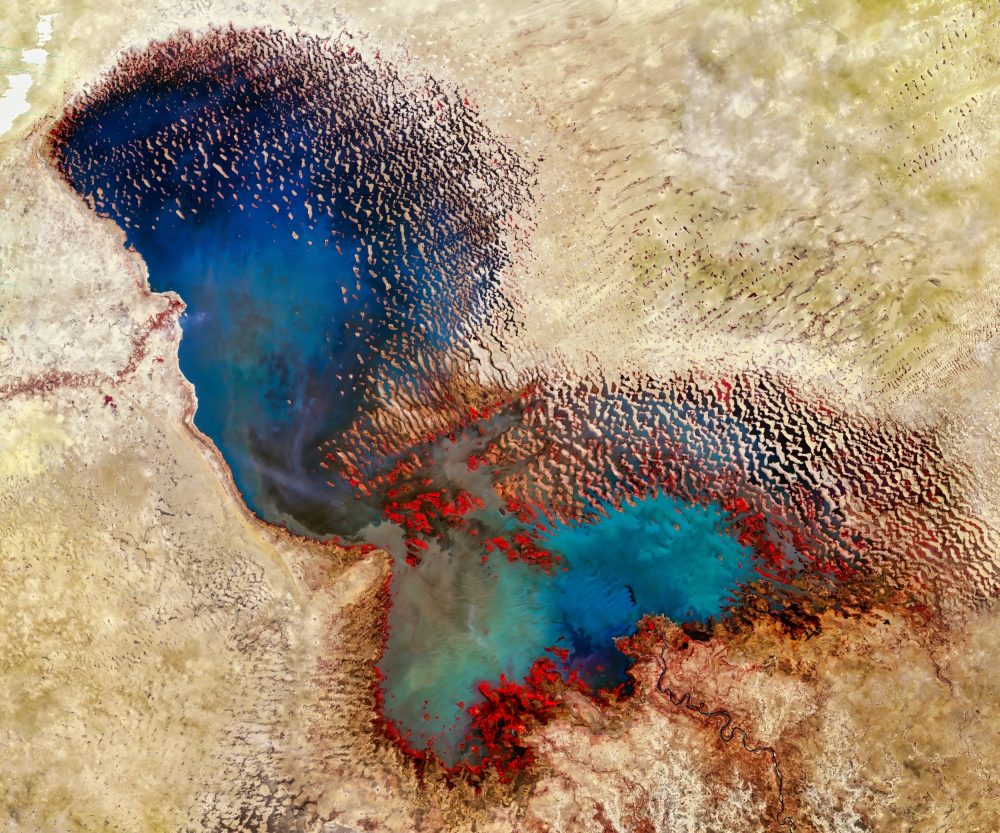
Lake Chad usually makes the news for conflict and its shrinking shoreline. A new study shows another side to the place
The lake supports a huge number of waterbirds. Chad is named after it, and it is one of the largest wetlands in Africa
A wetland surrounded by conflict
The Lake Chad basin has faced more than a decade of insecurity. Armed conflict has forced families from their homes and kept most outsiders away
That made the area very hard to study. Scientists had mostly stopped trying to survey it
Regular fieldwork became too risky, so reliable bird counts stopped. A new international study has now filled that gap
Nearly 2.48 million waterbirds
The main finding is a large number. Researchers estimate that about 2.48 million waterbirds use the lake
That is likely the biggest concentration of wetland birds in Africa. No other site on the continent is known to hold more
The estimate came from a team led by Tour du Valat, a French wetland research institute. The French Biodiversity Agency (Office Français de la Biodiversité, OFB) took part as well
Much of the flying was conducted by the Dutch NGO Wings for Conservation. The team worked with Chad’s Department of Wildlife and Protected Areas
Together, they produced the first full survey of the lake’s birds since 2008. That gives conservationists a current baseline to work from
Counting birds from the air
Getting these numbers was not simple. Much of the lake is dangerous and hard to reach by road
So the team surveyed from the air. Small planes flew set routes while observers counted the birds below
Those counts fed into spatial models. The models estimated bird numbers across areas no one could safely reach on foot
“By combining adapted aerial sampling methods with spatial modeling, we were able to estimate wildlife abundance across vast and difficult-to-access territories while limiting risks to observers,” said Pierre Defos du Rau, one of the study’s authors
When conflict becomes a refuge
The next finding was unexpected. Several species have held steady in recent years, and a few have grown
Some of the most conflict-affected areas held more animals than calmer, easier-to-reach ones. The researchers call this a refuge effect
Fewer people now fish, graze livestock, or hunt along the shore. That has left parts of the lake undisturbed, and wildlife has spread into them
This runs against the usual assumption. Conflict zones are not often good for wildlife
Not every species is thriving
The good news has limits. Not every bird is doing well
Some populations are rising, but others are in a clear state of decline. The mix shows how fragile the system still is
The researchers do not oversell the positive numbers. They stress that only regular monitoring can show what is really happening
Why the counting stopped
Lake Chad was not always so hard to study. Decades ago it was a leading site for migratory waterbirds in Africa
People compared it to the Inner Niger Delta in Mali. Then conflict made regular fieldwork almost impossible, and the surveys stopped
The International Waterbird Census tracks how bird populations rise and fall. It has not run reliably at Lake Chad since the 2000s
Without that data, it is hard to judge how many birds there are or where the numbers are heading. The census needs people on the ground, and that work had become too dangerous
Birds linking three continents
These birds do not stay in one place. Many migrate each year between Africa, Europe, and Asia
The lake is an important stopover on those routes. Losing it would affect bird populations far beyond the region
Protecting Lake Chad is not just Chad’s concern. Many countries have a stake in it
The lake also matters to the people living around it. Its wetlands help feed nearby communities
Fishing and other wetland reke is healthy, so are those food supplies
Protecting it is about local livelihoods as much as wildlife. A healthy lake means more reliable catches
A call for stronger protection
The researchers want more than a one-off survey. They are calling for a large protected area on the lake
They also want it added to the UNESCO World Heritage List. That status would bring stronger recognition and clearer rules
They noted that long-term monitoring matters just as much. It is the only reliable way to track changes over time
Why this matters now
As wetlands disappear around the world, places like Lake Chad become increasingly important
The lake is vital for birds that migrate between Africa, Europe, and Asia. It’s equally important for the people who depend on it for their livelihoods
Despite years of conflict, the lake still supports remarkable biodiversity. Researchers say protecting it is now more important than ever
The study is published in the journal Proceedings of the National Academy of Sciences
—–
Like what you read? Subscribe to our newsletter for engaging articles, exclusive content, and the latest updates
Check us out on EarthSnap, a free app brought to you by Eric Ralls and Earth.com
—–





