



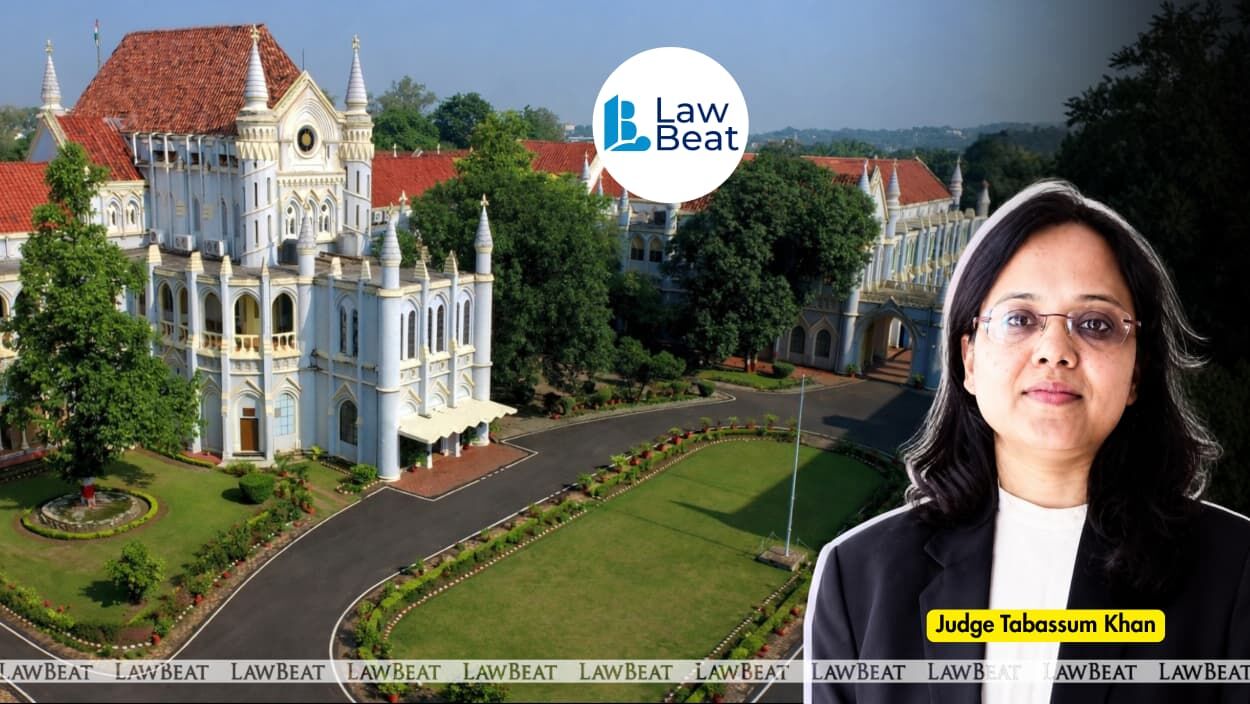
MP High Court Takes Suo Motu Cognizance Of Threats Against Judge Tabassum Khan, Seeks DGP’s Response
MP High Court Takes Suo Motu Cognizance Of Threats Against Judge Tabassum Khan, Seeks DGP’s Response
Taking serious note of threats issued to a judicial officer after a lynching verdict, the Madhya Pradesh High Court has said judges cannot be intimidated for passing orders and directed top state officials to explain the steps taken against those responsible
By : Himanshi Hans
Update: 2026-07-03 06:02 GMT
Judicial Officers Cannot Be Threatened for Their Orders: MP High Court on Threats to Judge
The Madhya Pradesh High Court has taken serious note of threats allegedly issued against a judicial officer following a judgment delivered in a criminal case, observing that such conduct strikes at the very foundation of judicial independence and the fearless functioning of courts
A Division Bench of Justice Vivek Agarwal and Justice Avanindra Kumar Singh, while hearing a pending suo motu matter concerning judicial officers in the State, directed the Director General of Police and the Additional Chief Secretary/Principal Secretary (Home) to personally explain the steps taken against those responsible for creating an atmosphere of fear around a judicial officer posted in Narmadapuram
The Court was informed through submissions made by counsel as well as media reports that a judicial officer had been subjected to threats from certain sections of society after passing an order in a case. Taking immediate cognizance of the issue, the Bench described the development as “a serious matter” and proceeded to seek accountability from the State administration
Appearing in the matter were Advocate Brajesh Nath Mishra for the petitioner, Additional Advocate General Janhvi Pandit and Deputy Advocate General Abhijeet Awasthy for the State, while Advocate Rohan Harne appeared for the intervener
The Court recorded that it had initially requested the Advocate General to assist in the matter. However, as the issue concerning threats to the judicial officer arose during the proceedings and the Advocate General was occupied before the Supreme Court through video conferencing, the Bench proceeded to issue directions without delay. It requested Additional Advocate General Janhvi Pandit to take notice and ensure that personal affidavits were filed by the Director General of Police and the Additional Chief Secretary/Principal Secretary (Home) detailing the action being taken against those responsible.
Expressing concern over the consequences of such incidents, the High Court observed, “We are of the opinion that such activities directly hampers the judicial independence and fearless working of our Judicial Officers.”
The Bench granted three days’ time for the filing of affidavits by the senior officials and simultaneously directed that protection be extended to judicial officer Tabassum Khan, Additional Judge, Seonimalva to the Court of First District and Additional Sessions Judge, Narmadapuram. The Court noted that protection had already been provided but emphasised that mere security arrangements would not be sufficient unless concrete action was taken against those allegedly issuing threats
Accordingly, the Superintendent of Police, Narmadapuram, was directed to file an affidavit explaining the steps taken to identify and proceed against the individuals responsible for creating an atmosphere of intimidation around the officer. During the hearing, Deputy Advocate General Abhijeet Awasthy informed the Court that an FIR had already been registered in connection with the incident
The order comes in the backdrop of reports that Judge Tabassum Khan faced online threats and communal targeting after delivering a verdict in a lynching case involving the killing of a truck driver over allegations of cow smuggling. While the High Court did not enter into the merits of that case, it made it clear that judicial officers cannot be subjected to pressure, threats or public intimidation merely because a section of society disagrees with a judicial outcome
Underscoring the legal remedies available against court decisions, the Bench observed that every judicial order is open to scrutiny before appropriate forums. The Court stated, “Any order passed by the Judicial Officer is subject to judicial scrutiny as per the forum provided for said scrutiny, be in the form of appeal or revision, but our judicial officer cannot be threatened merely because he or she choses to pass a particular order and that is not of liking of the certain section of the society.”
The matter has now been listed for further hearing on July 9, 2026
Case Title: In Reference (Suo Moto) (Judicial Officers of the State of M.P.) v. The State of Madhya Pradesh and Others
Bench: Justice Vivek Agarwal and Justice Avanindra Kumar Singh





