


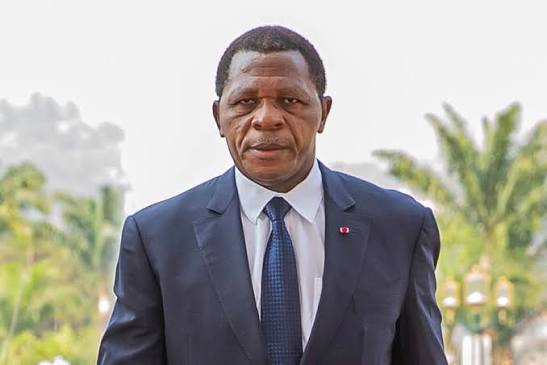
India donated 1,000 tons of rice for flood victims. China donated 418 tons for war victims. Paul Atanga Nji received both with fanfare. Neither has been publicly distributed. Now the government wants to sell rice to a starving population. Connect the dots.
There is a particular kind of cruelty that wears the mask of governance. It does not shoot you. It does not arrest you. It simply takes the food meant for your starving children, smiles for the cameras at the donation ceremony, and then disappears, leaving you to wonder whether the hunger you feel is your fault for not being grateful enough.
That is precisely what the Cameroon government, under the watch of Territorial Administration Minister Paul Atanga Nji, appears to have done with thousands of tons of humanitarian rice donated by India and China for the country’s most vulnerable citizens.
In 2025, India donated 1,000 tons of rice to Cameroon. The intended beneficiaries were flood victims in the Far North Region. No public distribution ceremony was ever organised. The rice did not visibly reach its targets. What reporters did witness, however, was that same Indian rice appearing at ruling CPDM party campaign events in Bamenda during the presidential election — repackaged and presented as a personal gift from Paul Biya to voters. Humanitarian aid, converted into campaign currency.
Then came China. On June 16, Beijing donated rice and wheat valued at 1.6 billion CFA francs as humanitarian assistance for victims of the Ambazonia armed conflict, Boko Haram victims in the Far North, and Seleka rebel victims in the East. Paul Atanga Nji received the consignment with ceremony and declared, with characteristic confidence, that distribution would begin immediately. That was over three weeks ago. Again, there has been no visible distribution event. No photographs of beneficiaries. No government accountability report. No rice.

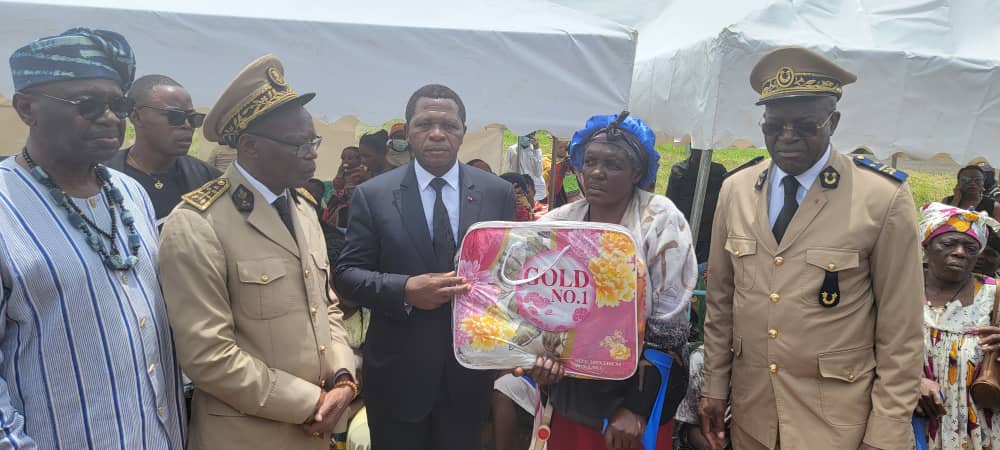
And now — in what may be the most brazen act of all, the same government is announcing promotional sales of rice and food items to the suffering population, framed as a measure to curb the rising cost of living. Rice that was received free, as international humanitarian aid, may now be finding its way back to a hungry population, with a price tag attached.
This is not mismanagement. This is not bureaucratic delay. This is theft. Systematic, deliberate, and contemptuous theft from displaced widows in Bamenda, Buea, from Boko Haram survivors in Maroua, from families rebuilt from nothing in the East. These are the people India and China wrote the cheques for. These are the people Atanga Nji smiles beside in donor photographs. These are the people who received nothing.
The Cameroon government owes these people an immediate, detailed, and publicly verifiable account of where every kilogram of that rice is. When was it distributed? To whom? In which localities? Which civil society organisations verified the process? Which prefects signed off? The silence so far is not administrative delay; it is the silence of people who have something to hide.


Paul Atanga Nji has built a career on loyalty to a system that feeds itself before it feeds the nation. The rice scandal is not an aberration. It is the system functioning exactly as designed — aid flows in through the front door, accountability walks out through the back, and the suffering population is handed a receipt and told to be grateful.
Cameroon’s international donors — India, China, and every government that has ever written a cheque in this country’s direction- must demand answers. Because if humanitarian aid meant for war victims and flood survivors is being laundered into campaign props and resold to a destitute population, then every future donation is complicit in the same crime.
The rice belongs to the people. Give it back. Or explain, in detail, where it went.


