



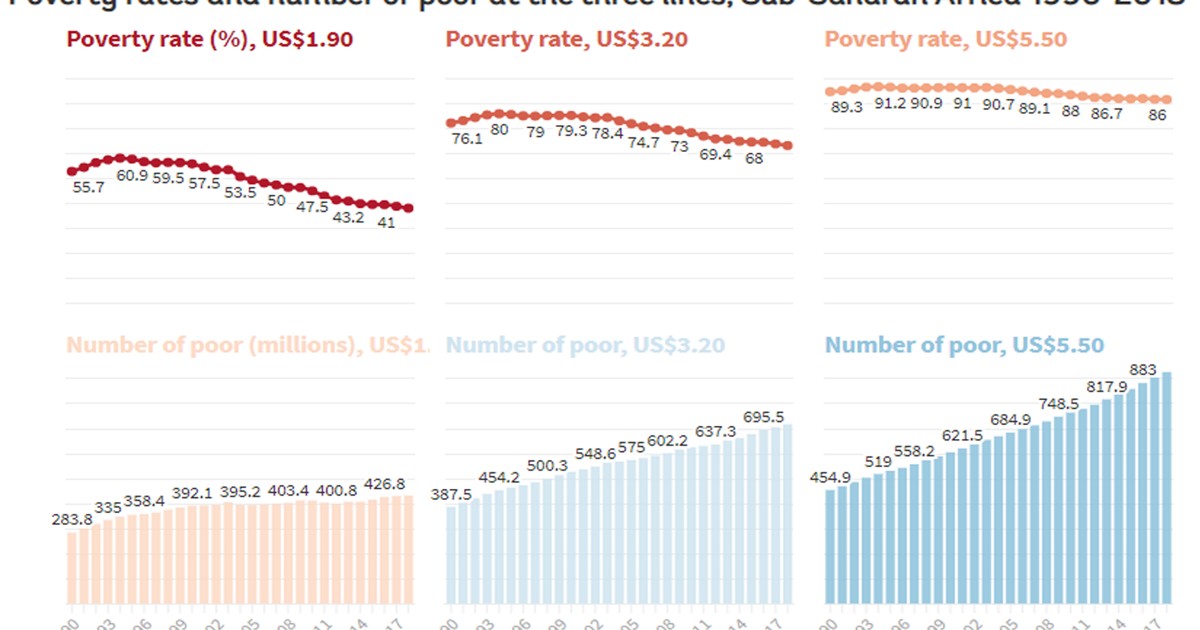
One reason behind the slowdown in global extreme poverty reduction is the slow progress in Sub-Saharan <a href="https://absafricatv.com/blinken-touts-new-us-policy-for-sub-saharan-africa/” title=”Blinken touts new US policy for sub-Saharan Africa”>Africa. The latest estimates show that the regional poverty rate decreased by 1.6 percentage points between 2015 and 2018. This translates to 40% of the population living below the US$1.90-a-day poverty line in 2018 and Sub-Saharan Africa accounting for two-thirds of the global extreme poor population. While the poverty rate has decreased from 56% in 1990 to 40% in 2018 the number of poor continues to rise. In other words,
The Poverty and Shared Prosperity report 2020 shows that the number of poor has also increased at the US$3.20 and US$5.50 lines. While the poverty rate has decreased at the three lines between 1990 and 2018, the number of poor has increased (Figure 1). Poverty reduction has been much slower at the higher lines: between 1990 and 2018 the poverty rate fell 15 percentage points at the US$1.90 poverty line, by 10 pp at the US$3.20 line and by just 3.3 pp at the US$5.50 line. Consequently, the number of poor has risen by 50% at the US$1.90 line and has doubled at the higher lines over the past three decades.
Figure 1 Poverty rates and number of poor at the three lines, Sub-Saharan Africa 1990-2018
Perhaps even more alarming than having 40% of the Sub-Saharan African population living in extreme poverty in 2018 is the limited progress from such high levels over the past three decades. East Asia and Pacific has seen a remarkable compression in poverty rates over that period, while starting from levels that were not all that different a generation ago. The progress in East Asia and the Pacific, and more recently in South Asia, is evident both at the US$1.90 and US$3.20 poverty lines (see Figure 2).





