


Pan-Africa Football is evaluating each African participant’s performance at the 2026 FIFA World Cup and now we take a closer look at Cape Verde, the darlings of the tournament.
Result: Round of 32
- Group H: Cape Verde 0-0 Spain
- Group H: Cape Verde 2-2 Uruguay
- Group H: Cape Verde 0-0 Saudi Arabia
- Round of 32: Cape Verde 2-3 Argentina (AET)
What was the objective?
As coach Bubista said, “we have already won” by qualifying to the World Cup. The objective for the Blue Sharks was to show how far Cape Verde have come as a football nation by competing positively and challenging for a place in the knockout stages.
Evaluation
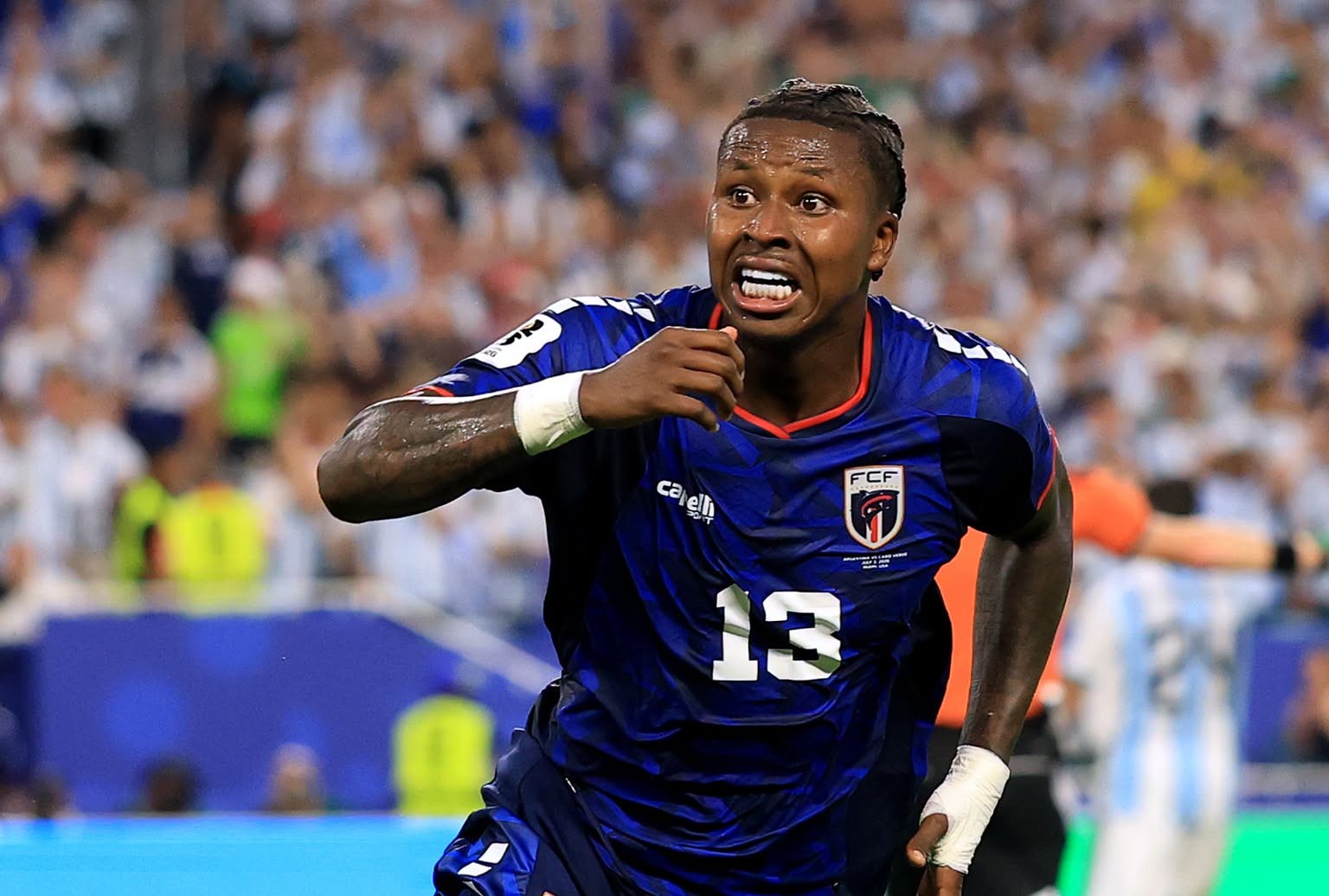
Cape Verde achieved an ideal result by advancing from Group H as the runners-up. While they failed to achieve their first-ever World Cup victory, the Blue Sharks won over hearts and minds from neutral supporters as well as their own. The tournament was a massive success with notable results against Spain and Argentina despite the Round of 32 defeat following extra-time.
Positives
- A victory for coach Bubista and the style of play he has instituted with this team. Mastering the counter-attack while still playing positively against more pedigreed opponents increased the respect for Cape Verdean football.
- Excellent performances from the defensive line as well as goalkeeper Vozinha.
- Team leadership and collective was at the highest level.
- The emergence of left back Sidny Lopes Cabral as a star for the team now and in the future.

Negatives
- A heavy dependence on veterans leaves uncertainty for the future and if Cape Verde can continue to maintain this level when they return to African competitions.
Conclusions: Where does Cape Verde go from here?
Bubista’s emergence as a coach
While many coaches at the World Cup utilized different approaches and systems to disrupt their opponents, Cape Verde coach Bubista stuck with what he and his team know. This is a team that can compete against any opponent due to their ability to neutralize and counter-attack, a strategy that will achieve results against any team in the world.
Which team leaders will stick around for future campaigns?
This is a team that depended on elder statesmen more than any African team at the competition. Six to eight of the squad members who contributed regularly are over the age of 30.
So Bubista will have leadership and experience to count upon but he will need to decide which players enjoyed their last dance at the World Cup and who can anchor the team during their 2027 Africa Cup of Nations qualification campaign.
- The defense particularly needs a plan for the future. Roberto “Pico” Lopes has just turned 34, goalkeeper Vozinha is 40. How long can Bubista count on these veterans and who will he call upon to gain valuable experience that is younger.
- The attack is a similar story. Veteran wingers Garry Rodrigues and team captain Ryan Mendes are deep in the twilight of their careers. Jovane Cabral appears likely to be the attacking star at 28-years-old while strikers Gilson Benchimol and Dailon Livramento are still relatively young and already contributing.
Dual national recruits?
How deep is the pool of dual nationals that Cape Verde can recruit? Their World Cup performance will make them more intriguing to Portugese and other European-born players who are eligible, making it interesting to see who Bubista and the Cape Verdean federation will bring in with the team’s boosted reputation.
How much will the team change by the start of 2027 Africa Cup of Nations qualifying?
It appears likely that with the exception of one or two players, the party will go on for Cape Verde’s veteran players moving forward. 2027 Africa Cup of Nations qualifying will begin in September for a tournament that will take place in one year, so Bubista has decisions to make about how much he wants to change things up or when he can give younger players an opportunity to impress in an experienced group.


