

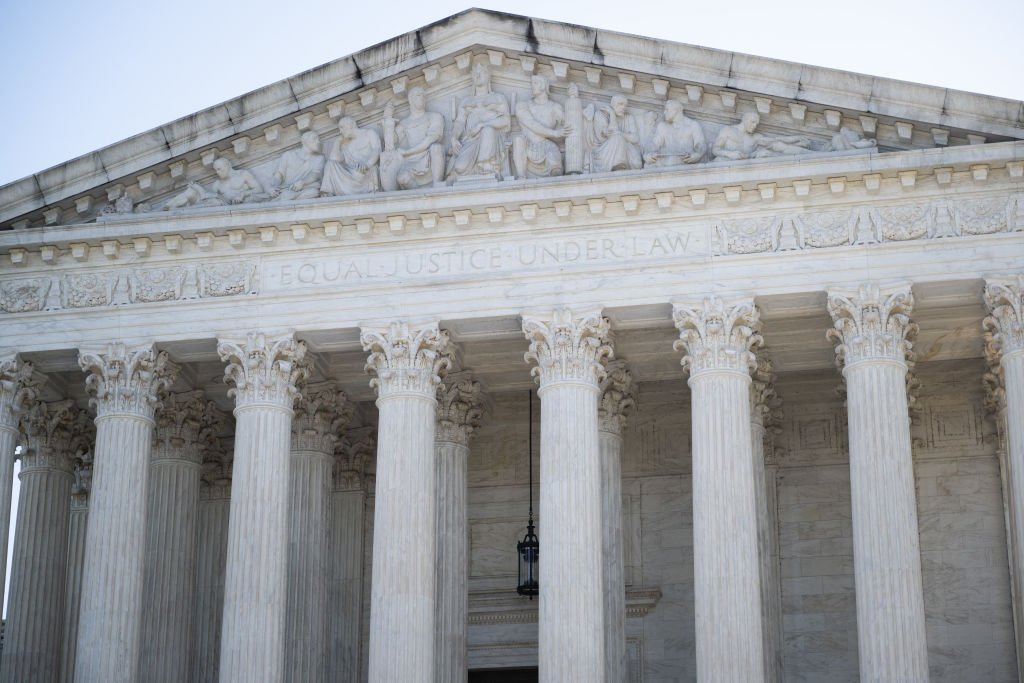
On Wednesday, Dec. 3, in Olivier v. City of Brandon, Mississippi, the Supreme Court will consider whether individuals can challenge a law as unconstitutional and seek to protect themselves from its future enforcement if they’ve previously been punished for violating the law.
The dispute centers on the experiences of Gabriel Olivier, a pastor from Bolton, Mississippi, who described himself as a “public evangelist” in an interview with SCOTUSblog. He feels called to share his Christian faith with others, and for much of the past decade he’s done so by going to places where “there’s going to be a lot of people,” such as concert venues, to “preach the gospel,” hand out religious literature, and hold up signs with scripture verses on them.
This mission brought Olivier and others to an amphitheater in Brandon, Mississippi, several times in 2018 and 2019. In late 2019, however, after city leaders determined that demonstrations outside the venue were creating “hardships” for law enforcement officers, Brandon enacted an ordinance that requires protesters and other demonstrators to stand within a designated protest area.
The amphitheater temporarily closed in 2020 due to the COVID-19 pandemic, so Olivier wasn’t affected by the ordinance for more than a year. In May 2021, he returned to Brandon to evangelize outside a concert and was asked to stay within the designated protest area. After briefly complying, Olivier left the area to return to his preferred, more visible spot, located outside of the designated protest area, and he was then arrested for violating the demonstration rules.
In June 2021, Olivier entered a no contest plea – that is, he did not admit guilt, but he did not dispute the charges and accepted the punishment. “He was found guilty and received a fine, a suspended sentence of ten days’ imprisonment, and a year’s unsupervised probation,” according to the city’s Supreme Court brief.
A few months later, Olivier brought a Section 1983 claim against the city, contending that its ordinance violates his First Amendment rights and seeking to prevent the city from enforcing it against him in the future.
A district court, however, dismissed his claim. It cited a 1994 Supreme Court decision, Heck v. Humphrey, which held that convicted criminals cannot challenge the law they were convicted under when a judgment in their favor “would necessarily imply the invalidity of [their] conviction or sentence.”
The U.S. Court of Appeals for the 5th Circuit later agreed that Olivier cannot bring a Section 1983 claim against Brandon until his prior conviction is “’reversed,’ ‘expunged,’ or ‘declared invalid.’”
In his petition to the Supreme Court, Olivier emphasized that the 5th Circuit’s interpretation of Heck puts it at odds with two other federal courts of appeals, which have held that Section 1983 claims like Olivier’s can proceed when they involve requests for forward-looking relief, such as an injunction preventing the government from enforcing the challenged law, rather than backward-looking relief, like monetary damages. He further contended that there’s a related divide between the federal courts of appeals over whether the Heck precedent applies to people who never had access to habeas relief because they were never in custody or were only briefly in custody.
In July, the justices agreed to weigh in.
The key argument from Olivier’s legal team is that the 5th Circuit is applying the Heck decision too broadly. In Heck, according to Nate Kellum of First Liberty Institute, with whom SCOTUSblog spoke, the court was hoping to prevent a “flood” of Section 1983 lawsuits from prisoners who were frustrated with how their cases had played out, and so the court made it clear that habeas corpus is the “appropriate forum” for them to challenge their convictions. It wasn’t looking to limit the options of someone concerned about future prosecution, especially not someone who is not in custody and cannot make a habeas claim, Kellum said.
And Olivier’s options, as well as the options of “anyone who has forgone a challenge to a conviction,” are certainly limited under the 5th Circuit’s interpretation of Heck, according to Olivier’s brief on the merits. They are “left with the untenable choice of violating the law again and enduring the consequences, or giving up their constitutional rights.”
The federal government filed a friend-of-the-court brief in support of Olivier’s position, and it will take part in Wednesday’s argument. Like Olivier’s merits brief, the government’s brief emphasized that the 5th Circuit’s interpretation of Heck puts people like Olivier in an absurd position: they must “abide by a law that they believe is unconstitutional or risk ‘becoming enmeshed in (another) criminal proceeding,’” wrote U.S. Solicitor General D. John Sauer.
Where the government parts ways from Olivier is on the question of whether Heck applies to someone who was never in custody and, therefore, never had the option of seeking habeas relief. “This case presents no need to resolve that question,” Sauer wrote, “but if the Court does so,” it should keep in mind that, in Heck, the majority passed on an opportunity to make eligibility to bring Section 1983 contingent on “a plaintiff’s custodial status.” Instead, Sauer added, the court’s opinion emphasized the need to determine if a Section 1983 claim, whether it comes from a prisoner or not, “challenge[s] the propriety of prior criminal proceedings.”
In its own brief, the city of Brandon contended that Olivier’s team and the government were wrongly complicating the court’s straightforward holding in Heck. That decision, the city wrote, makes clear that “the favorable-termination requirement ‘applies whenever a judgment in favor of the plaintiff would necessarily imply that his prior conviction or sentence was invalid.’” “Whenever means whenever,” not only when “someone is in custody” or only when someone seeks forward-looking relief, the city wrote. According to the city, while Olivier’s focus may be on the future enforcement of Brandon’s demonstration ordinance, if his Section 1983 claim is successful, it would necessarily “attack” his past conviction and sentence.
And rather than trapping people like Olivier in an impossible position, supporting a broad application of Heck promotes “federalism, comity, finality, and consistency,” the city of Brandon contended, by, among other things, reducing tension between federal and state courts and limiting the circumstances under which “millions of … convicted plaintiffs” can challenge their convictions.
During Wednesday’s arguments, the discussion likely will focus on the Heck decision and the practical implications of accepting either side’s position on how broadly it should apply. If the justices choose to emphasize the underlying First Amendment arguments, it could signal an interest in allowing Olivier’s challenge to Brandon’s policy to move forward.
Cases: Olivier v. City of Brandon, Mississippi
Recommended Citation:
Kelsey Dallas,
Can a Mississippi pastor challenge the constitutionality of a law that he was previously convicted of violating?,
SCOTUSblog (Dec. 1, 2025, 10:00 AM),
https://www.scotusblog.com/2025/12/can-a-mississippi-pastor-challenge-the-constitutionality-of-a-law-that-he-was-previously-convicted-of-violating/
