

AV Ristorante is a recurring series by Brian Fitzpatrick.
Please note that the views of outside contributors do not reflect the official opinions of SCOTUSblog or its staff.
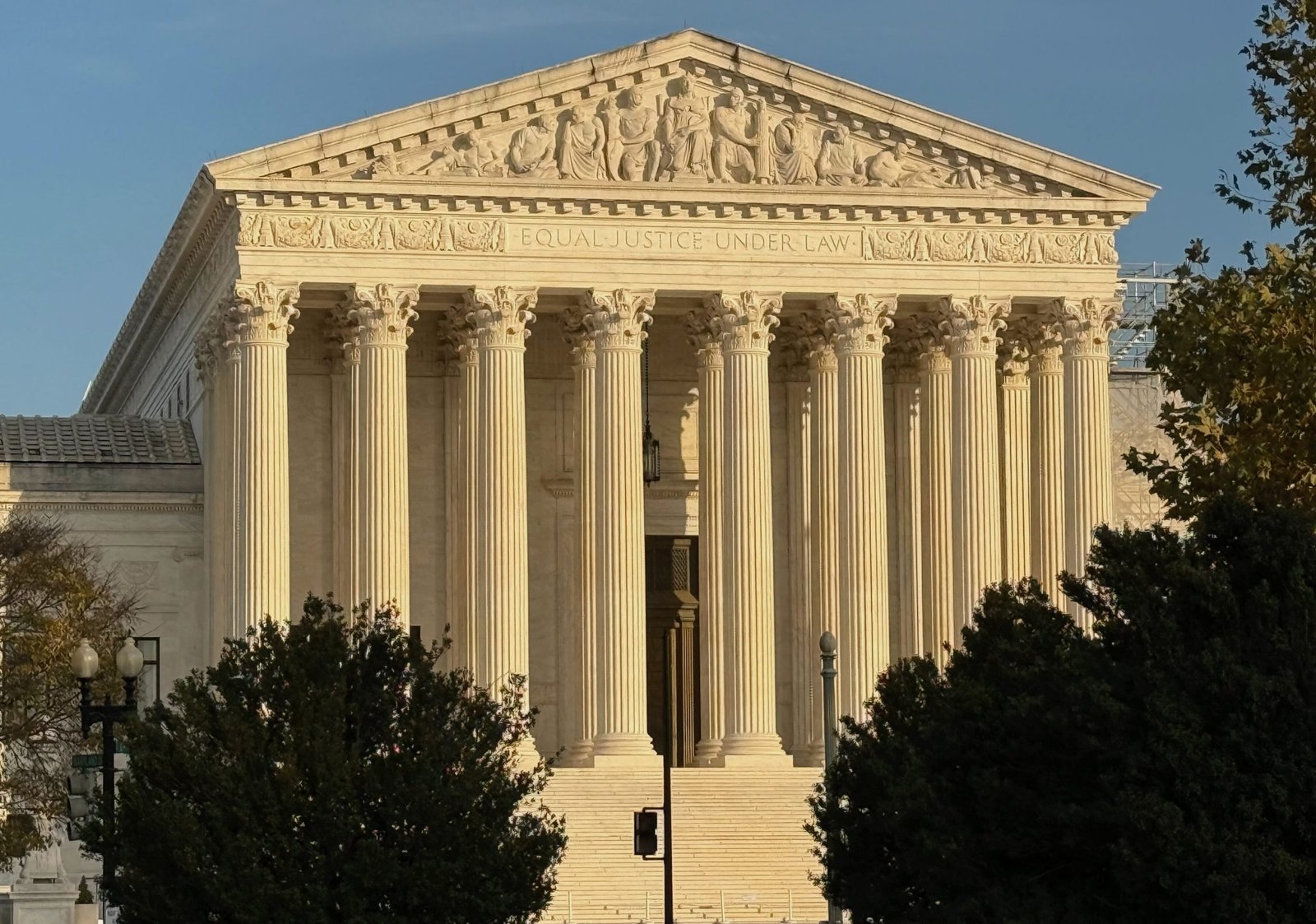
As we all know – how could we have missed it! – the Supreme Court heard oral argument in Trump v. Slaughter just a week ago, on Monday, Dec. 8. That case involves the erstwhile commissioner of the Federal Trade Commission, Rebecca Slaughter, and tees up the question whether so-called “independent” federal agencies violate the constitutionally mandated separation of powers. The case would have been near and dear to the heart of my old boss, Justice Antonin Scalia, who vehemently thought these agencies should be subject to the president’s control.
What makes agencies “independent” is that Congress purportedly prevented the president from removing their leaders at will. These agencies were first created during the Progressive Era – that’s usually a bad sign – and the court upheld the FTC’s removal restrictions as constitutional in 1935 in a case called Humphrey’s Executor v. United States. Given the court’s decision on its interim docket to allow Trump to fire Slaughter while the litigation moved forward, many suspected the court would bring a smile to Scalia up in heaven and overrule Humphrey’s Executor in this case, and, indeed, a majority of justices at oral argument suggested as much.
Given the focus on the Constitution, I have been left to wonder on my own about the statute at issue here. Have we been correct to assume all these years that Congress made these agencies as independent from the president as the court and my fellow conservatives seem to think? Or does the statute give the president more discretion to fire the leaders of such agencies than we have been led to believe, and issues of constitutionality – though they get all the attention – might thus be avoided?
The Federal Trade Commission Act says the president can remove the commissioners for “inefficiency, neglect of duty, or malfeasance in office.” This same language is found in many of the statutes creating Progressive Era agencies. There is a good law review article that explains what these words likely meant 100 years ago, and their grounds for removal seem pretty narrow.
On the other hand, these statutes do not say the president can only remove a commissioner for these reasons. In Humphrey’s Executor,the court deployed the well-known canon expressio unius est exclusio alterius to conclude that “only” is what the statute must have meant. But, interestingly, the first time the court encountered the same language in Shurtleff v. United States in 1903, it rejected the expressio unius interpretation. The court said “[t]he right of removal would exist if the statute had not contained a word upon the subject. It does not exist by virtue of the grant, but it inheres in the right to appoint.” Accordingly, “[i]t requires plain language to take it away,” not “leaving it to be implied from doubtful inferences” like the expressio unius canon.
Given that Shurtleff was on the books when Congress enacted the FTC Act in 1914, does that mean we have to presume that the statute does not set forth the exclusive grounds for removal? According to the treatise Scalia himself wrote with Bryan Garner, that’s called the “prior construction canon”: “if a statute uses words or phrases that have already received authoritative construction by the jurisdiction’s court of last resort . . . they are to be understood according to that construction.” Is it possible, then, that, putting the Constitution aside, Humphrey’s Executor was wrong on statutory grounds?
I don’t know – Shurtleff involved an officeholder whose term was not limited in years like FTC commissioners, a distinction the court pressed in Humphrey’s Executor – but I recently came across something that made me think Shurtleff might have been on to something after all. The author was none other than Woodrow Wilson – the president who signed the FTC Act into law! – and the piece was his famous article, The Study of Administration. It was published in 1887, the very same year Congress created the Interstate Commerce Commission, the first “independent” agency with the inefficiency-neglect-malfeasance provision.
Wilson’s piece is largely a love letter to the administrative state and the piece is often read in conservative circles as part of the “anti-canon,” if you will, but I was struck by what he said about the tenure of agency officials:
[T]o fear the creation of a domineering, illiberal officialism as a result of [what] I am here proposing is to miss altogether the principle upon which I wish most to insist. That principle is, that administration in the United States must be at all points sensitive to public opinion. A body of thoroughly trained officials serving during good behavior we must have [and] the apprehension that such a body will be anything un-American clears away the moment it is asked, What is to constitute good behavior? [S]teady, hearty allegiance to the policy of the government they serve will constitute good behavior. That policy will have no taint of officialism about it. It will not be the creation of permanent officials, but of statesmen whose responsibility to public opinion will be direct and inevitable.
To my ear, this does not sound like Wilson thought these agencies would be very independent from elected representatives like the president at all. He does go on to say that bureaucrats must exist “removed from the common political life of the people.” But I take that to mean only that they should not be elected, as he also says that that “chiefs of departments must be made” to “serve[] the people.” Moreover, in the quotation above, he states that agencies “must be at all points sensitive to public opinion.” But how can agency heads serve the people if they are not elected? By being subject to removal by those who are. As Wilson puts it, if they do not show “[s]teady, hearty allegiance to the policy of the government,” they can be removed by “statesmen whose responsibility to public opinion will be direct.”
I don’t want to overemphasize Wilson’s viewpoint. He is only one person, and, whatever he might have wanted to be the case, we are bound by the words Congress used. But when textualists interpret old documents and the text is not clear, we sometimes ask ourselves WWFD: what would the framers do? It’s an informal way of summoning original public meaning. Woodrow Wilson was one of the framers of the administrative state. If we ask WWWWD here, is it possible that the answer is that Shurtleff was right all along and that much of the constitutional hubbub about “independent” agencies has been based on the false premise that these agencies were considered independent to begin with?
Recommended Citation:
Brian Fitzpatrick,
WWWWD: What would Woodrow Wilson do?,
SCOTUSblog (Dec. 16, 2025, 10:00 AM),
https://www.scotusblog.com/2025/12/wwwwd-what-would-woodrow-wilson-do/
