


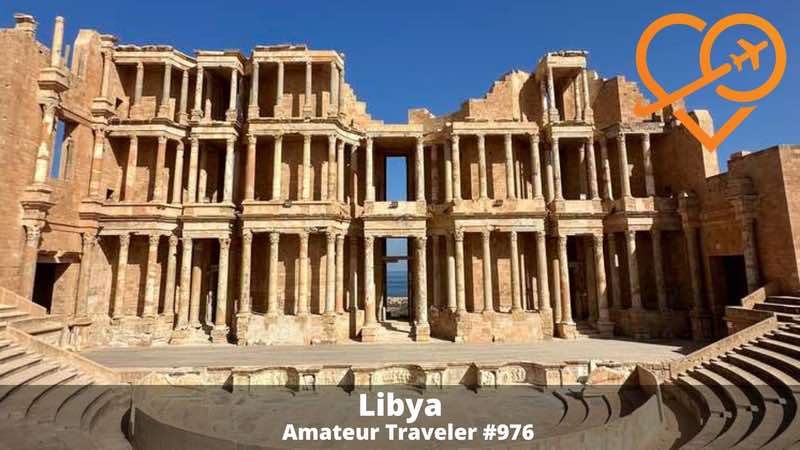
In this episode of Amateur Traveler, host Chris Christensen talks with Ajay Ajaal, a Libyan-born travel professional and founder of Intu Libya, about traveling to one of North Africa’s least-visited and most misunderstood destinations: Libya. From spectacular Roman ruins to Saharan oases, ancient Amazigh towns, and the vibrant streets of Tripoli, AJ explains why Libya rewards travelers who are curious, respectful, and willing to look beyond headlines.
Why Visit Libya?
Libya offers a rare sense of discovery. With tourism largely undeveloped since the mid-20th century, many of its historic sites feel untouched. AJ describes Libya as a country where Roman, Greek, Phoenician, Ottoman, Italian, and Islamic histories overlap, often in the same physical space. Add to that Mediterranean coastline, vast Saharan landscapes, and deep-rooted traditions of hospitality, and Libya becomes a destination for travelers seeking something truly different.
Safety, Visas, and Practicalities
Chris and AJ address the elephant in the room: safety and travel advisories. AJ explains how Libya currently operates with an electronic visa system that requires a local sponsor and organized itinerary. Tourism is tightly coordinated with authorities, and travel routes are planned in advance. While some regions remain off-limits, AJ emphasizes that millions of Libyans live their daily lives safely and that guided travel within approved areas is the key to visiting responsibly.
Suggested Libya Itinerary (10–12 Days)
This itinerary uses Tripoli as a base, then branches out to Libya’s most significant Roman sites, Amazigh mountain towns, and Saharan desert oases. Travel in Libya requires a local guide and pre-approved routes, so this plan reflects what is realistic and recommended for visitors.
Day 1: Arrival in Tripoli
- Arrive in Tripoli, typically via Tunisia or Istanbul
- Check into a hotel near the Old City
- Evening walk through the Medina to get oriented
- First taste of Libyan coffee and pastries
Overnight: Tripoli
Day 2: Exploring Tripoli’s Old City
- Walk the Old City (Medina)
- Visit the Arch of Marcus Aurelius
- See Roman columns supporting Ottoman-era houses
- Explore Italian colonial architecture near Martyrs’ Square
- Visit the gold, spice, and currency markets
- Evening at Martyrs’ Square, a lively family gathering place after sunset
Overnight: Tripoli
Day 3: Day Trip to Leptis Magna
- Drive about 1.5 hours along the coastal road to Leptis Magna
- Explore one of the best-preserved Roman cities in the world
- Theater overlooking the sea
- Roman baths and basilicas
- Forum and Severan Arch
- Massive amphitheater with underground tunnels
- Lunch near the site
- Return to Tripoli for dinner
Overnight: Tripoli
Day 4: Day Trip to Sabratha
- Drive west along the coast to Sabratha
- Visit the reconstructed Roman theater facing the Mediterranean
- Walk among temples, mosaics, and port ruins
- Learn about Sabratha’s role as a caravan trading hub
- Optional visit to the site museum if open
- Return to Tripoli
Overnight: Tripoli
Day 5: Nafusa Mountains and Qasr Nalut
- Depart Tripoli for the Nafusa Mountains
- Visit Qasr Nalut, a fortified Amazigh granary
- Learn about Amazigh culture, language, and food storage systems
- Visit traditional troglodyte homes carved into rock
- Sample Amazigh cuisine
Overnight: Nafusa Mountains or nearby town
Day 6: Drive to Ghadames
- Long drive south toward Ghadames
- Scenic desert landscapes along the way
- Arrive in the “Pearl of the Desert,” a UNESCO World Heritage Site
- Evening walk through the modern town
Overnight: Ghadames
Day 7: Ghadames Old Town and Desert Architecture
- Guided tour of Ghadames Old Town
- Covered walkways and rooftop paths
- Ingenious cooling and airflow design
- Courtyard houses and community spaces
- Visit a traditional café inside the old town
- Learn how Ghadames became Libya’s historic tourism showcase
Overnight: Ghadames
Day 8: Sahara Desert and Sand Dunes near Ghadames
- Transfer to experienced 4×4 drivers
- Drive into the surrounding Sahara Desert
- Climb sand dunes near the Algerian border
- Tea ceremony and sunset over the desert
- Learn about desert navigation and survival traditions
Overnight: Ghadames
Desert Extension
Day 9: Fly to Sabha and Desert Oasis Expedition
- Return north and fly from Tripoli to Sabha
- Meet desert drivers and head into the deep Sahara
- Travel several hours by 4×4 through dunes
- Visit remote saltwater oases where floating is effortless
- Desert camp with limited infrastructure and star-filled skies
Overnight: Desert camp
Day 10: Sahara Oases and Return to Sabha
- Continue exploring nearby oases
- Learn how water is pumped and managed in extreme conditions
- Return to Sabha by late afternoon
- Hot shower, real bed, and recovery
Overnight: Desert camp
Day 11: Germa and the Acacus Region
- Visit Germa, site of Garamantian ruins and small pyramids
- Optional extension into the Acacus Mountains
- Rock formations and prehistoric rock art
- Zero light pollution, ideal for night skies
- A visit from the Touarg people for some traditional bread
Overnight: Desert camp
Day 12: Return to Tripoli and Departure
- Fly back to Tripoli
- Final shopping and farewell meal
- Depart Libya
Food and Hospitality
Libyan cuisine reflects Mediterranean, North African, and Saharan influences. AJ highlights dishes such as couscous, pasta-based specialties, seafood meals prepared fresh at markets, and communal dining traditions. Meals are often shared, and hospitality is central to Libyan culture. Visitors should expect generosity, invitations, and sincere concern for their well-being.
Best Time to Go
- September to March
- Cooler temperatures for both cities and desert travel
What Makes This Trip Special
- Multiple UNESCO World Heritage Sites
- Some of the best Roman ruins in the Mediterranean
- Living Amazigh & Touarg culture
- Rare access to Saharan oases
- Deep hospitality and local interaction
Sponsors

Go to Quince.com/traveler for free shipping on your order and 365-day returns!

This week’s show is supported by the new Smart Travel Podcast. Travel smarter — and spend less — with help from NerdWallet. Check out Smart Travel here.

Go to livekindred.com and use code TRAVELER to join for free. Plus, you’ll earn 5 nights of travel credit just for signing up!

For simple, online access to personalized and affordable care for Hair Loss, ED, Weight Loss, and more, visit Hims.com/TRAVEL.
subscribe: rss feed | Apple podcasts 
right click here to download (mp3)
Show Notes
Into Libya
Libya Travel Guide – Archaeology, Culture, and Adventure – Amateur Traveler
Libya
Leptis Magna
Sabratha
Tripoli Cathedral
MWNF – Sharing History
Martyrs’ Square, Tripoli
The Libyan Kitchen: Macroona Imbakbaka
Nalut
Berbers
Ghadames
Ubari
Garamantes
Community
Give me your feedback on the show at AmateurTraveler.com/1000
Amateur Traveler Trips
On Budget Travel to the Galapagos Islands – Episode 960
Sorry to be Debbie Downer, but land-based tourism is the most UNsustainable way to visit the Galapagos Islands. More hotels and restaurants, as well as all the shops needed to serve both exponentially increasing numbers of land-based tourists as well as all the people moving to the islands for jobs serving those tourists, are destroying both the islands where those tourists and residents stay/live and the surrounding areas.
I recall going through Puerto Ayora on a day tour there when I visited the Galapagos twenty years ago or so and thinking how great a place it would be to stay, but realizing even then that too many people were moving to the Galapagos to serve tourists, and it was already putting pressure on the islands. (The guides on my ship at that time all lived on the mainland when they weren’t working, which I think was required at the time as a way to limit development in the islands.)
Tourism dollars do help pay for environmental protection in the Galapagos, but currently the costs of tourism – and especially “budget” land-based tourism – way outweigh the benefits. Galapagos cruises are expensive because boat and passenger numbers are limited in order to protect the islands. Staying on land should cost as much or more because of the greater impact. There are places that really shouldn’t be cheap to visit, and the Galapagos is one of those places. I hope your listeners care enough about the places they visit to really consider the cost of their impact and factor that into their travel decisions.
Is this a completely irrational response?
Cindy
and no, it is not 🙂
—
Travel to Northern Taiwan – Episode 973
Chris,
I’ve listened to the northern Taiwan episode twice, such a great conversation.
My wife and I visited Taiwan for two months earlier this year with our tween and teen. We had such an amazing time and second the safety, friendliness, and excellent food. This episode is giving us lots of ideas for our next visit.
PS: The Aura Frame was a timely suggestion. Jodie and I had been mulling gifts for our parents and just ordered some for the holidays. Thank you!
All the best,
Anthony and Jodie St. Clair


