

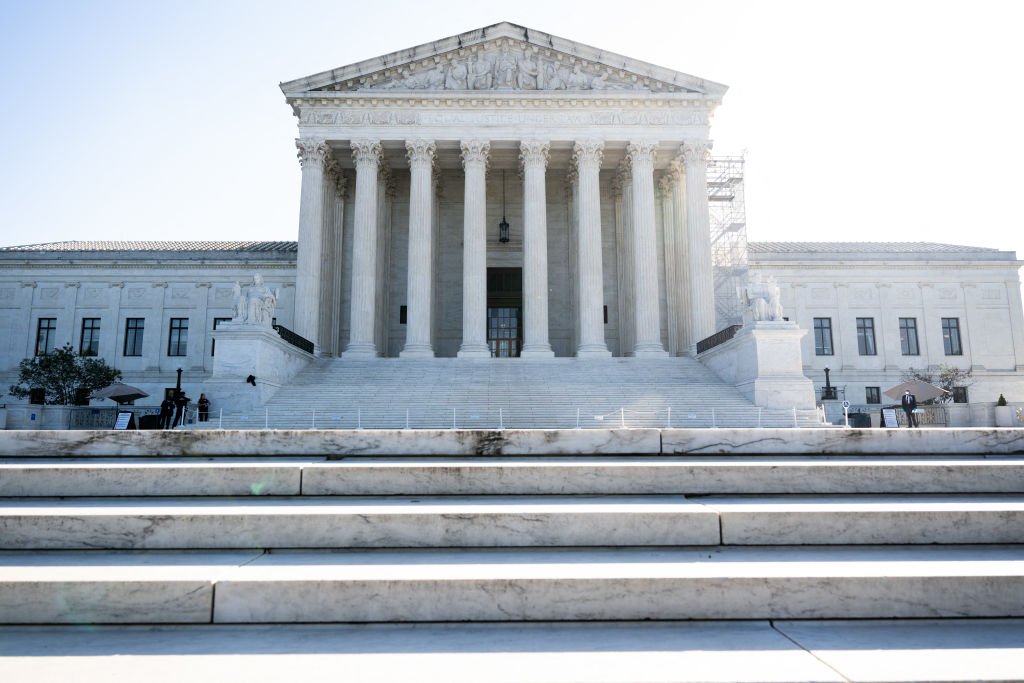
On Jan. 21, the Supreme Court will hear arguments in the case of Lisa Cook, a member of the Federal Reserve’s Board of Governors whom President Donald Trump has attempted to fire based on unproven allegations of mortgage fraud. Although Trump sought to terminate Cook “for cause,” the question of whether the president has the power to fire a governor of the Federal Reserve for any reason at all will likely come up at oral argument.
Indeed, this question was raised in the context of the Federal Trade Commission earlier this month in a dispute over the scope of the president’s power to fire members of that agency. Under federal law, FTC commissioners can only be removed for “inefficiency, neglect of duty, or malfeasance in office” – restrictions that, Trump argues, violate the constitutional separation of powers between the three branches of government because they prevent the president from having complete control over the executive branch. At oral argument, Justice Brett Kavanaugh told U.S. Solicitor General D. John Sauer – the federal government’s top lawyer before the Supreme Court – that he shared “concerns” expressed by Rebecca Slaughter, the FTC commissioner whom Trump fired, about the possibility that the government’s position would also “undermine the independence of the Federal Reserve.”
So where has the court traditionally stood on the issue of the Fed’s independence from presidential control?
The answer is muddled at best – addressed through mere footnotes and with little explanation by the court. One of the early discussions of a special role for the Federal Reserve came – albeit in a slightly different context – in 2018, in a dissent by then-Judge Kavanaugh from a ruling by the full U.S. Court of Appeals for the District of Columbia Circuit in the case of a mortgage lender that had been ordered by the Consumer Financial Protection Bureau to pay $109 million for violations of a federal mortgage law.
A three-judge panel, in an opinion by Kavanaugh, initially ruled in favor of the lender, which challenged both the structure of the CFPB, headed by a single director who could only be removed by the president “for cause,” and the $109 million order.
But the full D.C. Circuit reversed the panel’s ruling on the constitutionality of the CFPB’s structure. Kavanaugh dissented. As part of his dissent, he rejected the CFPB’s assertion that, like the head of the CFPB, the chair of the Federal Reserve cannot be removed from his position as chair by the president at any time. “[E]ven assuming the CFPB’s assertion is correct,” Kavanaugh wrote in a footnote, an exception for the Fed “would simply reflect the unique function of the Federal Reserve Board with respect to monetary policy.”
Two years later, the Federal Reserve surfaced in another opinion, this time in a challenge to the structure of the CFPB that made its way to the Supreme Court. By a vote of 5-4, the court in Seila Law v. CFPB ruled that the CFPB’s leadership by a single director removable only for inefficiency, neglect, or malfeasance violates the separation of powers.
In a dissent joined by Justices Ruth Bader Ginsburg, Stephen Breyer, and Sonia Sotomayor, Justice Elena Kagan argued that federal agencies charged with financial regulation, including the Federal Reserve, the FTC, and now the CFPB, had been “historically given—with this Court’s permission—a measure of independence.” The majority pushed back against that assertion in a footnote, however, writing that “even assuming financial institutions like … the Federal Reserve can claim a special historical status [which was otherwise left unaddressed], the CFPB is in an entirely different league.”
In 2024, Justice Samuel Alito addressed the distinctive role of the Federal Reserve – at least, in his view, with regard to its funding, in CFPB v. Community Financial Services Association of America, in which the majority upheld the constitutionality of the structure used to fund the CFPB. In doing so, Alito, joined by Justice Neil Gorsuch – and again in a footnote – rejected the CFPB’s argument that the Fed “is a close historical analog for the CFPB,” writing instead (with little explanation) that the Fed’s “setup should not be seen as a model for other Government bodies. The Board, which is funded by the earnings of the Federal Reserve Banks, is a unique institution with a unique historical background.”
Fast-forward one year, when the justices were considering the Trump administration’s request to pause a ruling by a federal court in Washington, D.C., that barred the president from firing Cathy Harris and Gwynne Wilcox, members of the Merit Systems Protection Board and the National Labor Relations Board, while their challenges to their firings moved forward in the lower courts. Both officials, as well as a “friend of the court” brief filed by law professors to support them, told the court that allowing the president to fire the officials would call the structure of other independent, multi-member agencies into question as well – including the Federal Reserve. Indeed, the law professors wrote, putting the lower court’s ruling on hold “would immediately call into question the Fed’s independence from the White House, with potentially disastrous consequences for economic and financial stability.”
In its reply brief, the Trump administration countered that Harris and Wilcox had “ignore[d] Seila Law’s observation that the Federal Reserve’s tenure protection presents a distinct question with a unique historical pedigree.”
The majority’s order, issued five weeks later, emphasized that it did not threaten the structure of the Fed. Echoing the language that the Trump administration had used in its brief, it described the Fed as “a uniquely structured, quasi-private entity that follows in the distinct historical tradition of the First and Second Banks of the United States.”
Kagan dissented, in an eight-page opinion joined by Sotomayor and Justice Ketanji Brown Jackson. Kagan noted that the court’s language regarding the Fed was “out of the blue,” though she did “not doubt the majority’s intention to avoid imperiling [it].” But she questioned the majority’s reliance on Seila Law to support what she characterized as “the creation of a bespoke Federal Reserve exception.” Seila Law, Kagan stressed, “provides no support” for such an exception. “Its only relevant sentence rejects an argument made in the dissenting opinion ‘even assuming [that] financial institutions like the Second Bank and Federal Reserve can claim a special historical status.’ And so an assumption made to humor a dissent gets turned into some kind of holding.”
Despite Kagan’s efforts to highlight the tenuousness of the majority’s statement in its Wilcox order, the Trump administration seized on it in its brief on the merits in the FTC case. Citing the Wilcox order and the section of Seila Law on which that order relied, Sauer wrote that the Supreme Court “has described the Federal Reserve System as a ‘uniquely structured, quasi-private entity’ that ‘follows in the distinct historical tradition of the First and Second Banks of the United States.’ If a historical exception to the removal power exists for the Federal Reserve Board—a question the Court need not decide—it would be an agency-specific anomaly based on the Federal Reserve System’s history and ‘unique function’ ‘with respect to monetary policy.’”
In Cook’s case, both sides agree that the constitutionality of the for-cause removal restriction for the members of the Fed’s Board of Governors is not directly before the justices. In the government’s application seeking to pause a lower-court ruling preventing the president from firing Cook, Sauer emphasized that the Supreme Court had “left open whether an exception to the removal power, grounded in history and tradition, allows Congress to restrict the President’s power to remove members of the Federal Reserve Board.”
And on Nov. 19, after the justices had set the case for argument, Cook pushed back – in a footnote – against a suggestion, made in a “friend of the court” brief, that the justices should invalidate the for-cause removal restriction for Fed governors. “That argument is neither presented here nor correct,” she emphasized in an earlier brief – citing the court’s decision in Wilcox, which had “recognized that the Federal Reserve’s ‘unique[] structure[]’ and ‘quasi-private’ status distinguish it from other agencies when assessing ‘the constitutionality of for-cause removal protections.’”
Cases: Seila Law LLC v. Consumer Financial Protection Bureau, Consumer Financial Protection Bureau v. Community Financial Services Association of America, Limited, Trump v. Wilcox, Trump v. Slaughter (Independent Agencies), Trump v. Cook (Independent Agencies), Trump v. Cook
Recommended Citation:
Amy Howe,
The Supreme Court and whether the Fed is special,
SCOTUSblog (Dec. 30, 2025, 9:30 AM),
https://www.scotusblog.com/2025/12/the-supreme-court-and-whether-the-fed-is-special/
