

[ad_1]
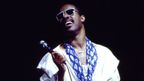
“Big Brother is a very strong protest song,” Gaines tells the BBC. “He says ‘You’ve killed all our leaders… You’ve caused your own country to fail.'” Wonder was describing a US society that responded to the social movements of the 1960s with violence and a series of political assassinations. “He’s clearly questioning the legitimacy of the political order at that time,” says Gaines.
The early 1970s was a disastrous era for African-American activists, with state crackdowns on the Black Panthers and the killing of Black Power leaders in Chicago, and Big Brother reflected those real events. On Wonder’s next album, Innervisions, songs including Higher Ground, Too High, and of course, one of his most influential songs, Living for the City, gave a stark view of the urban landscape. A cinematic story of the 20th-Century black American migration from the rural South to urban North, the song features a spoken word interlude that takes us right on to New York City streets with the roar of a bus and police sirens. It describes how a young black man from Mississippi gets caught up in crime, drugs and the police brutality many urban African Americans faced at the time – and remains relevant into the 21st Century.
A new national holiday
By 1980, with the release of Happy Birthday’s call to action, Wonder was one of the most important musicians in the country, and Dr King’s birthday became a rallying point to codify his activism, says Nelson George. “People were looking at that point to honour King and his movement and the change in America.”
But the America that King was murdered in, in 1968, was different from that of 1980, with civil rights struggles morphing into new challenges like equal opportunity in housing and education. The newly-elected Regan administration was cool on civil rights issues, and Reagan initially spoke out against the idea of a national holiday, resurrecting the old innuendo about King being a subversive communist, just as civil rights opponents in the 1950s had.
“There were people then and probably still now, who just didn’t want a black person to have a national holiday,” George says. Many in the US also balked at the idea of making a holiday for someone who wasn’t a president or a government official, let alone a social activist. “There were a lot of threads working against this happening,” he adds.
[ad_2]
Source link
