

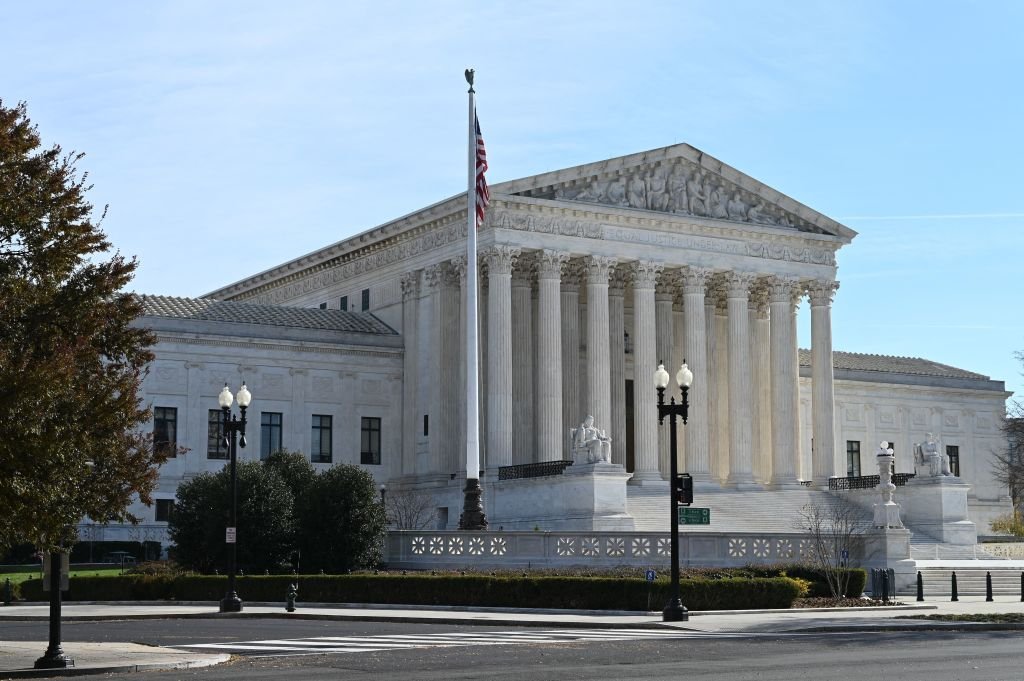
Friday, Jan. 9, was the Supreme Court’s first announced opinion day of the term, and the excitement that typically surrounds that occasion was heightened by rumors that the court would release its ruling on President Donald Trump’s tariffs. It felt as if the eyes of the whole country were on One First Street – well, the Supreme Court’s website – as the clock struck 10 a.m. and the landing page for opinions of the court gained an entry.
But the decision released that morning did not address Trump’s tariffs. Instead, the opinion was in Bowe v. United States, a case from the October argument session on a federal prisoner’s efforts to obtain post-conviction relief. The mood in many offices and homes went from anticipation to confusion as more casual court watchers read updates on a ruling they didn’t expect in a dispute they hadn’t been following.
Although the situation felt unique because of the unusually bright spotlight on the tariffs case, similar situations play out multiple times each year, and they did again on the second (Jan. 14) and third (Jan. 20) opinion days of this term. (The court’s January sitting ended on Jan. 21, and it’s unclear whether there will be any more opinion announcements before the justices next take the bench on Feb. 20.)
Of course, many of the people who follow court news on opinion days are not Supreme Court obsessives. Instead, and understandably, they’re often focused on the highest-profile cases, or at least the ones that stand to impact their life the most, and there thus may be as many as 40 or 50 argued cases they haven’t engaged with at all.
Before I began working at SCOTUSblog, I was one of those court watchers. Although I covered the Supreme Court’s work for my previous employer, my beat was narrowly focused on religious freedom, free speech, and culture war cases. I had a general sense of the range of issues that were before the court each term, but I didn’t spend much time digging into what I thought of as boring disputes over how to interpret obscure laws. And like some of the commenters I now encounter on SCOTUSblog’s X account, I would often think something like, “Wait, the court spent six months debating that?,” when confronted with a particularly dry decision.
But now that I’m part of the SCOTUSblog team, cases I once thought of as boring are a big part of my daily work – and not just because I copy edit most of the stories we publish. I have been assigned to cover some of these cases, meaning I’ve read through all the briefs, written a case preview ahead of oral argument, listened to the argument, and then analyzed what was said. In the process, I’ve stumbled upon all sorts of fascinating details, details that I’m now just as likely to bring up in casual conversation as the latest developments in high-profile disputes (to my husband’s chagrin).
Perhaps more importantly, I’ve come to understand that each case is significant to someone (and usually many, many someones). When the Supreme Court resolves a conflict over the meaning of a statute, the proper venue for a legal challenge, or how broadly one of its past rulings should apply, people can better advocate for their interests, whether those interests center on the future of their family, company, or religious institution.
Take, for example, United States Postal Service v. Konan. This case centers on a seemingly arcane question of statutory interpretation: how to interpret the words “loss” and “miscarriage” in the portion of the Federal Tort Claims Act that deals with suing the government over misdelivered mail. As a result, the briefs feature a lengthy discussion of the structure and purpose of the FTCA. Boring, right?
Not by a long shot if you dig into the story behind the case. The legal question arose out of a dispute between a Texas landlady and the mail carriers serving two of her rental properties. According to the landlady, Lebene Konan, the postal workers repeatedly refused to deliver mail to the properties and insisted that she prove her identity at the post office in order to pick it up. But when she would attempt to do so, Konan would sometimes discover that the mail had been returned to sender. She estimates that she filed more than 50(!) administrative complaints before suing the mail carriers, U.S. Postal Service, and federal government for, among other things, race-based discrimination and emotional distress.
This story is both relatable and horrifying. We’ve all cursed the post office for losing or damaging a package or letter, but I doubt more than a handful of us have experienced the kind of months-long, maddening feud that Konan described. And in fact, the difference between those two experiences plays a significant role in the case, because the justices are considering whether allowing for suits like Konan’s over the latter type of mail-delivery issue would open the floodgates to thousands of suits over the former type. In other words, would a win for Konan give someone with a single missing Christmas card the freedom to sue?
But perhaps the presence of mail drama in all of our lives means that I should have never thought of USPS v. Konan as boring. A better example might be Montgomery v. Caribe Transport II, LLC, a case on whether a federal statute on intrastate transportation prevents state-level claims against shipment brokers for “negligently selecting” a dangerous driver or motor carrier company. Sounds exciting, I know. But the actual events underlying the case are quite serious: It was brought to the court by Shawn Montgomery, who was severely injured in an accident involving a freight truck and who contends that he has a right to sue not just the truck driver, but also the broker that arranged the delivery.
The court’s eventual ruling could hold consequences for anyone who travels by car or bus, because it will determine in what ways parties can be held accountable after an accident and how much money an injured party could potentially receive.
Or consider Coney Island Auto Parts Unlimited, Inc. v. Burton, a case on whether the “reasonable-time standard” in Federal Rule of Civil Procedure 60(c)(1) applies to motions to vacate a judgment as void.
Reasonable-time standard? Void Judgments? Not necessarily thrilling stuff. But here, as in Konan, the story behind the case makes the debate more intriguing.
The case arose amid bankruptcy proceedings for a business in Tennessee. Because it owed the business money, Coney Island Auto Parts became the subject of a separate lawsuit aimed at collecting outstanding payments. When Coney Island didn’t respond to that separate lawsuit, a Tennessee bankruptcy court issued a default judgment against it, ordering the company to pay around $50,000. Jeanne Burton, the trustee for the business going through bankruptcy, then spent five years trying to get Coney Island to respond to that judgment. It eventually did respond – with legal action, not with a check. Coney Island contended that notice of the original complaint was served incorrectly and that, as a result, the Tennessee bankruptcy court’s judgment against it was void.
The question in front of the Supreme Court was whether Coney Island waited too long to raise that concern. On Tuesday, Jan. 20, the court unanimously ruled that it did. This certainly wasn’t a glamorous case, but it reflects on much larger themes, including the unpredictability of the legal system and just how significant a small procedural error can become. Who could have guessed that an effort to resolve an outstanding bill would take 11 years and Supreme Court intervention?
Additionally, as a few justices noted during oral argument, this case could have consequences for people across the country, particularly those who may not know enough about the law to realize when to take a legal document seriously. The dispute won’t seem very boring if you’re the one in need of more time to challenge a default judgment.
To put it simply: I think most – and maybe even all – boring Supreme Court cases cease to be boring once you spend enough time with them. There’s always something unexpected or intriguing to uncover in the case history or related precedents. But, more importantly, there’s often more at stake in the dispute than it may, at first, appear. After all, the court turns down thousands of cases each term while only hearing argument in around 60. The justices chose the ones that made it to the oral argument docket for a reason, even if that reason isn’t obvious from the initial description of a decision in a seemingly boring case.
All that said, yes, I would really like the court to release its tariffs decision soon.
Cases: Montgomery v. Caribe Transport II, LLC, United States Postal Service v. Konan, Bowe v. United States, Coney Island Auto Parts Unlimited, Inc. v. Burton
Recommended Citation:
Kelsey Dallas,
The case for embracing “boring” cases,
SCOTUSblog (Jan. 27, 2026, 9:30 AM),
https://www.scotusblog.com/2026/01/the-case-for-embracing-boring-cases/
