

[ad_1]
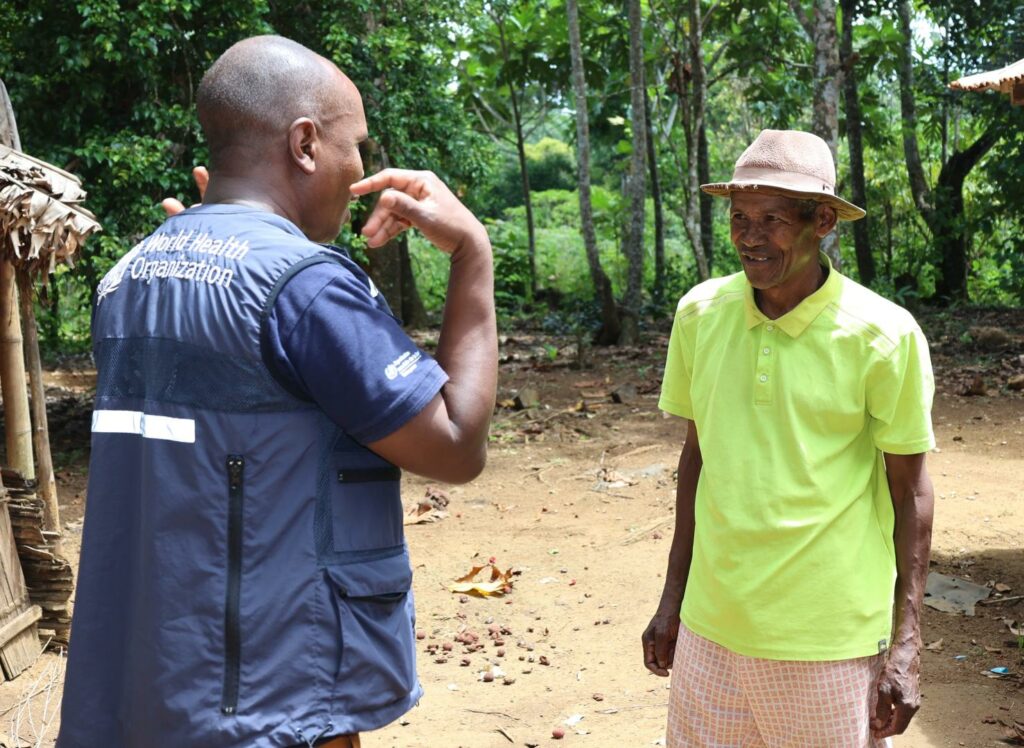
Geneva, Switzerland, 30 January 2026-/African Media Agency(AMA)/-Julien Ranjaivonirina, a 63‑year‑old farmer living in the Fitovinany region, smiles as he reflects on his journey. Standing in front of his wooden house, he recounts how the hydrocele he had for several years limited his movements and prevented him from working as he wished. Today, after receiving care, he is gradually regaining his pace and daily activities. “It feels like I’ve been given a second life; I can finally resume my days as before.”
For many people in Madagascar, lymphatic filariasis remains a difficult disease to live with on a daily basis. Transmitted by mosquitoes, it disrupts the circulation of lymph and can cause persistent swelling known as lymphedema. In severe cases, the swelling can become severe and the skin may thicken. This advanced form is commonly known as elephantiasis. In some men, as in Julien’s case, the disease leads to hydrocele—a swelling of the scrotum caused by liquid accumulation. This condition can be extremely debilitating and lead to complications, making simple daily tasks challenging.
Despite major progress, lymphatic filariasis is still present in several regions of the country. In recent years, the number of endemic districts has significantly declined, from 96 between 2018 and 2020 to 87 in 2023, four of which are now in the post‑treatment phase. The 2023 national survey recorded 15 303 cases of lymphoedema and 14 069 cases of hydrocele. In the Fitovinany region, where Julien lives, the situation remains notable: in Manakara Atsimo, 2922 cases of lymphoedema were reported, while Vohipeno and Ikongo each still count several hundred cases. These figures illustrate the ongoing burden of the disease on families and rural communities, who already face numerous challenges.
To address these persistent issues, strengthening the health system and providing technical support remain essential. Since 2023, the World Health Organization (WHO) has been working closely with the Ministry of Public Health to accelerate progress against lymphatic filariasis. This support is built on two pillars: interrupting transmission through mass drug administration and managing people already affected, particularly those living with lymphoedema and hydrocele. Thanks to this collaboration, Madagascar achieved full national coverage for the first time in 2023, followed by surveys to assess the effectiveness of interventions. In 2025, patient care was strengthened in 17 districts through additional training, supplies and follow‑up.
As part of this effort, WHO helped strengthen medical capacities by training 348 health professionals between September and December 2025, including 17 surgeons specialized in hydrocele management. These training sessions improved the quality of surgical procedures, enhanced patient safety and expanded access to specialized care in the most affected regions. In total, 61 people received surgery related to lymphatic filariasis in October 2025 in the districts of Tamatave (22 patients) and Manakara (39 patients).
Dr Yvette Ramanantsoa, head of neglected tropical diseases (NTDs) at the Regional Directorate of Public Health in Fitovinany, highlights the importance of the response. “The fight against elephantiasis is an investment in human dignity and development. Elimination is possible, but it requires collective and sustained commitment.”
On the ground, this commitment translates into concrete actions: regular campaigns, community mobilization, active screening and free surgical interventions. Community health workers walk long distances to inform, reassure and guide patients, helping reduce stigma and improving access to care.
For WHO, the vision is equally clear. “It is together, hand in hand with the ministry and communities, that we move forward so that no one has to suffer in silence,” says Dr Patricia Rasoamihanta‑Martin, NTD programme lead at the WHO office in Madagascar. She emphasizes that beyond treatment, success depends on active community participation. “Given the severe consequences of this disease, particularly in rural areas, it is essential for everyone to understand the importance of prevention, participation in treatment campaigns and access to care. Community engagement and the sustained commitment of all actors are indispensable.”
Looking ahead, the next step is to continue progressing toward the elimination of lymphatic filariasis by 2030, consolidating achievements and ensuring their sustainability within the health system.
Progress is particularly visible among surgical teams. Thanks to WHO‑supported training, surgeons are seeing immediate benefits for patients. At the Regional Hospital Centre of Mananjary, Dr Rynah Rakotomamonjy, involved in patient care since 2008, explains that these sessions have improved surgical techniques, reduced complications and ensured smoother recovery. “After the operation, many express a sense of liberation; they feel they can live a more normal life again, without shame, and it feels like a fresh start.”
In Manakara, Dr Mampionondray Razafindratovonimanana, head of the surgery department, shares similar observations. He describes sometimes complex cases but notes significant improvements: reduced swelling, restored mobility, return to work and decreased stigma.
These advances directly transform the lives of affected individuals. Behind each intervention are personal journeys marked by waiting, doubt and hope of regaining a normal life. And it is in the villages that the impact of these surgical procedures becomes most visible: where patients regain autonomy, confidence and the ability to resume activities they had long abandoned.
In a nearby village in Fitovinany, 60‑year‑old Victor Ratovonirina provides a powerful example of the long path many patients must take before receiving care. Also a farmer, he explains that he lived with the disease for nearly ten years, initially believing it was linked to an injury sustained during a football match. Gradually, he lost strength and mobility and the disease eventually affected his social life and ability to work. Informed at the health centre that treatment was available, he registered and later underwent free surgery. “This operation changed my life: I feel relieved, I’m regaining my strength and I can look forward to returning to the fields,” he says.
For Julien too, the change is profound. Before his surgery, he struggled to work and felt diminished. After finally receiving the care he needed, he enjoys a simpler, lighter daily life. Sitting on a bench surrounded by his family, his gaze fixed on his field— a symbol of his restored routine—he confides: “Now I feel reborn, and I’m confident that tomorrow will be even better.” For the communities of Fitovinany and beyond, hope is no longer a distant promise: it now takes the form of transformed lives, regained abilities and restored dignity.
Distributed by African Media Agency (AMA) on behalf of Word Health Organisation
The post Fighting lymphatic filariasis in Madagascar: Lives transformed and hope restored appeared first on African Media Agency.
[ad_2]
Source link
