

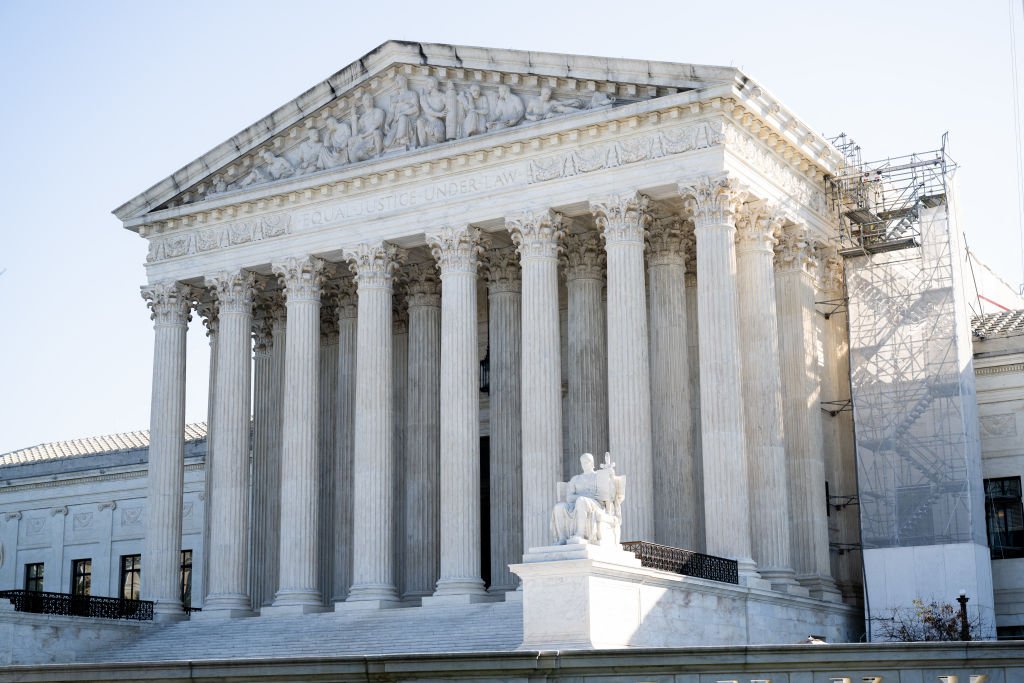
Last week, the Supreme Court issued a one-sentence order that cleared the way for California to use a new congressional map intended to add five Democratic seats in the U.S. House of Representatives. The California map was a response to Texas’ adoption of a new map that created five House seats favorable to Republicans. The justices in December had allowed Texas to use its new map.
Both cases came to the court on its “interim” docket, so that the court’s rulings merely granted or denied requests for preliminary relief while the challenges to the map continue. But both cases also illustrate an important, and often underappreciated, aspect of this docket: even if the rulings are theoretically only temporary, they can have lasting, if not permanent, consequences. The following is not exhaustive, but I explore below some other cases that, although on the interim docket, have had such effects.
Temporary Protected Status
One stark example of this can be seen in the Trump administration’s efforts to end protected status for hundreds of thousands of Venezuelan nationals under federal immigration law. Under a program known as Temporary Protected Status, the Department of Homeland Security can designate a country’s citizens as eligible to remain in the United States and work when they cannot return to their home country because of a natural disaster, armed conflict, or other “extraordinary and temporary conditions” there.
In 2021, then-DHS secretary Alejandro Mayorkas designated Venezuela under the TPS program and then redesignated it in 2023. In 2025, shortly before leaving office, he announced that the program would be extended through October 2026.
In February 2025, the new DHS secretary, Kristi Noem, terminated both Mayorkas’ 2023 designation of Venezuela and his 2025 extension of the program. A group representing TPS holders and several individual Venezuelan TPS holders went to federal court in San Francisco, where U.S. District Judge Edward Chen first issued a preliminary order barring the Trump administration from ending the TPS designation and its extension and, on Sept. 5, a final judgment concluding that Noem’s revocation of TPS for Venezuela violated the federal law governing administrative agencies. But the Supreme Court twice paused Chen’s rulings, giving the Trump administration the green light to move forward with stripping Venezuelan nationals of protected status while the litigation continues.
As the U.S. Court of Appeals for the 9th Circuit observed in a Jan. 28 decision that upheld Chen’s Sept. 5 ruling, Noem’s actions “have had real and significant consequences for the hundreds of thousands of Venezuelans” who were in the United States under the TPS program. A declaration filed with the district court in July 2025 by Emilia Garcia, an investigator for the ACLU, which represents the challengers, recounted stories of several Venezuelans with TPS who had been deported after the Supreme Court’s initial order in May 2025 pausing Chen’s ruling.
Ahilan Arulanantham, a UCLA law professor who also represents the Venezuelan TPS holders, said that although it is difficult to know precisely how many TPS holders have been detained and deported since the court’s decisions on the interim docket, the number was likely “at least in the hundreds” and “probably in the thousands.” And because the TPS program only applies to people who are already in the United States, without providing legal permission to enter the United States, TPS holders who have already been deported are unlikely to be able to return even if Noem’s termination of the program were ultimately struck down.
Transgender people in the military
A May 6, 2025, order by the Supreme Court that allowed the Trump administration to begin enforcing a Department of Defense policy prohibiting transgender people from serving in the U.S. military provides another example. The court’s order came less than four months after President Donald Trump revoked a 2021 executive order that allowed transgender troops to serve openly in the military. On Feb. 26, 2025, the Department of Defense issued a new policy that generally disqualified anyone with gender dysphoria, which is the medical term for the psychological distress caused by a conflict between someone’s biological sex at birth and that person’s gender identity, from military service.
Several transgender members of the military and a nonprofit with members who either are transgender troops or would like to be went to federal court in Washington state to challenge the new policy. U.S. District Judge Benjamin Settle agreed with them that the ban violated (among other things) the Constitution’s guarantee of equal protection.
After the 9th Circuit rejected the government’s request to freeze Settle’s order while the government’s appeal went forward, the Trump administration came to the Supreme Court on April 24, asking the justices to intervene. Approximately two weeks later, with the court’s three Democratic appointees indicating that they would have denied the request, the court paused Settle’s order while the litigation continued.
The 9th Circuit heard arguments in October 2025 on the government’s appeal of the preliminary injunction that Settle issued last year, but it has not yet issued its decision. And back in the district court, Settle set a four-day bench trial for Nov. 3 of this year.
But in the wake of the Supreme Court’s ruling in May, the Department of Defense moved forward with the process of separating transgender service members from the military. The lead plaintiff in the case, Cdr. Emily Shilling, was a naval aviator for nearly two decades and would have been eligible for retirement in September 2025. She told ABC News that, “under duress,” she began to voluntarily separate from the Navy. “You know, I was coerced into it,” she said, “because … the voluntary separation would give me an honorable discharge with some portion of my retirement, and I’d be able to keep all of my benefits.”
In a separate case pending in the U.S. Court of Appeals for the District of Columbia Circuit, lawyers representing the challengers told the court in a letter late last month that “many transgender servicemembers … have undergone the so-called ‘voluntary separation’ process or early retirement process under the Hegseth Policy and been discharged from military service.”
The National Guard
On Dec. 23, 2025, the Supreme Court turned down a request from the Trump administration to pause a ruling by a federal judge in Chicago that barred the government from deploying National Guard troops in Illinois. The order – which came over the objections of three of the court’s Republican appointees (Justices Clarence Thomas, Samuel Alito, and Neil Gorsuch) – meant that an Oct. 9, 2025, temporary restraining order issued by Judge April Perry would remain in place while litigation continued. But here too the court’s “temporary” order had broader effects: on Dec. 31, Trump indicated that he would remove National Guard troops from Los Angeles and end his efforts to deploy troops in Chicago and Portland. (By most accounts he has done so.)
Temporary relief?
When the court is considering whether to grant temporary relief, one factor that it considers is whether the litigant seeking that relief is ultimately likely to prevail on the merits of the dispute. If that’s true, some may ask, wouldn’t these consequences occur eventually anyway?
Not necessarily. You don’t have to look far to find cases in which the Supreme Court reached one result at a preliminary stage but then reached the opposite result after additional briefing and oral arguments. In Allen v. Milligan, for example, the court allowed Alabama to use a new congressional map in the 2022 elections despite a lower court’s finding that the map likely violated the federal Voting Rights Act. Republicans went on to win six of the state’s seven House seats in November 2022.
But in June 2023, by a vote of 5-4, the court reversed course and agreed with the lower court that the new map likely did violate the Voting Rights Act. That led to the adoption of a new map, in which Democrats picked up an additional House seat in the 2024 elections.
Also in 2022, the Supreme Court turned down the Biden administration’s request to pause a ruling by a federal district court in Texas that invalidated a new federal policy that prioritized certain groups of unauthorized immigrants for arrest and deportation. The justices heard oral arguments in the dispute four months later; seven months after that, they ruled that Texas and Louisiana, the two states that brought the lawsuit, did not have a legal right to sue, known as standing, to challenge the policy in the first place.
To be sure, not all of the court’s orders on the interim docket necessarily have lasting repercussions. Just a few days before the court declined to block the order barring the Trump administration from deploying National Guard troops to Illinois, it also refused to intervene in a dispute over a policy restricting speaking engagements by immigration judges. And in September, it turned down a request from a South Carolina school district to pause a federal appeals court ruling that required the district to allow a transgender boy to use the boys’ bathroom while litigation over the state’s bathroom policy continued. But as the TPS, transgender military, and National Guard cases illustrate, sometimes the effects of the court’s orders on the interim docket can be profoundly significant.
Cases: Allen v. Milligan, United States v. Texas, United States v. Texas, United States v. Shilling, Noem v. National TPS Alliance, South Carolina v. Doe, Noem v. National TPS Alliance, Trump v. Illinois, Margolin v. National Association of Immigration Judges, Tangipa v. Newsom
Recommended Citation:
Amy Howe,
An interim docket with long-term effects,
SCOTUSblog (Feb. 10, 2026, 9:30 AM),
https://www.scotusblog.com/2026/02/an-interim-docket-with-long-term-effects/
