


As an attorney, I’m trained to be suspicious of narratives, allergic to absolutes. I’m contractually obligated to ask, “Who consented?” and answer, “It depends.” That makes watching Neighborhood Watch on HBO Max a unique experience.
At its core, Neighborhood Watch is an America’s Funniest Home Videos retread—funny things happen on household cameras and people share the videos. But unlike the ABC show that’s been on the air for more than 35 years and was once hosted by Bob Saget, there’s no studio audience selecting a winner.
Also, the series raises some questions about what happens when ordinary neighborhoods become extraordinary data farms.
Unlike the film-focused entries I’ve previously written about, built almost entirely from body and dash cams strapped to the state—Neighborhood Watch shifts the gaze outward, toward privately owned cameras and the blurry legal conundrum that they can create.
Ultimately, the series doesn’t tread too much new ground aside from the vantage point. What it does, however, is spotlight the fact that cameras aren’t just watching suspects anymore. They’re watching us. By our own agreement.
And as a lawyer, I can assure you: Most folks didn’t read the terms and conditions.
Body cams, dash cams and the comfort of official narratives
A traditional body cam–centric true crime has a certain reassuring structure. There’s a badge, a policy manual and at least the theoretical promise of accountability. Dash cams, likewise, give us a linear story: ignition on, lights flashing, incident resolved. Or litigated.
Neighborhood Watch doesn’t provide that perspective. It doesn’t offer the types of video evidence and formal footage that we’re used to seeing in criminal investigations. In fact, the videos showcases aren’t tied to criminal investigations at all.
You might ask: “So why are you writing about this, Adam?”
Because I’ve been in this business long enough to know that the footage that it shows could become evidence in the wrong context. Remember, this series is slapstick; it focuses on cheap laughs and physical comedy at the expense of person and property. Plenty of pecuniary loss and potential punishment can stem from what initially seem like mere negligence, depending on state of mind and intoxication.
In fact, there’s one entire episode devoted to potential disasters entitled, “The Perils of Parenting.” Sure, the presumption is that none of the children in the videos were actually harmed, but there are quite a few concerning close calls. Flash-forward to a worst-case scenario where that same child is actually harmed, and your entire home video surveillance system becomes fodder for a state-issued subpoena.
That’s where my concern compounds. As someone who’s devoted their to life protecting our privacy from unreasonable governmental encroachment, I fear that we’re losing the battle by our own accord.
The rise of surveillance cameras and the myth of ‘passive’ surveillance
After all, why would we invite so much scrutiny into our homes when we have already agreed, or at least acquiesced to, near constant surveillance outside of them?
Take license plate readers, including systems operated by companies like Flock Safety, for example. These cameras, which capture vehicles and liscense plates in real time, promise safety through a faulty premise: They don’t watch people, they just collect data. I can assure you, while that may be the intention, it’s far from the application.
The proliferation of these systems raises a familiar constitutional question dressed up in modern tech language: At what point does convenience become consent, and when does consent become coercion?
I can’t even begin to count how many cases I’ve had over the last few years that start with law enforcement questioning a motorist about their recent travel history, only to end with an arrest once the relevant tracking information reveals an inconsistency. Many of those situations happen while agents access camera databases in real time during “consensual conversations” with motorists, who are ordered into law enforcement vehicles against their will after a minor traffic infraction.
For those who think that Flock Safety and others are solely focused on insurance enforcement or some other less intrusive function, just look at Flock Safety’s website. The company’s homepage is replete with calls to action far beyond remedial enforcement measures. With headings such as, “Stop Crime in Real Time,” “Beat the Clock, Every Call” and “Solving More Homicides,” it’s clear that the focus is assisting all government investigations in any way possible.
To be fair, while Neighborhood Watch doesn’t scream “government overreach,” it does at least whisper it if you’re willing to listen. After all, the implication is obvious. The series documents how society continues to grant immunity—legal, moral and psychological&mdashto systems designed to record our day-to-day existence.
Once installed and normalized, though, these tools rapidly move from optional safeguard to expected infrastructure. Once that happens, questioning them starts to sound suspicious to the uninformed or the uninvested, almost like a healthy dose of skepticism is shamed into opposing safety itself.
When we stop questioning the things that threaten our freedom, though, we acquiesce to invisible chains.
Porch footage and Nancy Guthrie’s case
The series lands differently in light of recent news surrounding porch-camera footage in the investigation involving Nancy Guthrie. The mother of journalist Savannah Guthrie went missing from her Arizona home in February, and footage from her front door has been released to the public.
Regardless of where that investigation ultimately lands, the reporting underscored something that Neighborhood Watch makes painfully clear: Home cameras and doorbell systems are no longer “passive” accessories. They are witnesses.
What was once a private threshold—the front porch, the driveway, the sidewalk just beyond your mailbox—is now a high-definition archive. Doorbell cameras don’t just capture crime; they capture habits, routines, visitors and moments never intended for public consumption.
There is a trade-off, of course. These systems can and do provide safety, clarity and sometimes justice. But the closer the cameras get to our doors, the more likely we are to let them inside our homes.
Neighborhood Watch isn’t staged to ask the natural follow-up question most of us avoid, so I will: Who controls that footage and for how long?
The verdict?
The show distinguishes itself from other footage-focused series by refusing to anchor its authority to a living, breathing operator. I doubt its creators ever intended the privacy rights ideation I’ve engaged in. Nevertheless, the show presents home security as a shared societal project—one that we’re all funding, feeding and normalizing, often without realizing it.
For your average viewer, it’s silly fun. For lawyers and anyone suspicious of state surveillance, it’s one more gallon of grease poured on the slippery slope.
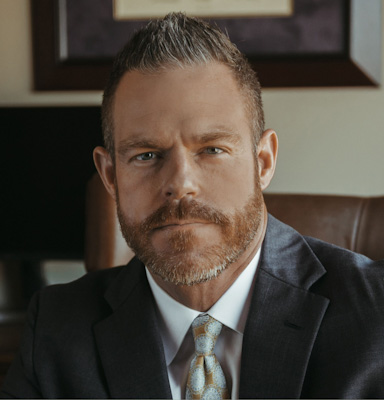
Adam Banner
Adam R. Banner is the founder and lead attorney of the Oklahoma Legal Group, a criminal defense law firm in Oklahoma City. His practice focuses solely on state and federal criminal defense. He represents the accused against allegations of sex crimes, violent crimes, drug crimes and white-collar crimes.
The study of law isn’t for everyone, yet its practice and procedure seem to permeate pop culture at an increasing rate. This column is about the intersection of law and pop culture in an attempt to separate the real from the ridiculous.
