

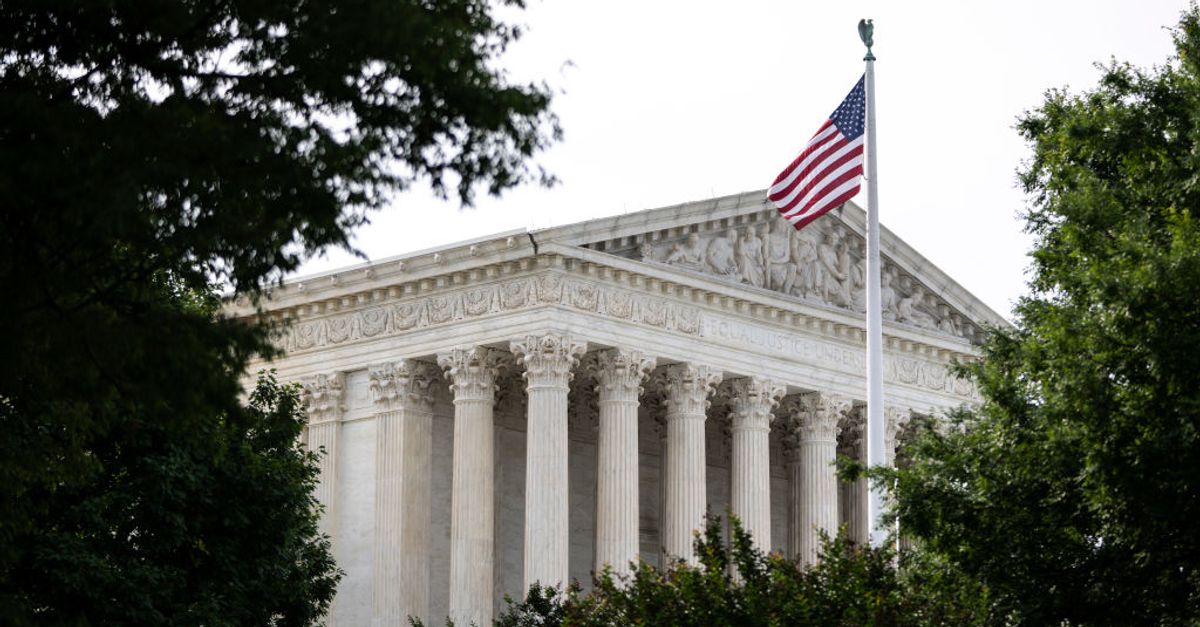

Thursday morning brought the first three decisions from the April argument session, with two of the three being unanimous. The first of those was Sripetch v SEC, which did just what the argument suggested it would, validate the SEC’s ability to use “disgorgement” to force a wrongdoer to turn over its profits to the government without showing harm caused to the wrongdoer’s customers.
Sripetch is a case for which context is crucial, as the case is the third in a closely related series of disputes considering the SEC’s use of disgorgement. This led Justice Neil Gorsuch, writing for a unanimous court, to start his opinion with a lengthy summary of that context. As he sees it, “[t]he SEC’s disgorgement powers have a long and nuanced history.” The first steps toward the modern usage of those powers, in his recitation, began “in the 1970’s, [when] the SEC persuaded lower courts to order those who had violated federal securities laws to disgorge their unlawfully earned gains” not under any particular statute, but rather “as an exercise of the courts’ inherent equity power to grant relief.”
That was not problematic when the remedy was limited to providing “‘restitution’ to victims,” but eventually “the SEC began routinely seeking and obtaining disgorgement awards that went … ‘to the United States Treasury’” rather than the victims, and that, “often ‘exceeded the profits’ the defendant had ‘gained as a result of [the] violation.’” As Gorsuch recounts, the Supreme Court’s decisions in Kokesh v. SEC (in 2017) and Liu v. SEC (in 2020) reined in those practices. Although Kokesh involved a relatively narrow procedural matter, Liu sharply constrained the SEC’s use of disgorgement. The Liu court did, as Gorsuch acknowledges, accept the SEC’s argument that a statute authorizing it to seek “equitable relief” “encompass[es] a disgorgement remedy.” But Liu also imposed what Gorsuch describes as “some key limitations on the disgorgement remedy.” The first, as he summarizes it, held “that any remedy must be limited to the defendant’s net profits (not total revenues) derived from his securities-law violations.” The second “concluded that any amounts the SEC secures must be ‘awarded for victims’” rather than the general federal Treasury.
Against that backdrop, Gorsuch turned to this case, which involves what he describes as “classic ‘pump and dump’ operations in which … Sripetch … obtained shares of penny-stock companies, promoted the companies to others, watched the share price rise, and then promptly sold.” In the lower courts, the litigation fell into a dispute whether it was enough for the SEC to prevail to quantify Sripetch’s profits – so that it could recover those profits – or if it also had to demonstrate the specific “pecuniary loss” that particular investors incurred. As Gorsuch explains, “the parties spill much ink debating” whether the current statute (amended since Liu) codifies or removes the equitable constraints the court discerned in Liu.
Gorsuch concludes that “we need not resolve that dispute” to decide Sripetch because the remedy the SEC seeks conforms to those constraints. As he sees it, the only question the court took this case was to resolve “whether the SEC must show that an investor suffered a pecuniary loss before it may secure a disgorgement remedy” under the relevant statutes. On that question, Gorsuch explains, the justices “conclude that a showing of pecuniary loss is not required.” He explains that result by reference to “traditional equitable principles associated with disgorgement.” Under those principles, “courts sitting in equity have long issued remedies designed to ‘deprive wrongdoers of their net profits from unlawful activity,’” conditioned only on “a showing that the defendant interfered with the plaintiff’s legally protected rights.” Recognizing that the remedy historically “ha[d] varying forms,” Gorsuch focuses on “one common feature” they shared: “Generally, the final award … is not measured by the [victim’s] loss but by the defendant’s gain attributable to his wrongdoing.” Quoting from the Restatement of Restitution, Gorsuch emphasizes that “the point of the remedy is for ‘the defendant to give the plaintiff the amount by which he has been enriched’ … not to compensate the plaintiff for a financial loss.”
Gorsuch offers, “[b]y way of illustration,” an example from a 1940’s dispute involving a coal mine. As he describes it, “a company had acquired the right to mine coal from a tract of land, part of which was owned by the plaintiff. Along with that right, the company also received an easement to cross the land, but only ‘for the purpose of … securing the coal from the tract in question.’” When “the company also used [the easement] to transport coal from other tracts of land,” a court “award[ed] the plaintiff $500 … because it represented ‘a fair value of the benefits’ the company unjustly received.” That was appropriate, the court concluded, even though the plaintiff “admitted that he had suffered no [substantial damage].” Gorsuch’s summary ties that ruling directly to this case: “In other words, the plaintiff whose legally protected interest had been invaded was entitled to the defendant’s gain from that wrongful conduct even without showing pecuniary loss.” Thus, he concludes, “[w]hatever else traditional equitable principles demand, they do not require a showing of pecuniary loss before a court may issue an award of unjust profits.”
It is hard to say how important Sripetch will be to the SEC’s enforcement activity, as the last few pages of Gorsuch’s opinion reject most of Sripetch’s arguments with the refrain that they are not yet before the court. He emphasizes, for example, that the case does not authorize the SEC “to depart from traditional equitable principles and attempt to use [the new statute] to secure penalties,” as opposed to disgorgement, a course that “would raise questions about whether [the new statute] permits deviation from equitable principles.” He also notes the problem that any deviation from those principles might “entitl[e] the defendant to a jury trial,” a possibility that sparks a separate opinion by Justice Clarence Thomas, emphatically supporting that conclusion.
The SEC surely will be relieved at this break in what has been a string of losses about disgorgement in the Supreme Court. I think it is quite likely, though, that there will be yet another chapter in the Supreme Court’s examination of the area, and that it will not be long in coming.

