

Expert SpeakRaisina Debates
Published on Aug 05, 2025
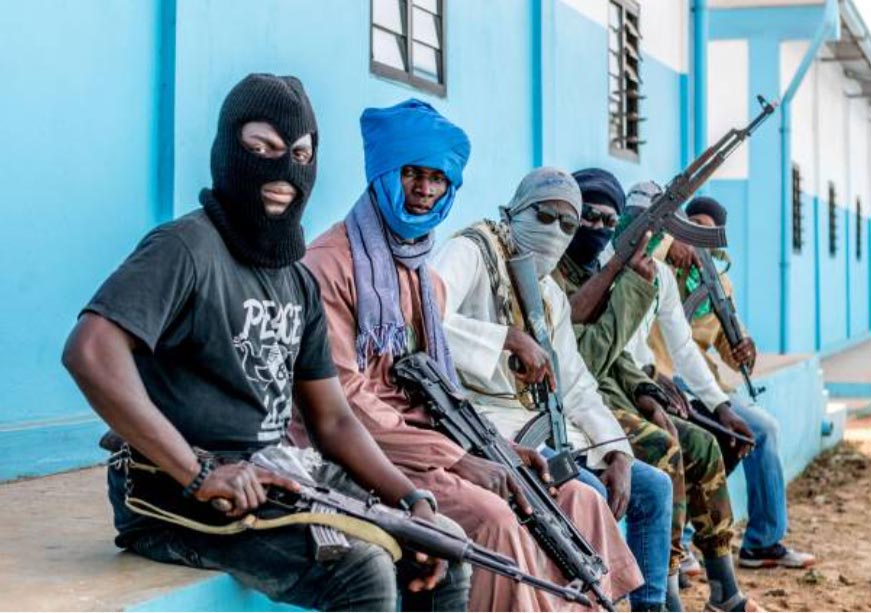
Jihadist groups have entrenched and expanded across sub-Saharan Africa, transforming the region into the deadliest and most dynamic theatre of global terrorism amid waning international counterterrorism efforts
Image
As of 2025, the African continent remains the principal theatre of global jihadist activity, as it has for the past several years. Throughout sub-Saharan Africa, violent extremists are sustaining operational momentum across key conflict zones — from the Sahel and Lake Chad Basin to Somalia and northern Mozambique. According to recent data from the Global Terrorism Index (GTI), over half of all terrorism-related deaths worldwide now occur in sub-Saharan Africa, with the Sahel region alone accounting for an astonishing 51 percent of these fatalities in 2024.
Groups affiliated with the Islamic State and al-Qaeda are continuing their territorial and strategic advance –– taking advantage of governance gaps and weak security forces to push into littoral West African states such as Benin and Togo, where they are consolidating cross-border economic networks to facilitate future incursions. At the same time, jihadists are entrenching their fighters in traditional strongholds, including Mali, Burkina Faso, and northern Mozambique.
According to recent data from the Global Terrorism Index (GTI), over half of all terrorism-related deaths worldwide now occur in sub-Saharan Africa, with the Sahel region alone accounting for an astonishing 51 percent of these fatalities in 2024
The operational landscape is becoming increasingly sophisticated: jihadist actors are leveraging unmanned aerial systems (UAS), transnational smuggling networks, and illicit resource extraction to finance their campaigns. Concurrently, deliberate attacks on civilian populations and targeted governance disruption remain at the core of a strategy to destabilise already fragile states and advance jihadi proto-statebuilding. The pace and scale of violence show no signs of abating, as militant groups exploit structural vulnerabilities and grievances among the populace to recruit and radicalise them. The result is a pan-African threat landscape that is more diffuse, more adaptive, and more lethal than at any point in the past decade. Notably, this is occurring against a backdrop of waning global counterterrorism resources and efforts.
West Africa’s vast semi-arid Sahel region — encompassing Mali, Burkina Faso, Niger, Chad, and Mauritania — has become the most lethal theatre of jihadist activity globally, a trend compounded in recent years by the region’s rapidly evolving security architecture. Jama’at Nusrat al-Islam wal-Muslimin (JNIM), al-Qaeda’s Sahel affiliate, and the Islamic State Sahel Province (ISSP, formerly ISGS) remain the primary jihadist threats in the region, accelerating their territorial expansion toward littoral West Africa. JNIM has entrenched its position as the deadliest terrorist group in the Sahel, escalating attacks across Burkina Faso, Mali, and Niger, while making inroads into Benin, Ghana, and Togo — countries that had largely avoided jihadist violence until now. In the first half of 2025, JNIM claimed to have carried out at least 280 attacks in Burkina Faso — double the number recorded during the same period in 2024 — and was responsible for approximately 8,800 fatalities across the Sahel that year, an estimate based on ACLED data. In the last week of July 2025, an assault on a military base in Dargo, northern Burkina Faso, claimed the lives of at least 50 military personnel.
JNIM has accelerated its operational reach and sophistication, using improvised explosive devices (IEDs) and unmanned aerial systems such as drones, to conduct coordinated assaults that continue to overwhelm junta-led security forces. This was demonstrated by its recent July 2025 offensive on seven military sites in western Mali, including the group’s first-ever attack on Kayes — a western economic hub that offers access to both lucrative formal and informal economic industries, as well as strategic routes to coastal states like Mauritania and Senegal. The group is shifting from rural disruption tactics to encirclement strategies targeting urban population centres, advancing its objective of building shadow governance structures and accelerating state collapse. This threat has intensified in the wake of successive coups, which have weakened cross-border security mechanisms, eroded regional diplomatic cooperation, and triggered the withdrawal of key international actors — including French and US forces — from junta-led states.Russian mercenaries deployed to prop up junta regimes have embarked upon scorched earth counterinsurgency campaigns, exacerbating, not ameliorating, the threat posed by jihadists. Meanwhile, growing anti-imperial sentiment, amplified by Russian, Iranian, and Chinese influence campaigns, continues to complicate the regional security landscape and facilitate endeavours to undermine the state.
Russian mercenaries deployed to prop up junta regimes have embarked upon scorched earth counterinsurgency campaigns, exacerbating, not ameliorating, the threat posed by jihadists. Meanwhile, growing anti-imperial sentiment, amplified by Russian, Iranian, and Chinese influence campaigns, continues to complicate the regional security landscape and facilitate endeavours to undermine the state
Beyond central Sahel, jihadist violence is accelerating across broader West Africa. The Islamic State West Africa Province (ISWAP) has grown in strength, facing an inadequate military response from overwhelmed Nigerian security forces. ISWAP’s tactics are evolving — the group continues to launch complex nighttime ambushes on military infrastructure — such as their “burn the camps” campaigns, use of drones for surveillance, and mass-casualty IED attacks. In the first half of 2025, ISWAP claimed more attacks than any other ISIS affiliate worldwide, with 215 attacks recorded in Nigeria alone, resulting in at least 734 casualties. These figures confirm that West Africa remains ISIS’s most active and lethal theatre of operations, surpassing activity levels in ISIS-Khorasan, the Democratic Republic of Congo (DRC), and even Iraq. Beyond Nigeria, ISWAP cells have expanded their activities in the Lake Chad Basin, pushing into border regions of Niger, Chad, and northern Cameroon. A series of attacks on military outposts in these countries in 2025 has underscored its regional ambitions. An ISIS branch in Africa may very likely begin setting its sights on external operations (EXOPS) beyond the African continent at some point. Meanwhile, Boko Haram has shown signs of resurgence in recent months following a period of relative lull due to skirmishes with ISWAP, reasserting its presence around Lake Chad and in southern Borno State.
In the Horn of Africa (HOA), both the Islamic State–Somalia Province (IS-Somalia) and al-Qaeda’s Somali affiliate, al-Shabaab, remain key drivers of regional instability. In April 2025, al-Shabaab launched a renewed offensive in Middle Shabelle, regaining territorial control not seen since the Somali federal government’s counteroffensive in 2022. As evidenced by the Cholo Abdi Abdullah incident, where a Kenyan al-Shabaab operative was arrested in the Philippines while taking aviation lessons to conduct a 9/11-style attack, attacking the West remains the intent of jihadist groups. For its part, IS-Somalia has attracted foreign fighters from Ethiopia, Djibouti, Kenya, and even among the Somali diaspora in the West.
The ongoing insecurity in eastern Democratic Republic of Congo (DRC) has created fertile ground for jihadist expansion, especially by the Allied Democratic Forces (ADF), also known as the Islamic State’s Central Africa Province (ISCAP). Once a local Uganda-based insurgency, the group has evolved into one of the Islamic State’s most active affiliates, causing over 650 civilian fatalities between June and November 2024, according to a United Nations Security Council (UNSC) report. After a brief lull, the ADF has increased its operational tempo in 2025, exploiting the vacuum created by the resurgence of the Rwandan-backed March 23 Movement (M23) insurgency, which has consolidated control over large parts of North and South Kivu.
As evidenced by the Cholo Abdi Abdullah incident, where a Kenyan al-Shabaab operative was arrested in the Philippines while taking aest remains the intent of jihadist groups
The redeployment of Congolese forces to counter M23’s resurgence created a security vacuum along the Uganda-DRC border, which the mobile and adaptable ADF quickly leveraged to reclaim lost territory and launch a wave of high-casualty attacks. That breathing space has subsequently narrowed, with the Uganda-DRC joint Operation Shujaa applying increasing pressure in recent months — including on the group’s “Madina” stronghold in Ituri — driving the ADF onto the defensive. In response, the group has launched a wave of reprisal mass‑casualty attacks, including the July 2025 massacre of at least 43 Catholic civilians in Komanda. Notably, recent media output from ISCAP propaganda channels claim it is conducting a da’wah campaign in the eastern Ituri Province — preaching to locals and converting dozens to Islam. This, alongside recent reports that the group is simultaneously levying taxes on civilians, could indicate a marked shift toward sustained community engagement and jihadi statebuilding in a region with no meaningful indigenous Muslim base. Meanwhile, Operation Shujaa –– launched to counter ISCAP –– can be viewed as disproportionately advancing Kampala’s strategic interests in eastern Congo’s resource-rich territories, mirroring Rwanda’s support of M23. With more than 100 armed groups and numerous external actors fighting proxy conflicts in the region, the situation is ripe for exploitation by jihadist militants.
On the Southeast Swahili Coast, insurgent violence in northern Mozambique remains centred around the Islamic State’s local affiliate, Islamic State Mozambique (otherwise known as Ahlu Sunna Waljama’a, or ASWJ). After a period of reduced activity, the group resumed attacks in May 2025, targeting Mozambican and Rwandan security forces in Cabo Delgado — a region of economic significance due to its multibillion-dollar liquefied natural gas (LNG) infrastructure. Drawing tactical inspiration from ISWAP’s “burn the camps” strategy, IS-Mozambique has carried out high-impact assaults on isolated outposts and infrastructure, exploiting local grievances tied to extractive industries and state neglect. Despite prior setbacks from Rwandan and SAMIM (Southern African Development Community Mission in Mozambique) interventions, ASWJ persists through mobile splinter cells that expand beyond traditional strongholds. Given the aftermath of the contested 2024 Mozambican election still defining the complex domestic political landscape, the group may find new openings to advance its proto-statebuilding agenda as unrest and weakened governance persist.
On the whole, the surge in jihadist militancy across sub-Saharan Africa has been met with a collective sigh of indifference by much of the international community, which remains focused on the war between Russia and Ukraine, the conflict between Israel and Hamas in Gaza, and Iran’s proxy groups. With regional dynamics changing from coordinated counterterrorism efforts to intensifying great power competition, the terrorism landscape in Africa is likely to grow more complex — left to mutate and evolve with potentially dire consequences.
Colin P. Clarkeis the Director of Research at The Soufan Group, a security and intelligence consulting firm based in New York City
Anoushka Varmais a Research Assistant at The Soufan Center, where she focuses on conflict dynamics and instability in sub-Saharan Africa
The views expressed above belong to the author(s). ORF research and analyses now available on Telegram! Click here to access our curated content — blogs, longforms and interviews.

PREVNEXT
Authors
Colin P. Clarke
Colin P. Clarke is the Director of Research at The Soufan Group, a security and intelligence consulting firm based in New York City. He is
Read More +
Anoushka Varma
Anoushka Varma is a Research Assistant at The Soufan Center, where she focuses on conflict dynamics and instability in sub-Saharan Africa. She holds a master’s
Read More +
Related Search Terms
Publications
Geography As Weapon
International Affairs
Jun 26, 2026

