

Funmi Ogundare
A new multi-country study has revealed that youth-led Micro, Small and Medium Enterprises (MSMEs) across sub-Saharan Africa are operating below expected levels of digital maturity, raising concerns about the region’s readiness to compete effectively in an increasingly technology-driven global economy
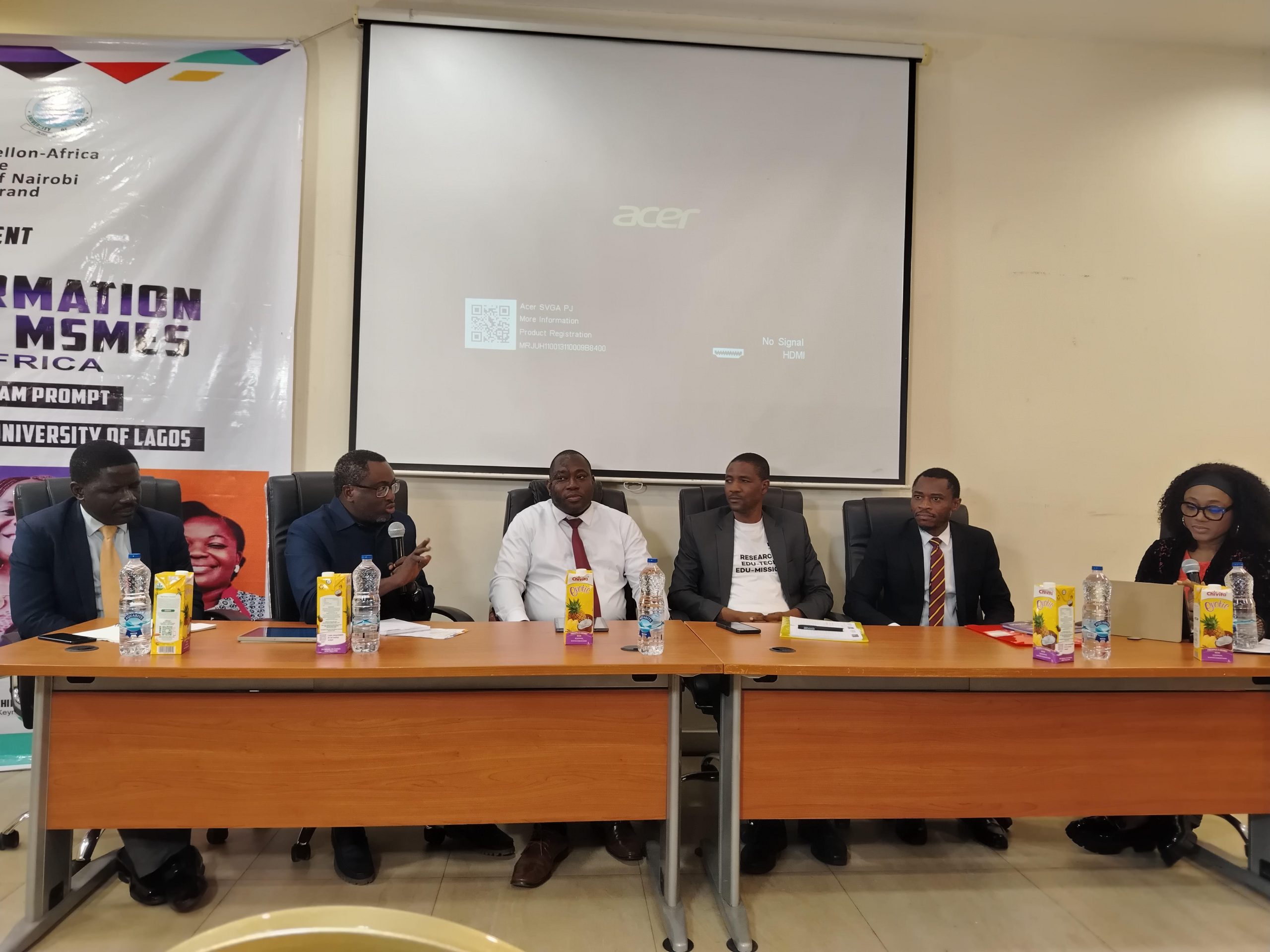
The findings were presented at a stakeholder engagement held at the Arthur Mbanefo Digital Research Centre of University of Lagos, where researchers, policymakers, academics, accountants, students and government officials gathered to discuss the future of digital transformation among African businesses
The research, led by Dr. Imoleayo Foyeke Obigbemi of the University of Lagos in collaboration with scholars from the University of Nairobi and the University of the Witwatersrand, examined youth-led MSMEs in Nigeria, Kenya and South Africa under the auspices of the AFRETEC Network by Carnegie Mellon University Africa
Presenting the findings, Dr. Obigbemi said digital transformation and maturity levels among MSMEs in the health, energy and sustainability sectors remained “relatively lower” than expected
“Overall, the level of digital transformation and maturity across sub-Saharan Africa remains below expectations,” she said, noting that the engagement was designed to bring together diverse professional perspectives towards addressing the challenge
The event, themed ‘Digital Transformation and Maturity of MSMEs in sub-Saharan Africa’, had the Vice-Chancellor of the University of Lagos, Folashade Ogunsola, as Chief Host
Delivering the keynote address, Chinonye Love Moses, Professor of Entrepreneurship at Covenant University and Commissioner for Entrepreneurship and Skill Acquisition in Imo State, underscored the strategic importance of MSMEs to Africa’s economy
According to her, MSMEs account for more than 80 per cent of businesses across Africa and contribute about 50 per cent of the continent’s Gross Domestic Product (GDP), despite facing major constraints such as limited access to finance, markets and technology
She identified four key forms of digital leverage capable of transforming small businesses: media leverage through strategic social media engagement; operational leverage using accounting systems and customer relationship management software; financial leverage through fintech platforms and grants; and knowledge leverage through accessible digital learning re
Prof. Moses urged governments to establish innovation hubs, stressing the need for researchers to help bridge the digital maturity gap.She also encouraged young people to acquire skills capable of creating jobs and driving economic growth, saying that Nigeria’s greatest re
A panel discussion featuring experts from academia and industry further explored the challenges surrounding digital transformation among small businesses
Ayodotun Ibidunni of James Hope University distinguished between digitisation and digitalisation, explaining that while digitisation refers to converting analogue processes into digital formats, digitalisation involves the application of technology to improve business operations
He warned that low digital maturity across Nigeria is closely tied to broader economic issues, including poverty
Also speaking, Akinyemi Ajibola of Bells University of Technology cautioned against the misconception that social media presence alone amounts to digitalisation
“Many equate mere social media presence with digitalisation,” he said, stressing that true digital transformation requires deeper integration of technology into business processes
Similarly, Collins Sanskay Oboh argued that much of today’s digital content lacks substantive value and often prioritises entertainment over meaningful societal and economic contributions
He urged MSMEs to focus on value creation rather than ventures driven solely by profit
Addressing concerns about taxation, taxation and power sector professional, Olusesan Samuel Okunade explained that businesses with annual turnovers below N100 million are exempt from tax liability under Nigeria’s current framework
He emphasised the need for improved documentation and financial transparency to avoid penalties arising from non-compliance
On his part, Oluwasogo Adediran stressed the importance of mentorship and empathy in supporting young entrepreneurs, while noting that taxation is a global standard and comparatively lower in Nigeria
He urged citizens to demand accountability from government instead of resisting taxation

