

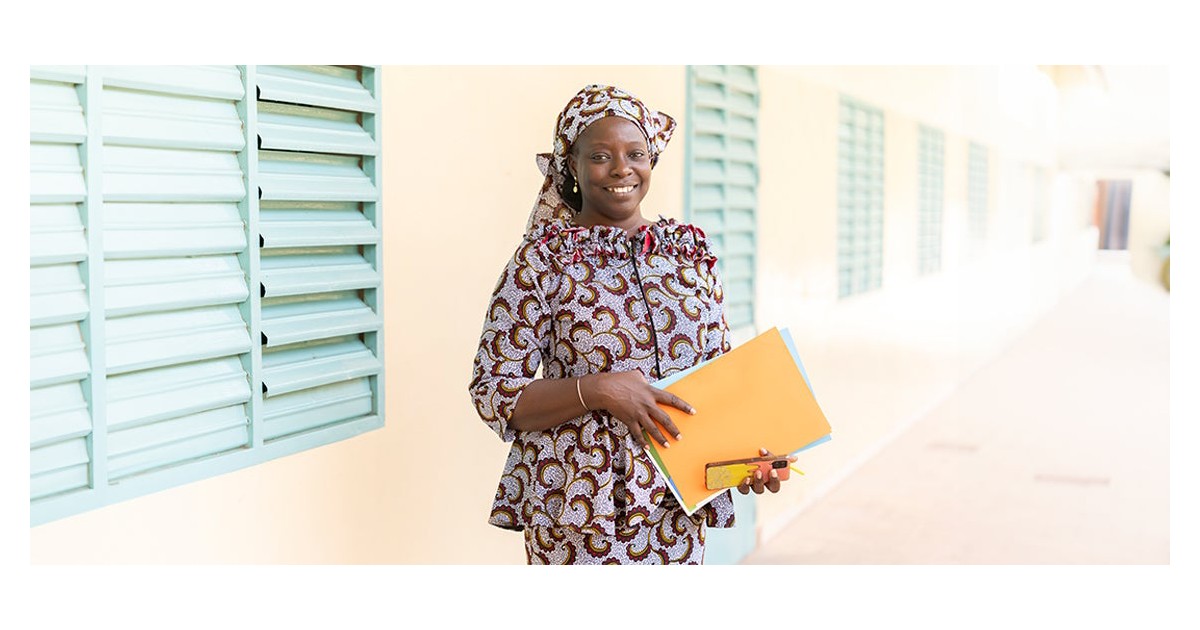
When She Leads: How Female Principals Guide and Impact Sub-Saharan <a href="https://absafricatv.com/ebrd-publishes-first-forecast-for-sub-saharan-africa/” title=”EBRD publishes first forecast for sub-Saharan Africa”>Africa’s Classrooms
School leadership plays a major role in shaping the quality of education, acting as a strategic lever to foster conducive learning conditions for students. Despite this, the characteristics of school leaders, particularly gender, have received little attention, especially in Sub-Saharan Africa (SSA). At the same time, positive outcomes associated with women’s leadership have been documented in domains such as politics, health, and business.
The gender of teachers has also been central to education development policies over the last decade as a means to influence girls’ education and aspirations.
While gender parity among the primary teaching workforce in SSA is almost achieved (with female teachers accounting for 47% of the primary teaching force in SSA, according to UIS, 2022), women struggle to reach school leadership positions. In countries like Mali, Togo, Côte d’Ivoire, Burkina Faso, Senegal, and others, ratios can be as low as 1 woman for every 10 men (Bergman et al., 2022; Alban Conto et al., 2023).
at 62%, strong patriarchal traditions often result in women being excluded from leadership roles and engaging in self-discrimination. Niger’s case exemplifies this disparity: while 58% of primary teachers are women, only 17% are female school leaders.
Men and women school principals: different contexts, different practices
including Benin, Burkina Faso, Burundi, Cameroon, Chad, Côte d’Ivoire, Kenya, Madagascar, Mozambique, Niger, Senegal, and Togo.
A new report by IIEP-UNESCO Dakar, analyzing data from the 2019 “Programme d’analyse des systèmes éducatifs de la CONFEMEN (PASEC)”, which covers 14 SSA countries, reveals significant contextual differences that characterize the school environments in which male and female school leaders operate. Notably, women school leaders are more frequently found in private schools, in urban and affluent areas, and often serve students from higher socioeconomic backgrounds. Additionally, schools headed by women tend to have a higher proportion of female teachers compared to those led by men.
To understand the specific association between students’ performance and the gender of school directors, it is essential to consider the learning environment. The report finds that in Benin, Madagascar, Senegal, and Togo, enrollment in a school with a female principal is associated with significantly higher student scores in reading and mathematics. These improvements range from 0.17 to 0.34 additional standard deviations in test scores, which are substantial magnitudes compared to other interventions.
Further investigation reveals that women school leaders tend to adopt distinct leadership and management approaches that enhance education outcomes. The report highlights that women principals engage more frequently in meetings with parents and are more inclined to provide remediation classes to students compared to their male counterparts, and actively encourage and monitor teacher attendance, thereby reducing absenteeism.
Image
School principal with students, Dakar, Senegal. Credit: Sylvain Cherkaoui / UNESCO
Encouraging more women to pursue school leadership roles
Beyond its importance for equity, advancing women’s representation in school leadership positions can challenge established norms and support different management and pedagogical approaches ultimately improving children’s overall schooling experience. Exposure to female leaders is likely to influence the aspirations of students, especially girls, and their families, transform gender norms, and inspire more women to thrive in education and seek these roles.
Breaking barriers and establishing career frameworks that counter biases in gender norms are essential to foster more equitable opportunities at each tier of education systems.
It is vital to view these positions as integral parts of a broader system that offers career perspectives and professional development opportunities for all teachers. To increase women’s representation in leadership, education systems must strengthen the pool of qualified female teachers and provide specific training that counters gender norms within the sector. Effectively fighting biases also requires supporting the professionalization of the role of school leaders, thereby empowering women and helping to establish their credibility and legitimacy.
The world is lacking women education leaders, and overcoming this issue requires challenging entrenched gender norms within both the education system and society at all levels
Moreover, establishing formalized career pathways that empower teachers and education staff by enhancing their skills, vision, and re pivotal role to play in this transformation and need to be trusted with their ability to advance education

