AFP
08 Oct 2026 03:59-05:00
Translated by
Legal experts’ views on the most controversial case
African football turns its attention today, Thursday, to the Swiss city of Lausanne, where the national teams of Senegal and Morocco and the Confederation of African Football (CAF) will meet before the Court of Arbitration for Sport (CAS), in the hearing concerning the appeal lodged by the Senegalese side against the decision to strip it of the 2025 Africa Cup of Nations title and award it to Morocco.
Last March, CAF’s appeals committee ruled that Senegal had lost the final by withdrawal, handing Morocco a 3-0 win under articles 82 and 84 of the tournament regulations.
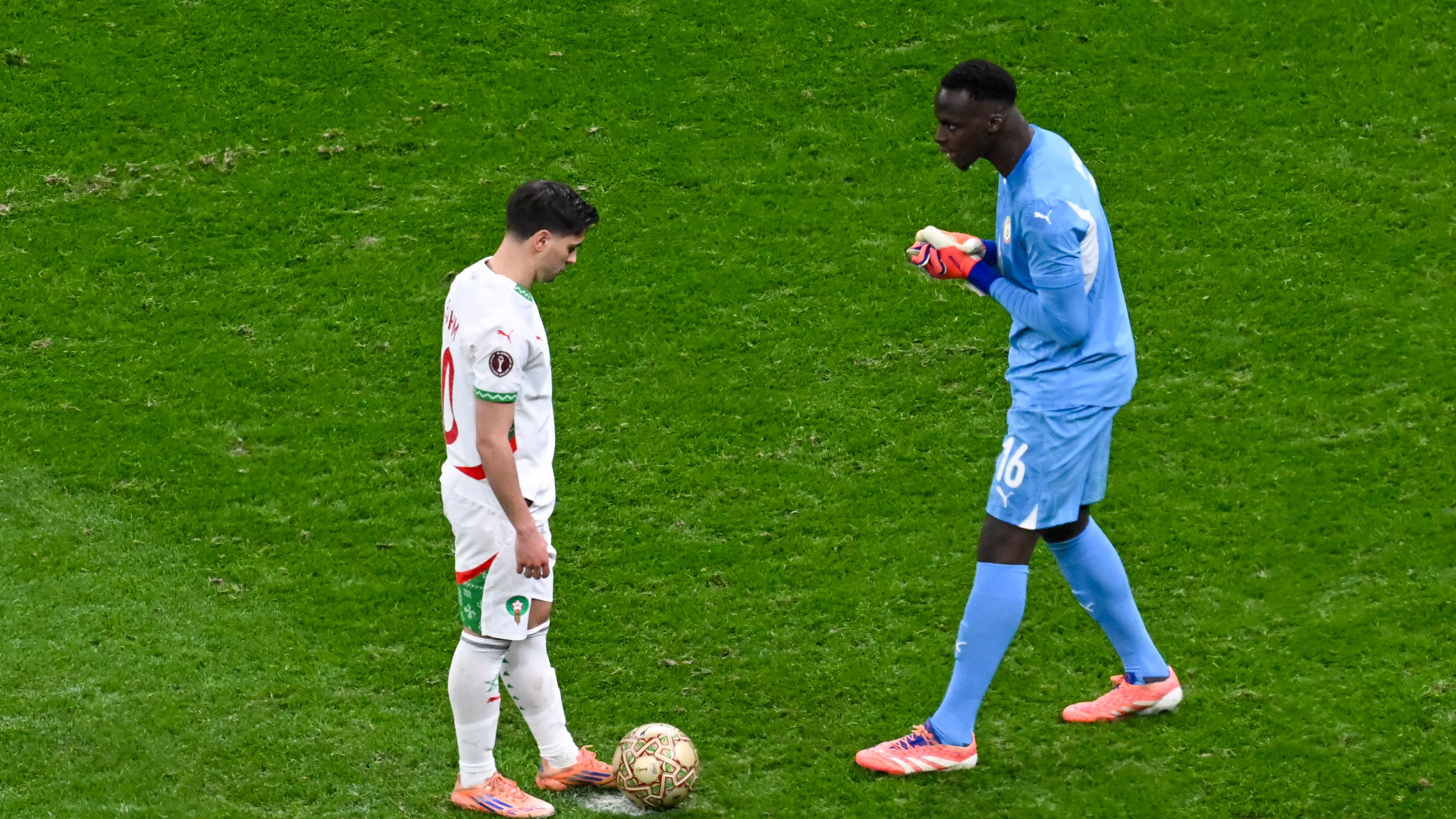
The case carries a striking legal complexity. Senegal’s players left the pitch during the final, then returned and resumed the match, which they ended up winning on the pitch after extra time.
Six main questions are expected to dominate the discussions before the Court of Arbitration, though the final verdict will not come down during today’s session.
Did Senegal actually refuse to complete the match?
This question ranks among the most prominent points the Court of Arbitration will have to settle, as article 82 provides for sanctioning the team that “refuses to play or leaves the pitch before the end of the match without the referee’s permission”.
According to a report by the network “Afrik-Foot“, which specialises in sporting affairs, Romain Bizini, a lawyer specialising in sports law, believes the situation at the Africa Cup of Nations final leaves the case in a legal vacuum. He explains that articles 82 and 84 do not explicitly address the case of a team leaving the pitch without permission, then returning to complete the match.
Bizini said the match did not stop permanently but was in fact resumed, which opens the door to a legal debate over whether what happened represents a “refusal to play” in the sense intended by the regulations.
In the same vein, the lawyer Amir Najazi distinguishes between a “refusal to play” and leaving the pitch, pointing out that Senegal’s return and completion of the match may make describing the incident as a definitive refusal to play open to debate.
Najazi also believes that the departure of the majority of the players from the pitch represents, in literal terms, a “leaving of the pitch” according to the text of the regulations.
The dispute, then, does not revolve only around the incident of leaving, but around the legal consequences arising from it once the match resumed.
Does the final whistle protect the result achieved on the pitch?
This point forms one of the most prominent elements of Senegal’s possible defence. The match returned to play under the referee Jean Jacques Ndala, ran to its end and saw the Senegalese team win in extra time.
South African sports lawyer Pius Ndubuko believes these details may prove decisive.
He told the South African Broadcasting Corporation (SABC): “Had the referee refused to allow them to return to the pitch, we would not be facing this case. But they returned, the match was resumed, and the referee blew the final whistle”.
On that basis, Ndubuko believes CAF’s appeals committee misinterpreted the facts, and that the completion of the match and the final whistle may represent two important factors in protecting the result achieved inside the pitch.
Was the penalty of considering Senegal to have lost by withdrawal proportionate?
Even if the Court of Arbitration is convinced that the Senegalese team breached the tournament regulations, another question remains open: was losing by withdrawal proportionate to the breach?
Najazi’s opinion stands out here, as he stresses that the principle of proportionality of penalties represents a fundamental element in the jurisprudence of the Court of Arbitration.
The court, Najazi believes, may consider the penalty of losing by withdrawal exaggerated if other penalties could punish Senegal’s conduct without annulling the sporting result achieved after the match’s completion.
So the case does not relate only to the literal interpretation of articles 82 and 84, but also to determining the penalty that strikes a balance between respecting the tournament regulations and preserving the result of a final that has already been completed.
Which takes priority: the text of the regulations or the facts of the match?
This point forms the core of the legal dispute, with two completely different readings of what happened.
Bizini believes a strict application of CAF’s regulations may lead to upholding the appeals committee’s decision, pointing out that article 82 clearly provides for sanctioning the team that leaves the pitch without permission.
On that basis, Bizini rates Senegal’s chances in the appeal as “largely weak”.
Ndubuko takes the opposite view, arguing the appeals committee erred in interpreting articles 82 and 84, especially as it did not, from his point of view, give sufficient attention to the players’ return to the pitch and the resumption of the match on the referee’s decision.
The South African lawyer went as far as to assert: “I am convinced that the Court of Arbitration will overturn the decision”.
Can the Court of Arbitration maintain the result while sanctioning Senegal?
This scenario may offer the most prominent middle ground before the Court of Arbitration. Najazi believes both legal positions can be defended, but the most important thing is to preserve “the integrity of the competition and the integrity of the sporting result”.
The court will therefore have to weigh several considerations: the strict application of CAF’s regulations, the referee’s role in resuming the match, the fact that the fixture was already completed, and the possibility of punishing Senegal’s conduct without erasing the result achieved on the pitch.
Can the final match be replayed?
This looks a highly remote hypothesis. The experts who have addressed the case agree that replaying the final is an unlikely scenario.
Bizini believes CAF’s regulations do not appear to allow this solution, while Ndubuko rules out the idea of replaying the match entirely.
The legal battle before the Court of Arbitration will most likely not revolve around replaying the final, then, but around a bigger question: who holds the legal right to win the match that has already been decided on the pitch?
Is it Morocco, based on CAF’s decision to consider Senegal to have lost by withdrawal? Or does the title return to Senegal based on the resumption of the match and the settling of the sporting result after the final whistle?