Africa produces talent, but where is World Cup-winning system?
by Kelvin Ndunga
Sep 25, 2026 11:05 am
As an African, there is one question that continues to trouble me no matter how many extraordinary players the continent produces or how many of them become stars at the biggest clubs in the world: Why has Africa still never won the World Cup?
The answer cannot simply be a lack of talent.
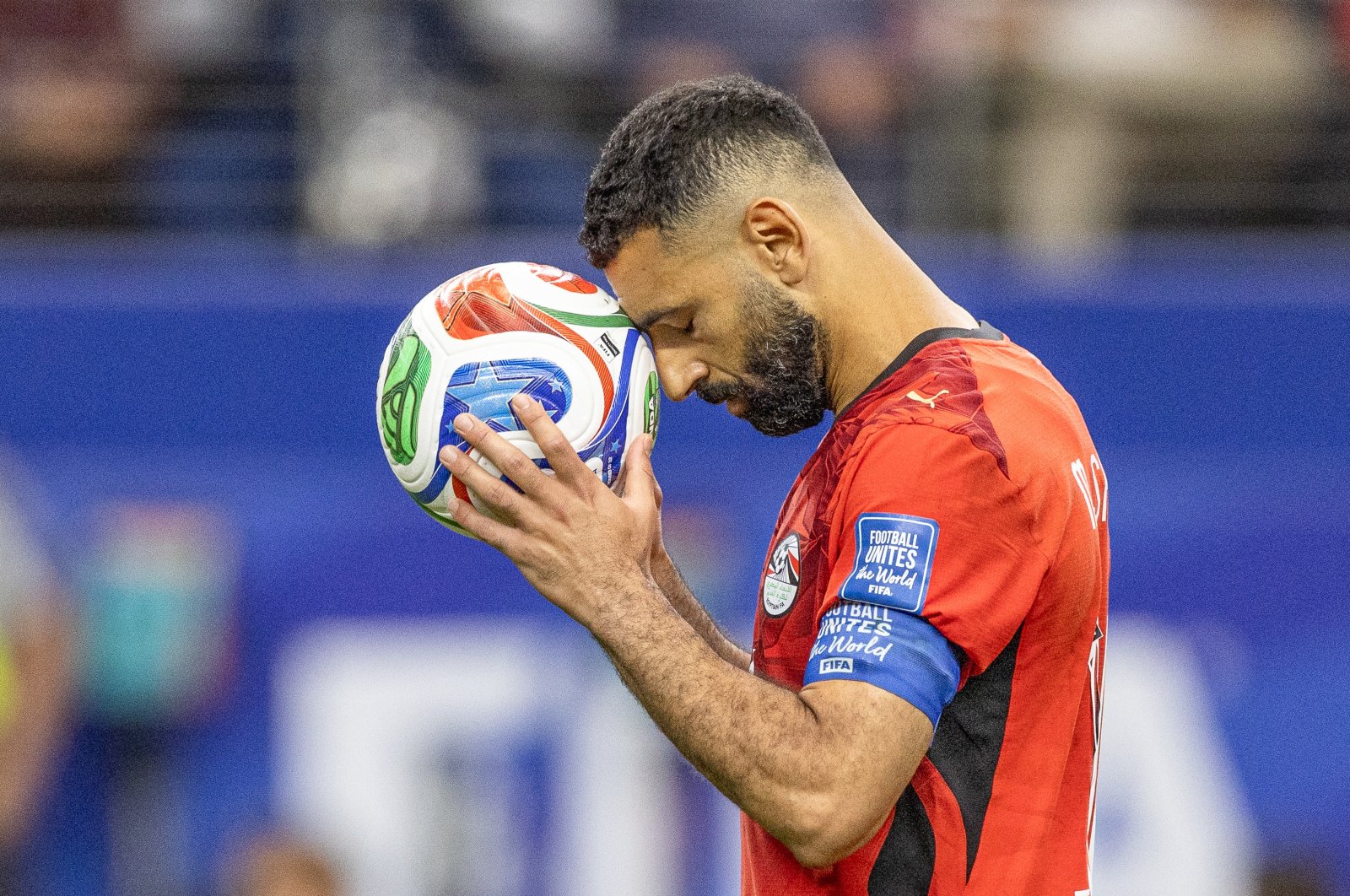
Africa has produced some of the greatest players of the modern era, including Didier Drogba, Samuel Eto’o, Yaya Toure, Sadio Mane and Mohamed Salah, who have won Champions League titles, domestic championships, golden boots and individual awards while becoming key figures at some of Europe’s biggest clubs.
Africa has never lacked players capable of competing at the highest level. What has been far more difficult to build is the system around those players.
Africa’s broad talent
There is another part of the conversation that is often overlooked. Some of the world’s biggest football stars have African roots but have represented European or other national teams because they were born, raised or developed there.
Kylian Mbappe, whose father is Cameroonian and mother is Algerian, represents France, while Romelu Lukaku, whose father was born in what is now the Democratic Republic of Congo, represents Belgium.
England have relied heavily on players of African heritage such as Bukayo Saka, while Germany have benefited from players including Jamal Musiala, whose father is Nigerian, and Antonio Rüdiger, whose father is from Sierra Leone.
The same story exists beyond Europe. Timothy Weah, the son of Liberian legend George Weah, was born and raised in the United States and chose to represent the U.S. national team despite his family ties to Liberia and his mother’s Jamaican heritage.
This does not mean those players should have chosen African countries, because international football is also shaped by where players grow up, where they receive their education and coaching, and where they develop their strongest football identity.
It does, however, underline the extraordinary depth of African football talent, much of which is developed within European systems before eventually representing those countries at the international level.
Many close calls
The continent’s World Cup history is therefore not simply a story of failure. African teams have repeatedly shown that they can compete with the world’s best and, at times, come agonizingly close to rewriting football history.
Cameroon announced themselves in 1990 by defeating defending champions Argentina before becoming the first African team to reach the quarterfinals. They led England 2-1 before two Gary Lineker penalties, including one in extra time, ended their remarkable campaign.
Senegal produced another extraordinary run in 2002. They opened the tournament by defeating defending champions France before reaching the quarterfinals, where Türkiye ended their campaign with İlhan Mansız’s golden goal in extra time.
Ghana came agonizingly close in 2010 to becoming the first African team to reach a World Cup semifinal. Against Uruguay, Luis Suarez stopped a certain goal with his hand on the line and was sent off, but Asamoah Gyan missed the resulting penalty by hitting the crossbar.
Uruguay eventually prevailed in the shootout, leaving Ghana with one of the most painful near-misses in World Cup history, made even more heartbreaking by the fact that it happened on African soil.
These moments are remembered primarily as heartbreak, but they also reveal something important. African football has repeatedly produced teams capable of standing alongside the world’s best.
Change of conversation
Morocco took that argument further in Qatar in 2022, becoming the first African nation to reach a World Cup semifinal.
They defeated Belgium, Spain and Portugal before losing to France, showing that an African team could combine individual quality with tactical discipline, organization and collective belief.
The progress continued at the 2026 World Cup, when Africa sent a record 10 teams to the expanded tournament.
Nine reached the knockout stage, while Morocco advanced to the quarterfinals for a second consecutive World Cup before losing 2-0 to France.
The World Cup rewards systems
So why has that progress still not produced a champion?
Look at the countries that have lifted the trophy and a pattern begins to emerge.
Spain’s golden generation was supported by a football philosophy developed over decades, with technical development, possession football and tactical education embedded throughout the country’s football culture.
Germany responded to the disappointment of Euro 2000 with major reforms to youth development, establishing regional talent centers and elite academies that helped create the generation that eventually won the 2014 World Cup.
France offers another example. Clairefontaine was inaugurated in 1988 as part of a broader French commitment to elite player development, and within a decade the country had won its first World Cup with several players who had developed through the system.
Argentina’s 2022 triumph offered another lesson, showing how extraordinary individual talent could be maximized when placed inside a coherent tactical structure.
The lesson is not that these countries necessarily produced better footballers than Africa. It is that they developed systems capable of identifying, developing, organizing and maximizing their best players.
The governance problem
There is also a more uncomfortable side to the discussion, involving how players are identified and selected within African football structures.
A long-running rumor surrounding Kylian Mbappe claims that his father, Wilfrid Mbappe, wanted his son to play for Cameroon when he was young but was allegedly asked for money before that could happen.
Whether that particular story is legitimate or simply another football rumor, the underlying concern is not entirely imaginary.
There have been documented cases of corruption and bribery within African football, including the 2018 investigation into former Ghana Football Association president Kwesi Nyantakyi, who was filmed accepting $65,000 during an undercover investigation and was later sanctioned by FIFA for breaching its corruption rules.
Nigeria also investigated assistant coach Salisu Yusuf in 2018 after he was filmed accepting $750 from men posing as football agents who wanted players selected for a continental tournament, although Yusuf denied wrongdoing and said the money was a gift.
Those cases do not prove that national-team selection across Africa is routinely determined by money or personal connections, but they demonstrate why concerns about governance, transparency and merit cannot simply be dismissed as football gossip.
Individual stars need a system
That distinction is critical because Africa has often been remarkably successful at producing individual stars while struggling to build football ecosystems capable of developing entire generations.
A talented teenager can leave an African academy at a young age, move to Europe and eventually become a world-class footballer. However, the success of that individual does not necessarily strengthen the football system that produced him.
The domestic academy may lose its best player, the local league may lose its biggest attraction and the national team may eventually inherit a collection of players who developed in different countries, tactical systems and football cultures.
That is where the gap becomes visible.
Modern football demands more
The modern game has become increasingly sophisticated, with pressing structures, defensive organization, positional play, transitions, set pieces and coordinated movements demanding far more than individual brilliance.
Exceptional players can still change matches, but the strongest teams create structures that repeatedly put those players in positions where their qualities can decide games.
Talent can win moments, but systems create the conditions for talent to win tournaments.
This is why the idea that Africa simply needs another generation of superstars misses the central problem. The continent already has superstars.
What it needs is continuity, institutional stability and a development structure that extends beyond individual players, coaches and tournament cycles.
Building a football ecosystem
African federations need long-term youth programs that survive changes in leadership, stronger coaching education, better facilities, improved sports science and scouting networks, competitive domestic leagues and national teams that develop tactical identities over several years rather than being assembled shortly before major tournaments.
Most importantly, African football needs institutions that can outlive its greatest players.
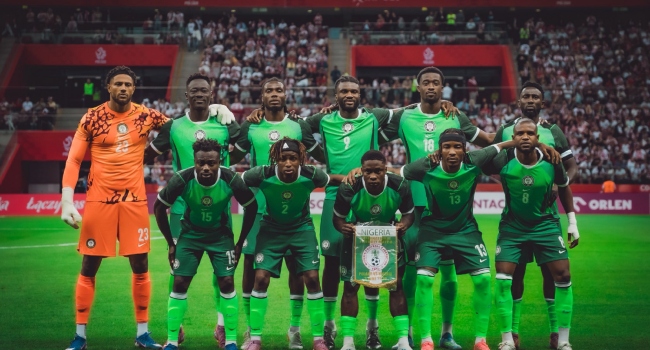
The recent World Cup results suggest that the door is not closed. Morocco’s semifinal in 2022 and quarterfinal appearance in 2026 have shown that an African team can compete deep into the tournament, while Senegal, Ghana, Nigeria and other nations continue to produce players capable of performing at the highest level.
The challenge is turning those ingredients into a sustainable structure.
Next step
The World Cup is particularly unforgiving because national teams cannot simply buy solutions during a transfer window or assemble an entirely new squad when weaknesses appear.
Their players must come from an existing development system, their tactical identity must already be established and their federation must have the institutional capacity to prepare them for the demands of the tournament.
That is why Africa’s greatest opponent has never simply been Europe or South America. It has been the gap between the extraordinary talent the continent produces and the football ecosystems built around that talent.
Africa has already proved that it can produce players good enough to win the world’s biggest trophies at club level. It has also repeatedly demonstrated that its national teams can compete deep into the World Cup.
The next challenge is building systems strong enough to make those breakthroughs routine rather than exceptional.
The continent has spent decades proving that it can produce the stars. Now it must prove that it can build the system around them.