



African startups drive growth in emerging deep-tech sector
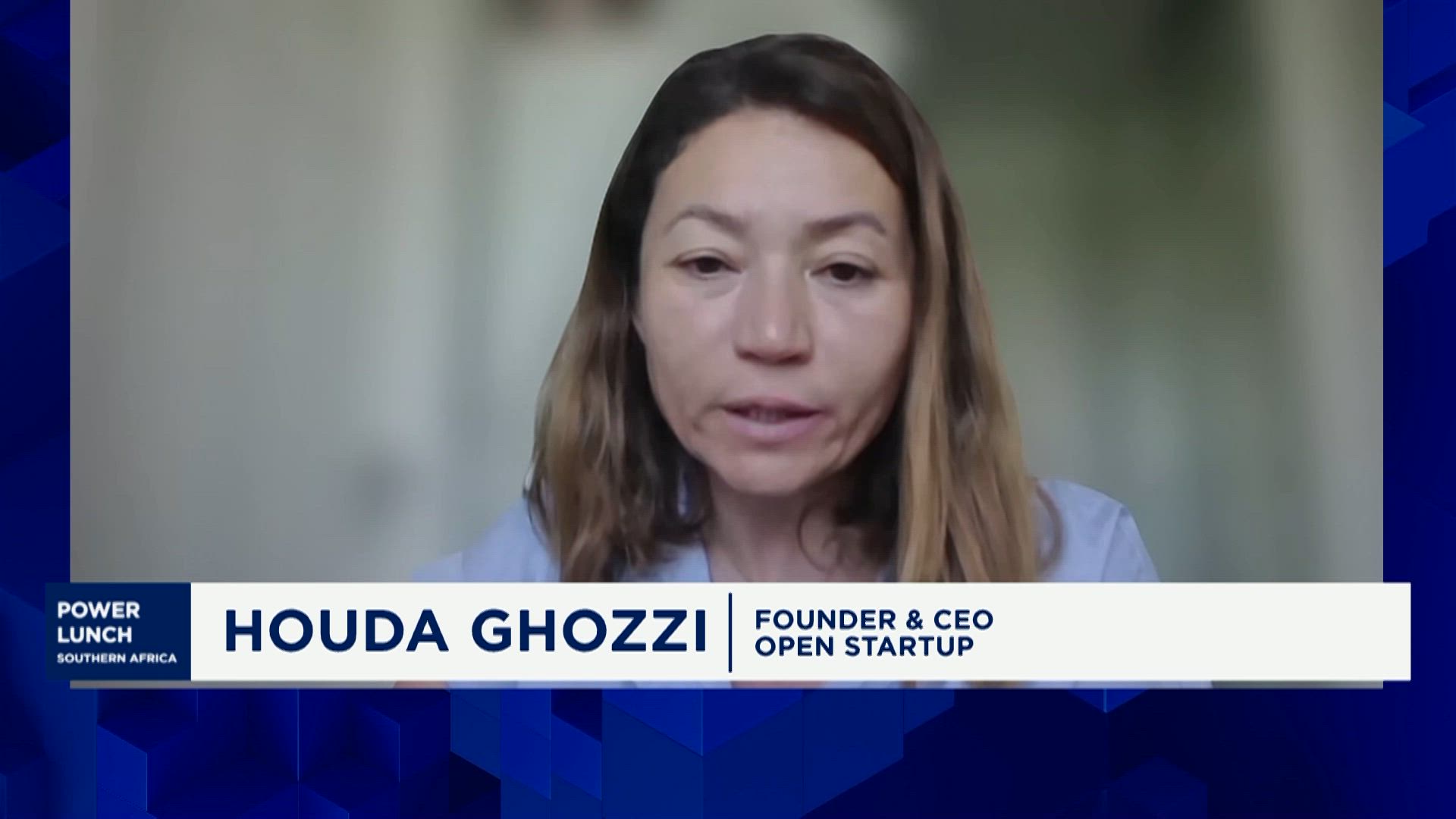
Africa is producing an increasing number of science and research-led innovations, yet many struggle to make the journey from the laboratory to commercial success. Open Startup is marking its 10-year anniversary with the launch of The Science Road, an initiative aimed at helping deep-tech ventures become investment-ready and scale globally. Joining CNBC Africa is Houda Ghozzi, Founder and CEO of Open Startup.
Mon, 29 Jun 2026 11:44:11 GMT
Disclaimer: The following content is generated automatically by a GPT AI and may not be accurate. To verify the details, please watch the video
AI Generated Summary
Key Points:
- Open Startup launched the Science Road initiative as it marked its 10-year anniversary.
- Hauda Kozi said Africa now has roughly 300 to 500 deep-tech startups across the continent.
- <a href="https://absafricatv.com/anti-migrant-protests-take-place-in-south-africa-cnn/" title="Anti-migrant protests take place in South Africa | CNN”>South Africa, Nigeria, Ghana, Tunisia and Morocco were identified as leading deep-tech markets.
- Kozi said many existing startup programs do not adequately support scientists in commercializing research.
- Key ecosystem gaps include awareness among scientists, team-building, governance support and specialized commercialization pathways.
- Patient capital, philanthropic funding, recoverable grants and loans were highlighted as important financing tools.
- Corporate venture capital was identified as a promising way to fund startups while giving corporates outsourced R&D access.
- Kozi said Africa is producing strong and frugal science, but awareness and support vary by country.
- Partnerships with tertiary institutions such as Stellenbosch are helping connect researchers to entrepreneurship pathways.
- Kozi said role models are essential to encourage more African scientists to become venture founders.
Topics
Africa deep techOpen StartupScience RoadHauda KoziAfrican startupsventure capitalscience commercializationstartup acceleratorsemerging marketsinnovation ecosystem
Africa’s deep-tech sector is entering what industry advocates describe as a pivotal growth phase, with hundreds of science- and research-led startups emerging across the continent even as many still face steep barriers in turning laboratory breakthroughs into commercially
That was the message from Hauda Kozi, founder and CEO of startup support platform Open Startup, who said Africa has seen a marked build-up of energy and momentum in deep tech over the past five years. Speaking as Open Startup marks its 10-year anniversary with the launch of a new initiative called Science Road, Kozi said the next decade could be transformative for the continent’s ability to produce globally competitive science-based ventures
“Africa is producing an increasing number of science and research-led innovations,” Kozi said, pointing to a growing ecosystem of roughly 300 to 500 deep-tech startups across the continent. She identified South Africa, Nigeria, Ghana, Tunisia and Morocco among the countries showing the strongest readiness in the sector
The comments underscore a broader shift underway in African innovation, where startup conversations have long been dominated by fintech and consumer-facing digital platforms. Deep tech — a category that typically includes innovations grounded in advanced science, engineering and research — is now starting to attract greater attention from founders, ecosystem builders and a wider pool of capital
Still, Kozi made clear that the continent’s deep-tech ecosystem remains in an early stage of development, with structural gaps that existing accelerators have not fully addressed. According to her, one of the biggest challenges is that many scientists are not yet being sufficiently encouraged or equipped to pursue entrepreneurship in the first place
“With Science Road, we’re starting from scratch,” she said in essence, arguing that the first hurdle is greater dissemination and awareness so that more scientists see startup creation as alored to the unique demands of deep-tech commercialization rather than simply replicating traditional startup accelerator models
That includes helping scientists navigate the difficult journey from research to market by building teams, putting in place proper governance structures and identifying the right partners to support commercialization. In contrast with software startups, deep-tech ventures often require longer development timelines, specialized technical validation and more patient capital before they can achieve scale
The Science Road initiative is intended to respond to precisely those gaps. While Kozi did not outline the full operational structure of the platform in the interview, she framed it as an effort to help deep-tech ventures become investment-ready and expand globally. The broader goal is to create a more complete pathway for research-led startups, one that links scientific talent with commercial know-how, financing and ecosystem support
Kozi also pushed back against any suggestion that Africa lacks scientific talent. In her view, the issue is less about whether the continent is producing enough scientists and more about whether those scientists are being adequately connected to entrepreneurial opportunities
“More than ever,” she said when asked whether students and researchers are showing interest in the field. She added that Africa is not only producing strong science, but also “incredible science that is more frugal,” suggesting that many solutions developed on the continent are adapted to local constraints and could offer globally relevant innovation models
Awareness levels still vary significantly by country, she noted, but the underlying scientific capability is already present. Open Startup’s partnerships with tertiary institutions, including Stellenbosch University, reflect a strategy of working closer to the research pipeline to identify talent earlier and support the transition from academic work to venture creation
On the funding side, Kozi said deep-tech startups require a different risk framework than traditional early-stage ventures, particularly because investors often view them as capital-intensive and slower to monetize. She pointed to multiple pools of capital that could play a role in de-risking the sector
The first group includes conventional investors seeking solutions that can eventually generate revenue, though Kozi suggested that this capital alone will not be enough. She expressed greater optimism about philanthropic funding, grants and financing structures such as recoverable grants or loans, which can provide more flexible and patient support during the early stages of commercialization
She also highlighted the role of corporate venture capital, or CVCs, as a promisingtes can back startups developing technologies that align with their strategic interests, effectively treating those investments as a cost-efficient form of out Sanofi Venture Fund and the Stevyn Madden Foundation as examples of institutions engaging in the space
Governments, too, have a role to play, even if Kozi spent less time on that point. Public policy, she said, is needed to help countries build the ecosystems required for deep-tech ventures to emerge and scale. That could include everything from research commercialization frameworks and university-industry collaboration to incentives for patient capital and startup-friendly regulation
Looking ahead, Kozi said the most urgent first step for Africa is cultural as much as financial: making sure more scientists can see examples of peers who have successfully built ventures from research. Role models, she argued, are critical to helping talented researchers imagine themselves as founders
“I think number one is to get more and more scientists aware and get them to see role models that were able to do it,” Kozi said. “They need to see that they have their peers that were able to build ventures.”
That message captures both the promise and the challenge facing African deep tech today. The raw ingredients — scientific talent, emerging startup activity and growing investor interest — are increasingly visible. But converting that promise into a durable pipeline of globally competitive companies will require specialized support, new capital models and a stronger bridge between the lab and the market
For Open Startup, the launch of Science Road represents a bet that Africa’s next wave of innovation will not come only from apps and platforms, but from science-led companies capable of solving complex problems at scale. If that bet pays off, deep tech could become one of the continent’s most important long-term growth engines
ChooseCNBC Africaas your preferred source on Google and never miss a moment from the most trusted name in business news.





