


Listen to this article
Estimated 2 minutes
The audio version of this article is generated by AI-based technology. Mispronunciations can occur. We are working with our partners to continually review and improve the results.
The U.S. military said Wednesday that it attacked a boat accused of smuggling drugs in the eastern Pacific Ocean, killing four people, on the same day the House rejected efforts to limit U.S. President Donald Trump’s power to use military force against drug cartels.
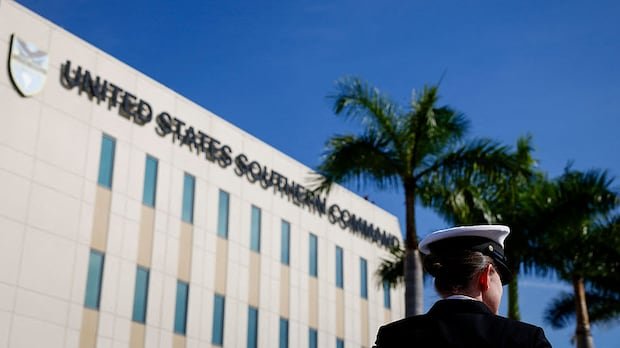
U.S. Southern Command stated in a news release, and on social media, that the vessel was operated by narco-terrorists along a known trafficking route.
The military didn’t provide evidence behind the allegations but posted a video of a boat moving through water before there was an explosion.
The attack brought the total number of known boat strikes to 26, in which at least 99 people have been killed, according to numbers announced by the Trump administration.
On Dec. 17, at the direction of <a href=”https://twitter.com/SecWar?ref_src=twsrc%5Etfw”>@SecWar</a> Pete Hegseth, Joint Task Force Southern Spear conducted a lethal kinetic strike on a vessel operated by a Designated Terrorist Organizations in international waters. Intelligence confirmed that the vessel was transiting along a known… <a href=”https://t.co/Yhu3LSOyea”>pic.twitter.com/Yhu3LSOyea</a>
—Southcom
Claim of ‘armed conflict’ with cartels
Trump has justified the attacks as a necessary escalation to stem the flow of drugs into the United States and asserted the country is engaged in an “armed conflict” with drug cartels.
The administration is facing increasing scrutiny from lawmakers over the boat strike campaign.
The first attack in early September involved a follow-up strike that killed two survivors clinging to the wreckage of a boat after the first hit.
House Republicans rejected a pair of Democratic-backed resolutions Wednesday that would have forced the Trump administration to seek authorization from Congress before continuing attacks against cartels. They were the first votes in the House on Trump’s military campaign in Central and South America.
A majority of Republicans in the Senate had previously voted against similar resolutions, and Trump would almost certainly veto them if they were to pass Congress.
