


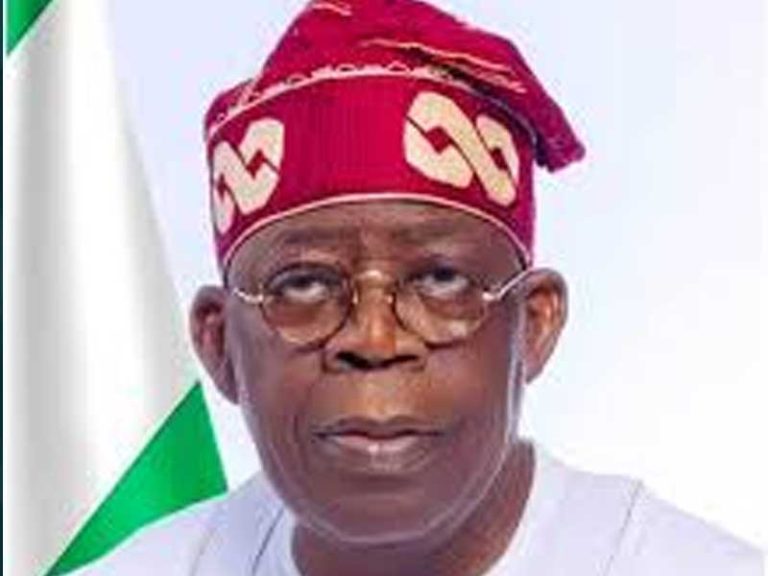
In the landscape of Nigerian and <a href="https://absafricatv.com/the-long-road-to-a-single-east-african-currency/” title=”The Long Road to a single East African Currency”>African politics, President Bola Ahmed Tinubu stands out as a true professor of political strategy. With a career spanning over 34 years, “The Asiwaju” possesses a deep reservoir of experience. He is currently implementing a visionary blueprint designed to safeguard and enrich Nigeria’s future generations. We can see this actively unfolding across the nation, particularly through simultaneous infrastructural developments driven by highly capable indigenous construction firms. Through these deliberate steps, Nigeria is visibly progressing.
A foundation built on resilience
President Tinubu’s political journey began during the transition era of the aborted Third Republic, defined by the two government-created parties: the Social Democratic Party (SDP) and the National Republican Convention (NRC). Established in 1989 by military President Ibrahim Babangida to encourage grassroots democracy and eliminate ethnic divisions, the SDP represented left-of-center views while the NRC stood right-of-center.
Tinubu was an integral part of this era. The SDP went on to win the widely acclaimed but ultimately annulled June 12, 1993, presidential election with Chief M.K.O. Abiola, before General Sani Abacha’s military takeover dissolved both parties later that year.
The architect of the South-west and modern Lagos
With the dawn of the Fourth Republic in 1999, Tinubu contested and won the Lagos State governorship under the Alliance for Democracy (AD). While the Peoples Democratic Party (PDP) swept most of the Southwest gubernatorial seats in 2003, Tinubu stood as the lone survivor, anchoring the opposition. Through strategic re-engineering, his political structure evolved into the Action Congress of Nigeria (ACN), which successfully reclaimed the Southwest and expanded its influence to other regions by 2007.
After completing his two terms as governor, Tinubu did not retire from politics; instead, he mastered the art of mentorship. He spent years building leaders and positioning capable hands into key governance roles. His masterstroke came in 2013. He facilitated the historic merger of the ACN, the All Nigeria Peoples Party (ANPP), a faction of the All Progressives Grand Alliance (APGA), and the Congress for Progressive Change (CPC)—originally founded by former President Muhammadu Buhari in 2009. This mega-merger formed the ruling All Progressives Congress (APC).
Tinubu’s foundational work transformed Lagos State into a modern, self-sustaining economic powerhouse. Today, states across Nigeria actively emulate the “Lagos Template” for revenue generation and urban transformation.
As President, Tinubu has shifted the governance narrative. He has actively dismantled the influence of political cabals, ensuring that his cabinet ministers are fully empowered and strictly focused on delivering results.
When evaluating civilian leadership in Nigeria’s history, Tinubu’s executive execution draws a close comparison to Alhaji Shehu Usman Shagari, who had laid out a grand vision to industrialise Nigeria before the 1983 military coup. Based on his credible performance and strategic foresight, it is my firm belief that President Tinubu will successfully steer the country forward and sustain this momentum until 2031.
To achieve the Nigeria of our dreams, we must unite and support his administration as he guides the nation to the Promised Land.
Otutu quarters, Okene, Kogi state

