


Before You Fly Anywhere: South Africa, Singapore, Malaysia, Thailand and Indonesia Have Introduced Mandatory Digital Traveller Declarations That Are Reshaping International Border Crossings – Travel And Tour World
Before You Fly Anywhere: South Africa, Singapore, Malaysia, Thailand and Indonesia Have Introduced Mandatory Digital Traveller Declarations That Are Reshaping International Border Crossings
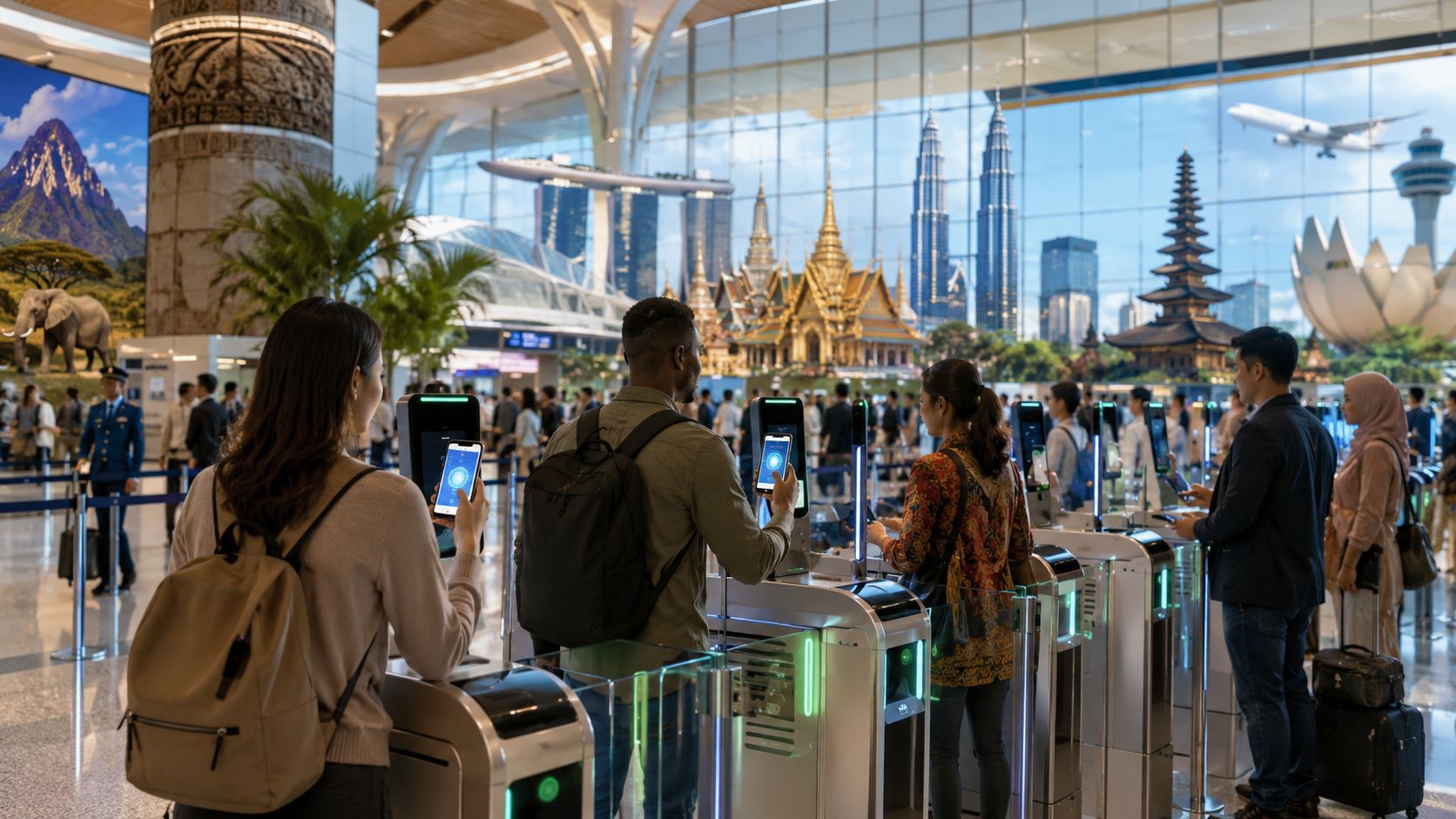
Before You Fly Anywhere, travellers should understand that South Africa, Singapore, Malaysia, Thailand and Indonesia have introduced mandatory digital traveller declarations that are reshaping international border crossings and changing the way millions of people prepare for overseas journeys. International travel is becoming more digital as governments strengthen border management, improve customs procedures, enhance immigration checks and streamline passenger processing through online systems. Consequently, travellers are now expected to complete official digital forms before arriving, and in some cases before departing, depending on the destination. While every country follows its own regulations, the common goal is to create faster, safer and more efficient border procedures. However, failing to complete the required declaration may result in additional screening, delays or longer processing times at immigration and customs checkpoints. Therefore, understanding these new requirements before you fly has become just as important as carrying a valid passport, visa and travel documents for a smooth international journey.
South Africa Makes Online Traveller Declarations Mandatory
South Africa introduced its mandatory online traveller declaration system on 1 July 2026.
The South African Revenue Service, known as SARS, manages the system through the South African Traveller Management System. Travellers often see this shortened to SATMS.
The rule covers people entering or leaving South Africa. It applies to South African citizens, residents and foreign visitors. It also covers many transport routes.
Travellers may need to complete the declaration when using:
- International airports
- Land-border posts
- Seaports
- International rail crossings
This gives South Africa one of the widest digital declaration systems among the countries in this report.
The form mainly supports customs control. Travellers must provide personal and travel details. They may also need to declare goods, cash, foreign currency, bearer instruments and other controlled items.
The system allows customs officers to study the information before a traveller reaches the border. This may help officials identify risks earlier. It may also reduce the need for paper forms.
Travellers should complete the declaration no more than 24 hours before the relevant departure. People taking connecting flights should normally complete it before the final direct journey into South Africa.
The process can be completed through the SARS online platform, the SATMS mobile service, QR codes or self-service terminals where available.
Why South Africa’s System Is Different
South Africa’s model is different because it works in both directions.
Most digital arrival cards focus only on people entering a country. South Africa requires declarations from travellers entering and leaving.
This means a passenger flying into Johannesburg may need to complete the form before arrival. The same traveller may also need to complete another declaration before departing South Africa.
The system also covers rail travel. This is unusual. Most countries focus mainly on airports, seaports and land-border crossings.
South Africa’s declaration is also mainly a customs tool. It asks travellers to report goods and money that may need official attention.
This is not the same as a visa. It does not give a traveller permission to enter. It also does not replace passport control.
Travellers must still meet normal visa, passport and immigration rules.
What Happens If a Traveller Does Not Complete the South African Form?
A traveller who forgets the declaration may not automatically be refused entry or exit.
SARS can provide help at ports of entry. Self-service facilities may also be available. Officials may allow a paper declaration in limited situations.
- The digital system is not working
- Internet access is unavailable
- A traveller cannot reasonably complete the online form
- Customs officials direct the traveller to use another process
However, travellers should not depend on these exceptions.
Failure to complete the correct declaration may lead to longer queues, extra questioning or customs inspections. False information may lead to penalties or the seizure of goods.
The safest choice is to complete the form before travelling.
Singapore Uses the SG Arrival Card for Most Travellers
Singapore operates the SG Arrival Card with an Electronic Health Declaration.
The Immigration and Checkpoints Authority manages the system. It replaced the old paper arrival card.
Most travellers must submit the SG Arrival Card within three days before reaching Singapore. The three-day period includes the day of arrival.
The system applies to travellers arriving by:
- Air
- Sea
- Land
Foreign visitors must provide personal details, passport information, travel plans, accommodation information and health details.
The form supports immigration checks. It also helps Singapore monitor public-health risks.
The SG Arrival Card does not act as a visa. Travellers who need a Singapore visa must still obtain one.
Singapore offers an official online service and the MyICA mobile application. Submission is free.
Travellers should avoid unofficial websites that charge money for the form.
Who Does Not Need Singapore’s SG Arrival Card?
Singapore has limited exemptions.
Travellers who remain in the transit area and do not pass through immigration usually do not need to submit the card.
Singapore citizens, permanent residents and long-term pass holders entering through the Woodlands or Tuas land checkpoints may also be exempt.
This means the system is mandatory for most travellers, but not for every person at every checkpoint.
Tourists arriving by air should normally assume that they must complete the SG Arrival Card unless official guidance says otherwise.
Why Singapore Uses a Health Declaration
Singapore’s form includes health questions.
This allows authorities to identify possible public-health risks before or during arrival.
Travellers must answer honestly. False health information can lead to legal action.
The health section became especially important after the world experienced major disease outbreaks and border disruptions.
Singapore now uses digital information to strengthen disease monitoring while keeping arrival procedures fast.
The system gives authorities early warning. It also reduces the use of paper documents.
Malaysia Requires the Malaysia Digital Arrival Card
Malaysia introduced the Malaysia Digital Arrival Card for most foreign travellers from 1 January 2024.
The Immigration Department of Malaysia manages the system.
Most foreign visitors must submit the MDAC within three days before arriving in Malaysia.
- Passport details
- Nationality
- Arrival date
- Travel method
- Flight or transport information
- Last place of departure
- Contact details
- Address in Malaysia
The MDAC is mainly an immigration form. It helps officers receive traveller information before the visitor reaches passport control.
It is not a visa. It also does not replace customs rules.
A traveller who needs a Malaysian visa must still apply for one.
Malaysia’s Digital Card Does Not Cover Everyone
Malaysia provides several exemptions.
- Singapore citizens
- Diplomatic passport holders
- Official passport holders
- Malaysian permanent residents
- Long-term pass holders
- Some travellers using border passes
- Some people covered by special cross-border agreements
This is why the rule should be described as mandatory for most foreign travellers.
It should not be described as a rule for every international passenger.
Travellers should check their nationality, passport type and residency status before completing the form.
Thailand Makes the Digital Arrival Card Compulsory
Thailand made the Thailand Digital Arrival Card mandatory from 1 May 2025.
The Thai Immigration Bureau manages the system.
All non-Thai nationals entering Thailand by air, land or sea must complete the TDAC, apart from limited exemptions.
The form replaced the old paper arrival card.
Travellers may submit it within three days before arrival. This period includes the arrival date.
- Passport information
- Travel details
- Transport information
- Arrival date
- Address in Thailand
- Purpose of travel
- Health information
- Email address
The form is required for tourists, business visitors, visa holders and visa-free travellers.
Children and infants also need a declaration.
Families and groups may submit information together, but every traveller must be correctly listed.
Thailand’s Exemptions Remain Very Limited
Thailand exempts some travellers.
People who remain in international transit and do not pass through immigration may not need the TDAC.
Crew members may also be exempt.
However, a transit passenger who leaves the airport and enters Thailand must complete the form.
This rule affects travellers with long stopovers. A passenger who plans to visit Bangkok during a connection must prepare the TDAC before passing through immigration.
Thailand may provide kiosks or internet help at entry points. Yet travellers should complete the form before departure to avoid delays.
Indonesia Combines Four Border Systems in One Platform
Indonesia has introduced one of the most ambitious digital arrival systems in the region.
The system is called All Indonesia.
It became mandatory nationwide at international airports and seaports from 1 October 2025.
Every passenger arriving from overseas must complete the declaration. This includes foreign visitors and Indonesian citizens returning home.
Travellers may submit the form from three days before arrival.
All Indonesia combines four types of border information:
- Immigration
- Customs
- Health
- Quarantine
This gives Indonesia a wider system than a normal arrival card.
Instead of asking travellers to complete several separate forms, the platform brings important declarations together.
How Indonesia’s Integrated System Works
The immigration section collects passenger and passport information.
The customs section allows travellers to declare goods that may need inspection or duty payment.
The health section helps officials detect possible disease risks.
The quarantine section covers animals, plants, fish and related products.
This matters because Indonesia has a rich natural environment. Imported animals, plants or food products may carry pests or disease.
The digital system allows officials to study risks before the traveller completes arrival procedures.
Indonesia’s system applies at international airports and seaports. Official nationwide confirmation for every land-border crossing is less clear. Travellers using a land route should check the specific checkpoint before travel.
| Feature | South Africa | Singapore | Malaysia | Thailand | Indonesia |
|---|---|---|---|---|---|
| Mandatory digital submission | Yes | Yes | Yes | Yes | Yes |
| Applies to arrivals | Yes | Yes | Yes | Yes | Yes |
| Applies to departures | Yes | No | No | No | No |
| Covers citizens | Yes | Most, depending on entry mode | No; primarily foreign travellers | No; non-Thai nationals | Yes |
| Covers foreign visitors | Yes | Yes | Yes | Yes | Yes |
| Air | Yes | Yes | Yes | Yes | Yes |
| Land | Yes | Yes, with exemptions | Entry-point dependent | Yes | Not confirmed nationwide in final launch statement |
| Sea | Yes | Yes | Yes | Yes | Yes |
| Rail | Yes | No | Not separately identified | No | No |
| Customs declaration | Primary purpose | Separate customs rules | Separate customs rules | Not primary | Integrated |
| Immigration declaration | Supporting role | Primary purpose | Primary purpose | Primary purpose | Integrated |
| Health declaration | No primary role | Yes | Not primary | Yes | Integrated |
| Quarantine/biosecurity | Customs-related where applicable | Separate controls | Separate controls | Not primary | Integrated |
Which Country Has the Toughest Digital Declaration Rule?
South Africa currently has the broadest system in terms of direction and transport.
It covers entry and exit. It also includes air, land, sea and rail travel.
Thailand has one of the clearest rules for foreign visitors. Almost every non-Thai national entering by air, land or sea must complete the TDAC.
Singapore has a strong mandatory system, but several residents and transit passengers remain exempt.
Malaysia applies its system to most foreign visitors but offers more exemptions.
Indonesia has the most integrated arrival platform because it combines four government functions.
Each country has chosen a different model.
How These New Rules Affect Tourists
The biggest change is simple. Travellers now need more preparation before departure.
A passport and ticket may no longer be enough.
- A visa
- An electronic travel authorisation
- A digital arrival card
- A customs declaration
- A health declaration
- Proof of accommodation
- An onward ticket
These requirements can confuse travellers because they often look similar.
A visa gives permission to travel or enter.
An arrival card gives border officials travel information.
A customs declaration reports goods and money.
A health declaration reports health-related risks.
Travellers must understand which form they are completing.
Could Digital Forms Reduce Airport Queues?
Digital systems may make border processing faster.
Officials can receive information before the passenger arrives. This may reduce manual data entry.
Paper forms can be hard to read. Travellers may make mistakes. Digital systems can guide users through each question.
Governments can also use the information to identify low-risk and high-risk travellers.
Low-risk passengers may move through formalities faster. Higher-risk cases may receive more checks.
However, digital systems do not always remove queues.
Passengers may still face delays if they forget the form, enter wrong details or cannot access the internet.
The success of each system depends on clear instructions, reliable technology and trained border staff.
Digital Borders Create New Challenges
Digital travel forms can create problems for some travellers.
Older people may not feel comfortable using online systems.
Some passengers may not own a smartphone.
Travellers may also face weak internet access before departure.
Language can create another problem. A traveller may misunderstand a customs or health question.
Governments must provide support at airports and borders.
They must also protect personal information.
Digital declaration systems collect passport numbers, addresses, travel plans and health details. Authorities must store this data securely.
A technical failure could also disrupt thousands of passengers.
This is why backup systems remain important.
Airlines Will Play a Bigger Role
Airlines do not run these government declaration systems. However, they play an important supporting role.
Carriers may remind passengers through:
- Booking emails
- Check-in messages
- Mobile applications
- Airport announcements
- Travel-requirement pages
Some airlines may ask passengers to confirm that they completed the required form.
Travel agents, tour operators and cruise companies must also give clear advice.
A traveller who misses the form may blame the airline. Yet the passenger usually remains responsible for meeting entry rules.
Clear communication will become essential.
Travel Companies Must Update Their Advice
Hotels, destination-management companies and tourism boards should also update their information.
Old travel guides may still mention paper arrival cards.
This can mislead passengers.
Travel companies should clearly explain:
- The official name of the form
- Who must complete it
- The deadline
- The official government website
- Exemptions
- Whether the form is free
- Whether children need separate declarations
They should also warn travellers about fake websites.
Fraudsters may copy government forms and charge high service fees.
Travellers should use official government portals whenever possible.
Why Governments Are Moving Towards Digital Borders
Governments want more information before travellers arrive.
- Faster risk checks
- Better customs control
- Stronger immigration management
- Public-health monitoring
- Biosecurity protection
- Reduced paper use
- Better data sharing
The systems can also help during emergencies.
If a disease outbreak occurs, authorities may quickly identify passengers from affected areas.
If customs officials suspect illegal goods, they can review declarations before baggage inspection.
If quarantine officers detect a risk, they can prepare before the traveller reaches the inspection point.
Digital borders give governments more control.
What Travellers Should Do Before Flying
Travellers should check official entry rules several days before departure.
They should not wait until reaching the airport.
A safe travel checklist includes:
- Check passport validity
- Confirm visa rules
- Find the official declaration website
- Complete the form within the allowed period
- Check all details carefully
- Save the confirmation or QR code
- Carry a screenshot or printed copy
- Keep travel and accommodation details ready
- Declare restricted goods honestly
Travellers should also check rules again before the return journey.
This is especially important in South Africa because the declaration may apply when leaving the country.
A New Era of Paperless International Travel
South Africa, Singapore, Malaysia, Thailand and Indonesia are showing how quickly border control is changing.
The paper arrival card is disappearing.
Digital forms are becoming a normal part of international travel.
For governments, these systems offer better control and faster access to information.
For travellers, they can make arrival easier. However, they also create new responsibilities.
A missed declaration may cause stress before a holiday even begins.
The key is preparation.
Travellers must now think of digital declarations as essential travel documents. They should complete them with the same care as a visa or passport application.
The future of travel will be more connected, more controlled and more digital.
South Africa’s broad system may encourage other countries to expand their own requirements. Singapore, Malaysia, Thailand and Indonesia already show that mandatory online declarations are no longer temporary tools.
They are becoming a permanent feature of global travel.
This content is protected under the Copyright Act. Unauthorized scraping, AI extraction, reproduction, or republication is strictly prohibited. Read ourCopyright Policy.Follow Travel And Tour World in Google News


PARTNERS














REGIONAL NEWS
Europe


London Tourism Secrets: The Internet is Completely Obsessed! Discover the Latest

Spain Alongside Italy, India, Thailand and More Lead a Global Tourism Revolution
America

Bermuda Targets New York and Boston Travellers With New Tourism Strategy as Isla

Miami, Atlanta and Philadelphia Eye Major Tourism Boost as FunPass Expands After
Middle East
Abu Dhabi Reinforces Maritime Safety Rules with Strict Waterway Fines to Protect
UAE Condemns Iranian Missile Strikes on Bahrain, Kuwait, Qatar, and Jordan as Es
Spain Alongside Italy, India, Thailand and More Lead a Global Tourism Revolution

World’s Best Hut-to-Hut Hiking Trails Inspire a New Era of Adventure Tourism w
We use cookies on our website to give you the most relevant experience by remembering your preferences and repeat visits. By clicking “Accept”, you consent to the use of ALL the cookies.Do not sell my personal information.
Settings
Manage consent
X

