



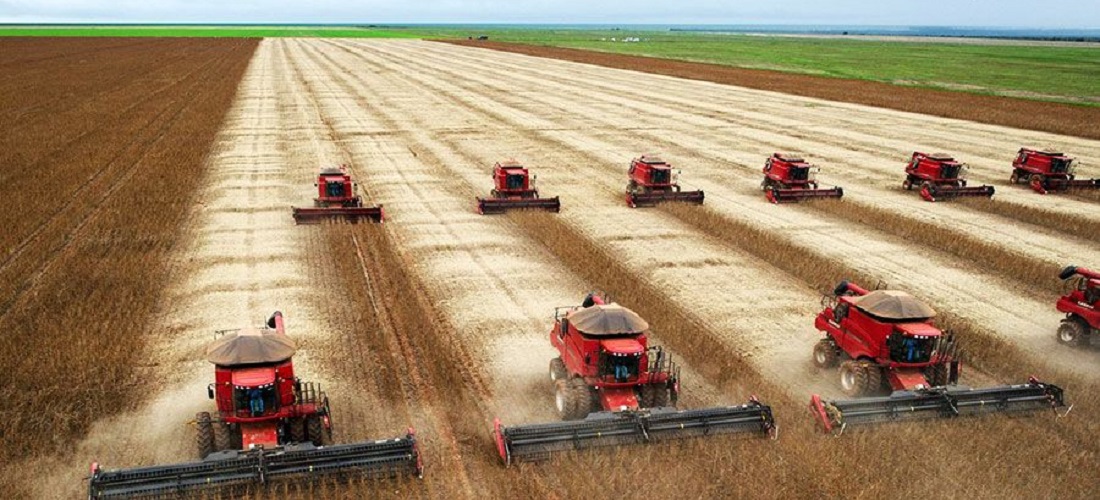
Brazil to strengthen role in global agricultural trade over next decade
Latin America is projected to maintain its position as the world’s leading agricultural exporting region until 2035, primarily driven by Brazil, Argentina, and Paraguay, as stated in the OECD-FAO Agricultural Outlook 2026-2035. By 2035, the report forecasts Latin America’s agricultural trade surplus could reach approximately US$150 billion, a figure three times higher than the projection for North America. Concurrently, South and Southeast Asia, the Middle East, and Sub-Saharan Africa are anticipated to boost their food imports due to expanding populations and rising incomes.
Worldwide agricultural output is forecast to increase by 13.3% by 2035, achieving a value of US$4 trillion. This expansion is anticipated to be spearheaded by middle-income nations, particularly across Asia-Pacific, Sub-Saharan Africa, and Latin America, collectively contributing over 80% of the total growth in global production.
Brazil, the United States, and the European Union are projected to collectively maintain their share of over half of all global meat exports in 2035. While China’s demand for beef is anticipated to stay robust, its proportion of global meat imports is likely to decrease as its domestic pork production grows. Due to constrained supply, beef prices are forecast to stay elevated in the near term.
Worldwide corn production is anticipated to continue its upward trend, with Brazil, China, and the United States identified as key contributors to this growth. Brazil is forecast to expand its portion of global corn exports, bolstered by the growth of its second corn harvest and the synergy between corn and soybean cultivation. The projected global corn export shares by 2035 are:
United States: 29%
Brazil: 26%
Argentina: 16%
Ukraine: 15%
According to recent port throughput data from Datamar, cargo flows are being redirected towards emerging shipping hubs. Notably, among Brazil’s primary corn export ports, the Port of Rio Grande experienced a significant increase in volumes, up 91.7% in the January-April 2026 period compared to the previous year, while the Port of Santarém recorded a substantial 271% growth during the identical timeframe. Conversely, established ports like Santos and Paranaguá observed decreases of 16% and 41%, respectively.
Brazil is anticipated to retain its position as the leading global producer and exporter of soybeans. The nation’s soybean output is forecast to expand by an average of 0.7% annually until 2035, primarily fueled by Brazil’s dual-cropping approach for soybeans and corn. Brazil is projected to be responsible for 61% of worldwide soybean exports by the close of this period.
Brazil is also anticipated to uphold its dominant role in the international sugar market. Domestic sugar production is forecast to hit 50.2 million tonnes in 2035, accounting for approximately 34% of the world’s total output. Regarding exports, Brazil is projected to contribute 72% of the global raw sugar trade and 28% of the white sugar trade, thereby solidifying its leading position alongside Thailand.
Improvements in productivity are anticipated to ensure Brazil remains the top global cotton exporter until 2035. The forecast shares of global cotton exports include:
Brazil: 39%
United States: 27%
Sub-Saharan Africa: 11%
Australia: 9%
Worldwide biofuel consumption is projected to increase by 1.4% annually throughout the coming decade. Brazil, Indonesia, and India are forecast to spearhead this production surge, driven by factors such as fuel demand, energy security objectives, and pledges to reduce emissions. Furthermore, Brazil is anticipated to boost its corn ethanol production.
Source: Valor Econômico





