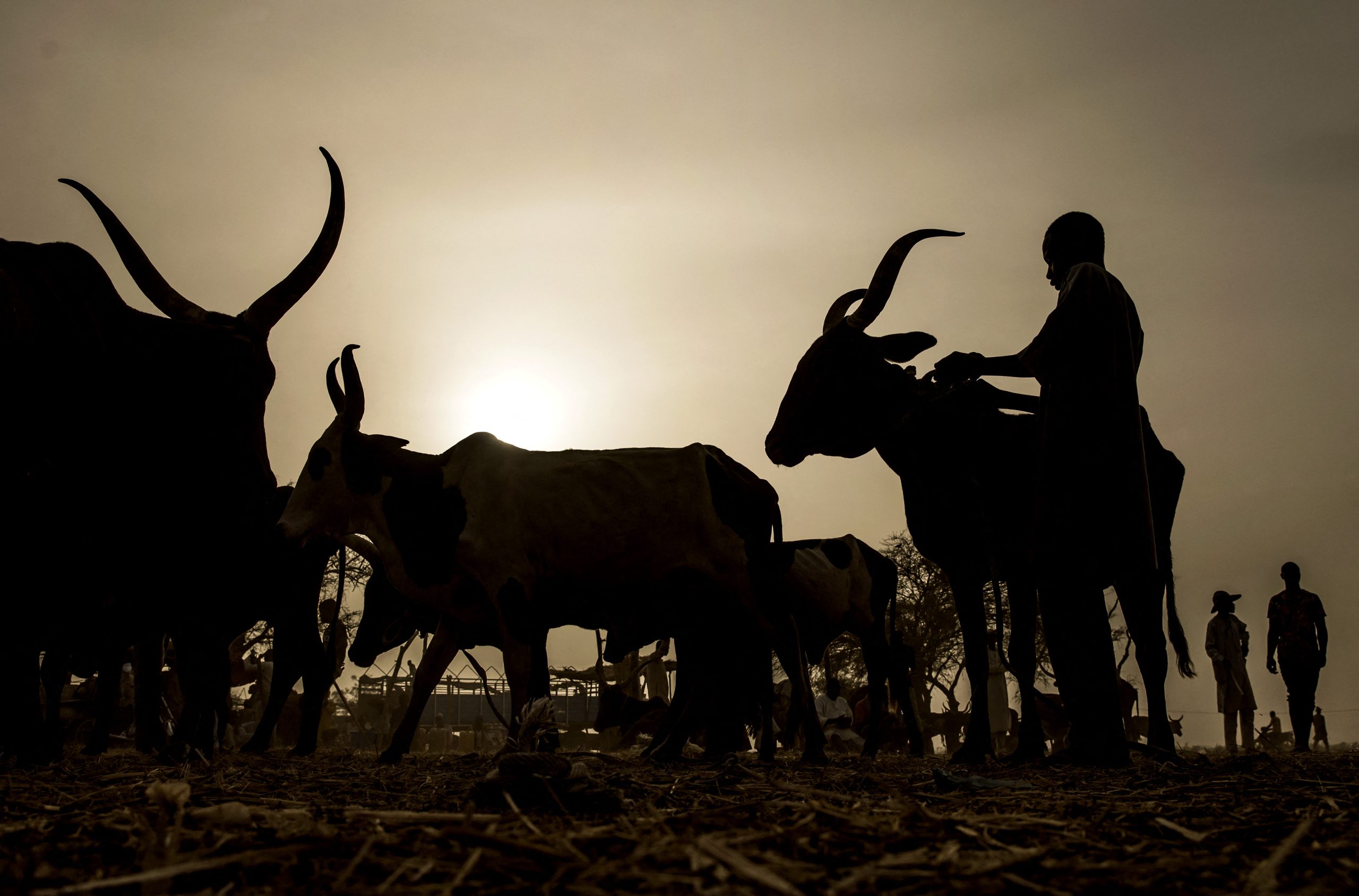
Livestock minister Idi Mukhtar Maiha said Nigeria’s traditional system of moving herds across the country was no longer sustainable as expanding farms, urbanisation and infrastructure projects have steadily erased grazing routes.
The plan, unveiled last week, comes after years of deadly farmer-herder violence in Nigeria’s Middle Belt, where competition for land and other reween 2020 and 2024, with about 1,015 more deaths recorded in 2025
‘We will not force the scheme’
But the proposal has revived conversations around disputes over land and ethnicity, dividing those who see ranching as a solution from those who fear it could deepen tensions.
“We will not force the scheme on the states,” Maiha tells The <a href="https://abs<a href="https://absafricatv.com/south-africa-blocks-shells-wild-coast-exploration-plans/” title=”South Africa Blocks Shell's Wild Coast Exploration Plans”>africatv.com/the-uneven-path-to-high-speed-connectivity-in-west-africa/” title=”The Uneven Path to High-Speed Connectivity in West Africa”>Africa Report. “It will follow consultations with key stakeholders, including farmers, herders, community leaders and state governors.”
READ MOREUS targets Nigeria’s sharia states with sanctions threats
But on the outskirts of Jos, a Middle Belt city, 46-year-old farmer John Ameh sees the proposal differently. Suspected herders have killed his wife and four of his relatives. Resettling herders nearby, he said, would feel like a defeat.
“God forbid,” he tells The Africa Report. “What happens to our lost families, farms and houses?”
A ghost of Ruga?
This is not the first time Nigeria has sought to resettle herders.
In 2019, former president Muhammadu Buhari’s government proposed Ruga (Fulani for human resettlement), a plan for dedicated settlements and ranches for nomadic, mostly Fulani herders. Buhari, himself a Fulani pastoralist, presented it as a way to curb the country’s long-running farmer-herder conflict.
READ MOREAnti-Christian violence: US ramps up pressure on Nigeria’s Fulani
Amid heavy backlash, Ruga was suspended in 2019. As similar concerns resurface, the livestock minister says the government has learned from the failure of Ruga.
“It is the state governors who control the land of their respective states,” says Maiha. “It is impossible for land resettled for herders to be permanently claimed by herders.”
“Every activity inside the resettled area will also be controlled by the state,” he adds.
We have not seen serious trials of herders’ crimes
Miriam Adah, researcher at Armed Conflict Location and Event Data (ACLED), a conflict monitoring group, tells The Africa Report that the longstanding rivalry between the two groups has increasingly taken on religious and ethnic dimensions. The resettlement plan, she warned, could become a new
“Issues of distrust for both governments and non-indigenous visitors exist, and aggrieved communal militias with outstanding grievances could take the settlement as an opportunity to settle previous scores,” she says.
Pastoralist profiling
The resettlement plan entered the mainstream media Tuesday, when the government announced plans for grazing reserves and ranches. But many rural herders in the Middle Belt and south have barely heard of it.
50-year-old Isa Wada, a pastoralist near Lokoja, hopes the plan will provide safer grazing. In 2022, he lost more than a dozen cattle to rustling. Two years later, during a farmer-herder crisis, suspected farmers killed two relatives, both under 17, in another Middle Belt community.
“I think this can end the crisis,” he says. “If cattle stop roaming farms and open land, both sides will be safer.”
READ MORENigeria: Attacks on northern Christians… targeted killings or climate-change conflict?
Nigeria’s cattle economy relies heavily on Fulani pastoralists for meat, hides, milk and livestock distribution. But its largely informal nature, Wada says, has fuelled the profiling of Fulani as criminals.
Farmers in Middle Belt communities, meanwhile, say herders often escape prosecution after attacks. “We have not seen serious trials of herders’ crimes,” says Haruna Ikem, 36, a farmer in Jos.
Miyetti Allah, the cattle association, did not respond to requests for comment. But it has previously said herders are victims of rustling and rejected portraying pastoralists as criminals.
A political gamble
Tinubu created the ministry of livestock development in July 2024 to modernise the cattle industry and tackle farmer-herder violence, while answering a longstanding demand from Fulani livestock groups.
But the conflict has become a liability beyond Nigeria’s borders. In 2025, the Trump administration designated Nigeria a Country of Particular Concern over religious-freedom concerns, amid accusations that the government had failed to protect Christians. Nigeria has since sought to reassure Washington even as security cooperation has deepened.
At home, the violence has become politically charged. Tinubu’s Muslim-Muslim ticket has given opponents grounds to portray attacks on predominantly Christian communities through a religious lens, even as the conflict also reflects land disputes, communal grievances and criminality.
For ACLED, that complexity raises doubts about whether settlements can deliver the security the government promises. “The resettlements could make matters worse,” says Adah, the research manager. They could intensify violence, create new grievances and give opportunistic criminals cover under the farmer-herder label.
-
in Lokoja, Kogi and Jos, Plateau