Culture is not an aesthetic preset. You cannot prompt your way into a lived experience.
I have spent a great deal of time thinking about two fundamental questions: first, what makes a story feel like us? And second, what is the future of African storytelling?
It is the way a mother calls her child’s full name when she is angry. The sound of a generator coming on in the middle of a conversation. Lagos traffic. The humour we find in difficult situations. Our languages, music, spirituality, food, family dynamics and contradictions. These are the little details of lived experience that make a story unmistakably ours, even when it travels thousands of miles away.
And that is why the conversation around artificial intelligence and Nollywood cannot simply be about technology. It must also be about identity and culture.
AI is changing the way films and content are conceived, developed, designed, produced and finished. For Nigerian filmmakers, this presents an extraordinary opportunity.
Nollywood has always been an industry that does more with less. AI potentially gives emerging filmmakers access to capabilities that once required significant capital, large crews, expensive equipment or international production infrastructure. AI is simply a tool.
A filmmaker with a compelling idea can visualise a world before raising millions to build it. An animator can prototype characters without a traditional studio. A producer can explore locations, costumes, production design and visual effects much earlier in the creative process. Independent filmmakers can experiment with stories and genres that might previously have been considered commercially impossible. That is powerful.
But we must be careful not to confuse access to technology with access to creativity. AI can generate an image of Lagos. It can generate an Igbo masquerade. It can generate a Nigerian character. It can even generate a voice that sounds Nigerian. But none of those things automatically make a story Nigerian.
The real opportunity for Nollywood, therefore, is not to use AI to make Nigerian stories look more futuristic, more polished or more “Hollywood”. It is to use AI to tell more and better Nigerian stories, in more ways and to more people. That distinction matters.
Through the Naija AI Film Festival, which I founded to spotlight filmmakers exploring AI and emerging technologies, I have had the opportunity to engage with creators experimenting with these tools in very different ways.
Some are using AI to create entire visual worlds. Others are using it selectively for ideation, previs, animation, post-production, sound and experimentation.
What interests me most is not the technology itself. It is what happens when a filmmaker brings their own cultural imagination to the technology. That is where the magic happens.
But we also have to be honest about the disruption.
AI will affect actors, writers, illustrators, designers, editors, composers, cinematographers and other creative professionals. Some roles will change. Some workflows will become faster. Some jobs may disappear or be redefined and, more importantly, new jobs will emerge.
We should neither romanticise this disruption nor panic about it. The question is: what kind of creative economy do we choose to build around it?
Technology should create new creative opportunities rather than simply become a mechanism for replacing people with cheaper machines. That requires ethical standards.
If an actor’s face or voice is replicated using AI, was there consent? Was there compensation? Who owns the resulting digital asset? If a filmmaker’s work is used to train an AI model, was that use authorised? If AI has made a substantial contribution to a film, should audiences be told? These are no longer theoretical questions.
Nollywood needs clear principles around consent, attribution, ownership, compensation and transparency. And those principles should be developed with creatives, not simply imposed upon them.
The government also has an important role to play, but I believe that role should be enabling rather than restrictive.
Nigeria needs policies that encourage investment in AI infrastructure, creative technology education, research, intellectual property protection and access to compute. We need young filmmakers to have opportunities to experiment without requiring Silicon Valley-sized budgets.
But regulation must be thoughtful. The worst thing we could do is respond to a rapidly evolving technology with rules designed for a world that no longer exists. We should protect people without suffocating experimentation. Because ultimately, AI is not the story. The human being is still the story.
The camera did not kill filmmaking when it arrived. Digital cameras did not kill cinema. Non-linear editing did not kill editors. CGI did not kill imagination. Every technological revolution changes the tools. The question is whether we remain intentional about what we use those tools to say. That is the philosophy behind the Naija AI Film Festival.
When we launched NAIFF, the objective was never simply to celebrate people who could write clever prompts. It was to create a space where filmmakers could explore what happens when African storytelling meets emerging technology, and to ask bigger questions about where our creative industries are heading.
Our second edition, taking place on September 19 and 20, continues that journey. We are expanding the conversation across creativity, technology, education and the future of African storytelling, while creating more space for filmmakers and creators to experiment, learn and engage with the possibilities and challenges of AI.
Because Africa should not simply be a consumer of the next generation of creative technology. We should be contributors to what that future looks like.
Nollywood has already proven that it can build a globally recognised film industry with limited rets audience
AI gives us another set of tools. What we do with them is up to us. We can use AI to imitate the world. Or we can use it to imagine worlds that have never existed before.
For me, the future of Nigerian cinema is not AI versus human creativity. It is human creativity amplified by AI. And if we get that balance right, technology will not erase our cultural identity. It may finally give us the tools to express it at a scale the world has never seen.
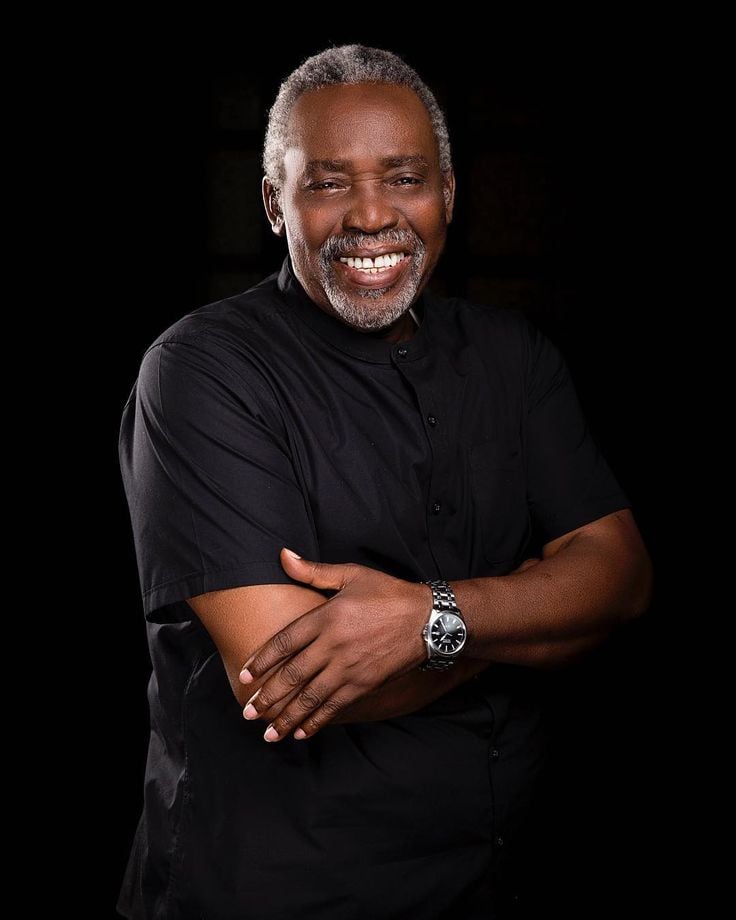
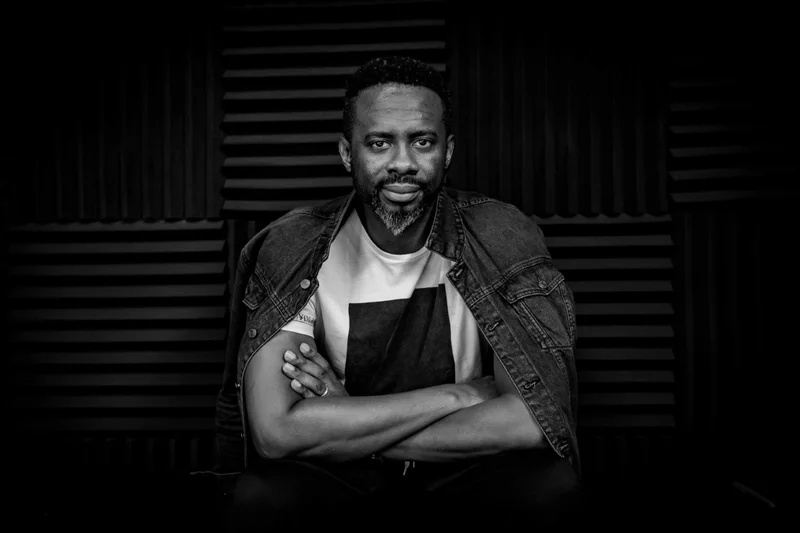
- Obinna Okerekeocha is founder of Naija AI Film Festival.


We have recently deactivated our website’s comment provider in favour of other channels of distribution and commentary. We encourage you to join the conversation on our stories
More from Peoples Gazette


Agriculture
FG tasks ECOWAS on leveraging financing strategies for agroecology
The federal government has urged stakeholders in the agriculture and finance sectors in the West Africa region to leverage financing strategies to enhance agroecology practices
Politics
Katsina youths pledge to deliver over 2 million votes to Atiku
“Katsina State is Atiku’s political base because it is his second home.”


Heading 5
South African govt raises alarm over rising mpox cases, calls for public vigilance
South Africa’s Department of Health urged citizens to watch for mpox symptoms as the country has seen a rapid rise in laboratory-confirmed cases in recent weeks.
States
Gov Fintiri inaugurates new mosque at Adamawa government house
Mr Fintiri said the worship centre would serve Muslim faithful working in the government house and adjoining communities.


Economy
Women’s participation in taxation critical to business growth: NRS
The Nigeria Revenue Service (NRS) says women’s participation and influence in tax decisions could help women-owned businesses to grow.


Abuja
Civil servants decry hike in petrol pump price, transport fares
A litre of petrol, which was sold between N1,180 and N1,350, is now selling for between N1,388 and N1,450 in the FCT.
NationWide
FG seeks Qatar’s partnership to tackle 15 million housing deficit
Mr Darma said the proposed partnership would support the provision of social housing across the country’s 774 local government areas.
States
Six kidnap victims rescued in Kaduna, Katsina
Six abducted victims were rescued during separate operations in Kaduna and Katsina states by troops of Operation Fansan Yamma.