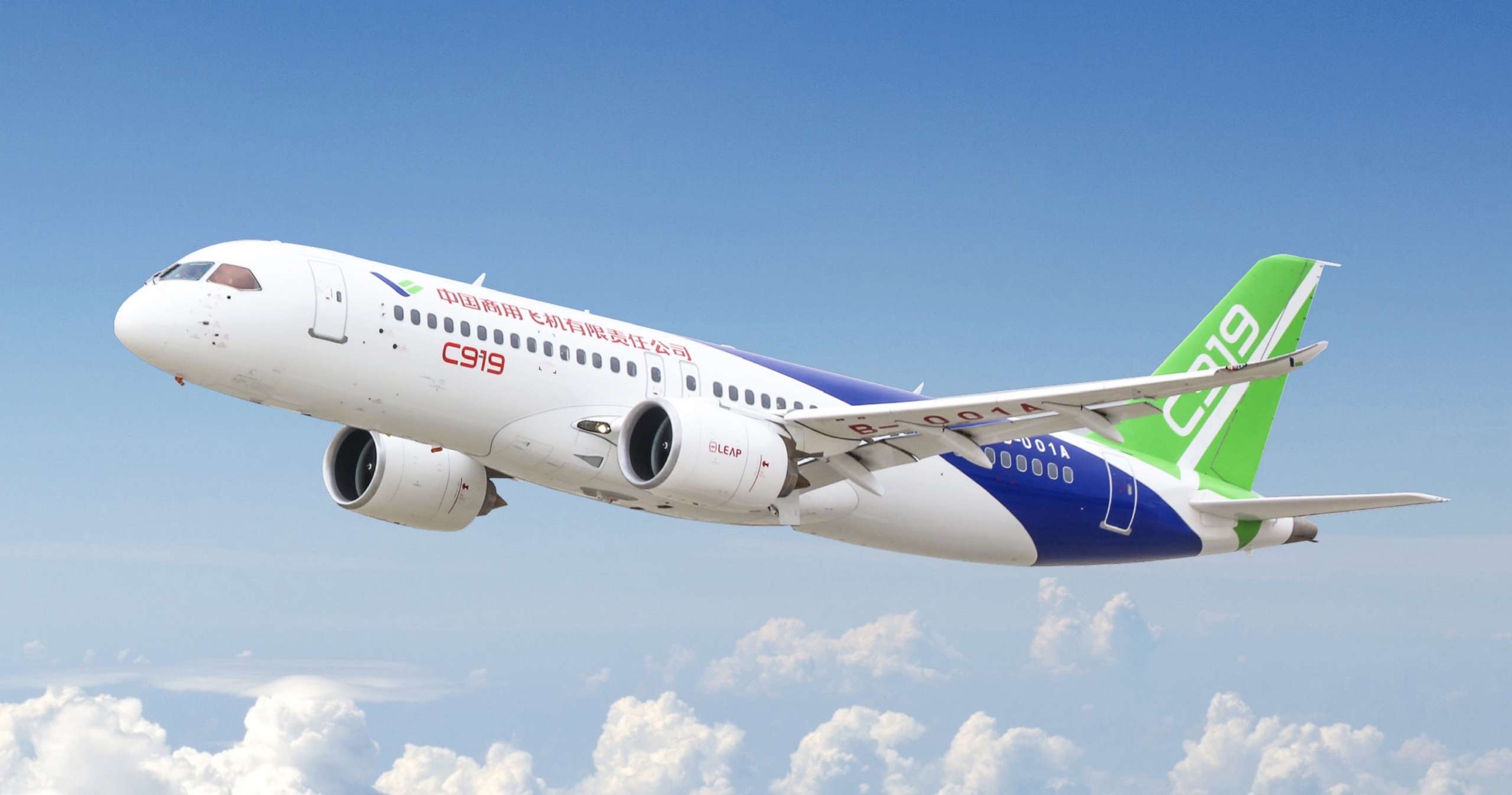
China’s first C919-600 high-altitude variant has completed its maiden flight 29 July after taking off from Shanghai Pudong International Airport, marking another milestone in the development of COMAC’s narrowbody aircraft family.
The flight, first reported by Global Times and later confirmed by the Commercial Aircraft Corporation of China (COMAC), completed all planned test objectives. The manufacturer said the successful flight marked an important step in the serial development of the C919 programme.
https://x.com/DavidWangPLA/status/2082322905124438204
The aircraft is based on the standard C919 but has been modified for operations at airports located at high elevations, where thinner air reduces engine performance and wing lift. Those conditions require aircraft capable of operating safely with heavier performance margins during take-off and landing.
Specialised modifications are designed for airports across China’s Tibetan Plateau
The high-altitude aircraft incorporates several changes compared with the baseline C919. These include a shortened fuselage, reduced weight and enhancements to onboard systems to meet the demands of plateau operations.

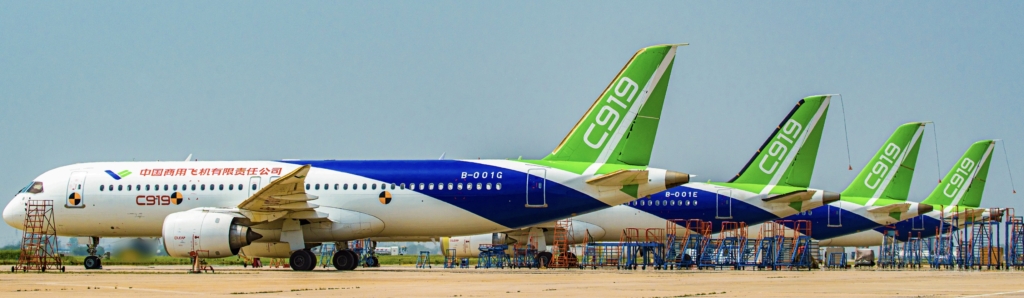
The variant is designed to carry between 140 and 160 passengers, slightly fewer than the standard C919, while maintaining the performance needed to serve airports across western China. Under Chinese civil a or higher are classified as high-altitude airports
https://x.com/Fahadnaimb/status/2082366038868627834
Removing six fuselage frames reduces the aircraft’s overall weight, improving its ability to operate in thinner air while maintaining commercial payloads. The prototype, registered B-002U (manufacturer serial number 00032), began taxi tests at Shanghai Pudong in June before progressing to its first flight.
High-altitude operations present unique challenges for commercial aircraft
Aircraft operating at high-altitude airports face significantly different conditions from those flying at sea level. Lower air density reduces both engine thrust and the amount of lift generated by the wings, meaning aircraft often require longer runways for take-off and landing.
China’s western regions, particularly Tibet, contain some of the world’s highest commercial airports, creating demand for aircraft specifically optimised for these conditions.
The new variant has been developed jointly with Tibet Airlines, which plans to use the aircraft across its network serving the Tibetan Plateau.
The airline announced an order for 40 aircraft as part of the programme launched in 2023. The partnership givesCOMAC access to operational experience from an airline that routinely flies into some of China’s most demanding airports.
Development has progressed through a series of certification and ground tests
The maiden flight follows several development milestones over the past year.
Earlier this year, the Civil A certified the aircraft’s outer wing box, manufactured by AVIC Xi’an Aircraft Industry Corporation. The approval cleared one of the programme’s major structural components before flight testing began

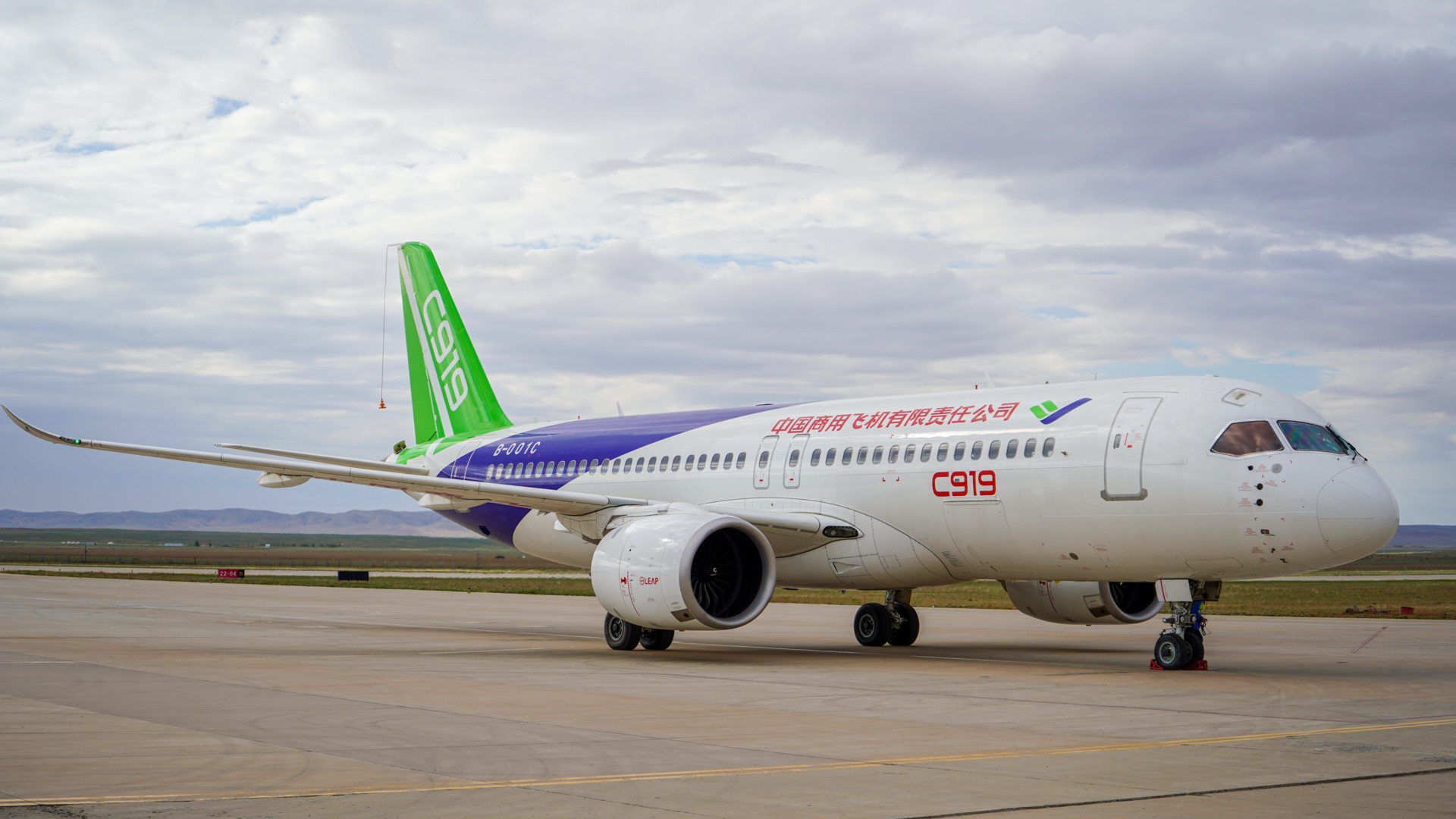
The aircraft then completed taxi trials at Shanghai Pudong International Airport in June, allowing engineers to validate ground handling and systems performance before the first flight.
The successful maiden flight now allows COMAC to move into a broader flight-test campaign aimed at validating the aircraft’s performance before certification.
The new aircraft broadens COMAC’s strategy for the C919 family
The high-altitude aircraft forms part of COMAC’s wider plan to expand the C919 into a family of aircraft serving different market segments


The standard C919 entered commercial service in 2023 and typically seats between 158 and 192 passengers. The shorter C919 high-altitude variant targets routes where airport elevation limits the use of larger aircraft, while COMAC is also developing a stretched C919-800 variant aimed at increasing passenger capacity.
The programme reflects COMAC’s strategy of tailoring the C919 to specific operating requirements rather than relying on a single configuration.
For China, the development also supports efforts to improve air connectivity across western provinces where geography and altitude continue to present operational challenges for airlines.
Although the aircraft has entered commercial service within China, the C919’s international expansion remains limited while it awaits certification from the European Union A and the US Federal A
Chinese media reported that the C919 passenger jet is slated to make its international commercial debut in August, with Mongolia as its first destination.
The daily service connecting Beijing and the Mongolian capital of Ulaanbaatar will begin on Aug. 12, offering one round-trip flight per day, Xinhua reported.
The successful first flight of the high-altitude variant nevertheless represents another step in broadening the C919 programme, with certification testing expected to continue as COMAC prepares the aircraft for commercial operations on some of the world’s highest airline routes.
News
Air TransportInnovation & TechnologyAines
Sign up for our newsletter and get our latest content in your
inbox.
1
Porter Airlines upgrades Dash 8 cabins with world’s lightest aircraft seatsPorter Airlines upgrades Dash 8 cabins with world’s lightest aircraft…
Porter Airlines
2
US Marine Corps begins major AH-1Z Viper and UH-1Y Venom upgrade to prepare H-1 fleet for future battlefieldUS Marine Corps begins major AH-1Z Viper and UH-1Y Venom…
Bell Textron
3
Stratolaunch’s Talon-A reaches double-digit reusable hypersonic flights for customersStratolaunch’s Talon-A reaches double-digit reusable hypersonic flights for customers
Boeing 747
4
Singapore Airlines posts first-quarter loss despite strong passenger demandSingapore Airlines posts first-quarter loss despite strong passenger demand
Singapore Airlines