


Sometimes the most fulfilling travel experiences are the ones you happen upon by chance. From mural-lined streets to repurposed warehouses humming with creative energy, these neighbourhoods invite slow wandering, curiosity and connection, writes Lee-Ann Steyn.
Why creative neighbourhoods reward wandering
Some neighbourhoods are best experienced without headphones, flags or fixed meeting points. Creative districts thrive on spontaneity. They are shaped by artists, designers, musicians, cooks and makers whose work spills into the streets, shopfronts and cafés. Exploring them solo allows travellers to move at their own pace, follow instinct over itinerary and discover places that never make it onto formal tours.
These are places where you can linger over a coffee, duck into a gallery because the door is open or sit on a stoep watching daily life unfold. All you need is time, comfortable shoes and a willingness to get pleasantly lost.
Ihwa mural village, Seoul, South Korea
Ihwa mural village, Seoul/[email protected]/Wikimedia Commons
Art-led regeneration on a hillside canvas
Perched on the slopes near Naksan Park, Ihwa Mural Village is an open-air gallery woven into a residential neighbourhood. Once overlooked, the area was transformed through public art projects that turned staircases, walls and alleyways into vibrant storytelling spaces.
There is no set route here. Painted steps lead into quiet lanes, murals appear around corners and views over Seoul open up unexpectedly. Visitors can wander freely, pausing for photographs or simply soaking up the contrast between everyday life and large-scale art.
Best explored on foot, Ihwa rewards slow exploration and respectful curiosity.
Tianzifang, Shanghai, China

Tianzifang, Shanghai/lienyuan lee/Wikimedia Commons
Old lanes, new creative energy
Hidden within Shanghai’s former French Concession, Tianzifang is a dense network of narrow alleys where traditional shikumen houses now host design studios, artisan shops, cafés and small galleries.
What makes Tianzifang ideal for unguided exploration is its scale and texture. There is no main attraction to tick off. Instead, travellers drift between tea shops, jewellery makers and tucked-away courtyards, often stumbling upon artists at work.
It is busy and layered but still intimate enough to explore intuitively, one alley at a time.
Gràcia, Barcelona, Spain

Gràcia, Barcelona/Txllxt TxllxT/Wikimedia Commons
Village spirit with a creative heartbeat
Gràcia feels more like an independent village than a Barcelona neighbourhood. Its charm lies in its walkability, leafy squares and strong local identity. Artists’ studios, bookshops and neighbourhood bars sit side by side, while public squares double as performance spaces and meeting points.
Without a guide, visitors can meander between plazas, stop for vermouth or tapas and watch the rhythm of daily life unfold. Street art and handmade signage hint at the area’s creative roots, while festivals and live music add layers of spontaneity.
Gràcia proves that creativity does not need spectacle to make an impression.
Baltic Triangle, Liverpool, England

Street art in Baltic Triangle,Liverpool/Fatih Renkligi/Wikimedia Commons
From warehouses to creative playground
Once an industrial zone of docklands and storage buildings, Liverpool’s Baltic Triangle has reinvented itself as a hub for artists, designers and independent businesses. Old brick warehouses now house studios, markets, music venues and experimental eateries.
This is a neighbourhood built for exploration. Street art changes regularly, pop-up events appear without warning, and each block offers something different. Visitors can wander freely, moving between cafés, galleries and beer gardens without needing a planned route.
It is gritty, energetic and refreshingly unscripted.
Borgerhout, Antwerp, Belgium

District House of Borgerhout, Antwerp/Torsade de Pointes, Public domain, via Wikimedia Commons
A multicultural neighbourhood shaped by locals
Borgerhout sits just outside Antwerp’s historic centre, yet feels worlds apart from polished tourist zones. Known for its diversity and strong community culture, the neighbourhood is rich in grassroots creativity.
Murals, small performance spaces, informal galleries and food spots reflect the area’s layered identities. Visitors who explore without a guide often find themselves drawn into local markets, community cafés and unexpected street scenes.
Borgerhout rewards openness and curiosity rather than checklists.
Maboneng and Braamfontein, Johannesburg, South Africa
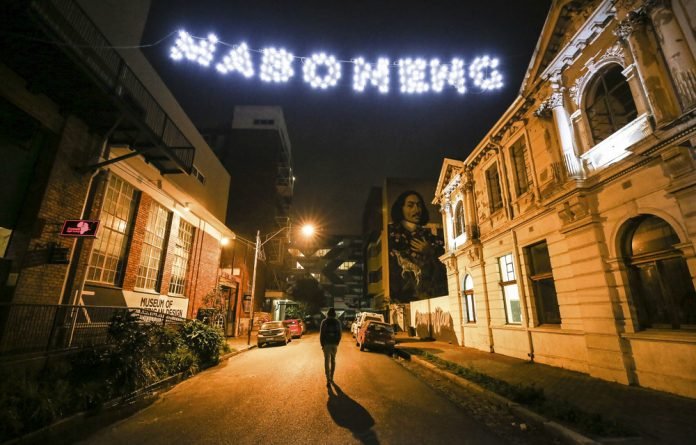
Maboneng/Getaway Gallery
Urban reinvention driven by art and design
Johannesburg’s creative pulse is most visible in Maboneng and nearby Braamfontein. Once dominated by neglected buildings, these areas are now home to galleries, design studios, rooftop bars and independent restaurants.
Arts on Main, 44 Stanley and surrounding streets invite visitors to wander between studios, shops and eateries. On weekends and during First Thursdays, the energy spills onto the streets, but even on quieter days, there is plenty to discover at your own pace.
Exploring these neighbourhoods without a guide allows space for conversations, chance discoveries and a deeper sense of the city’s creative resilience.
More creative neighbourhoods worth wandering

Lavapiés, Madrid/Nicolas Vigier from Madrid, Spain, CC0, via Wikimedia Commons
Global districts made for self-guided discovery
For travellers seeking similar experiences elsewhere, these neighbourhoods offer the same walkable, creative appeal.
- Palermo, Buenos Aires: Cobblestone streets, colourful murals and café culture blend with fashion studios and markets.
- Lavapiés, Madrid: A multicultural district where street art, independent theatres and global food scenes intersect.
- Metelkova, Ljubljana: A former military complex turned autonomous cultural zone filled with music venues and visual art.
Each of these areas thrives on organic exploration rather than formal structure.
How to explore creative neighbourhoods without a guide
Simple ways to get more from the experience
- Walk wherever possible and resist the urge to plan every turn.
- Follow visual cues like murals, handmade signs or clusters of cafés.
- Step inside spaces that feel open and welcoming.
- Talk to locals behind counters or in galleries for informal tips.
- Allow time to sit, observe and absorb rather than rush between stops.
The magic often happens when you slow down.
Why these neighbourhoods should be considered
Creative neighbourhoods reflect a city’s living culture rather than its curated highlights. They evolve constantly, shaped by the people who live and work there. Exploring them without a guide creates space for personal connection, unexpected encounters and stories that feel uniquely your own.
In a world of over-planned travel, these places remind us that wandering is still one of the most meaningful ways to explore.
Follow us on social media for more travel news, inspiration, and guides. You can also tag us to be featured.
TikTok | Instagram | Facebook | Twitter
ALSO READ: A design lover’s guide to Johannesburg’s architectural landmarks
