


The Wyoming-based crypto bank has argued unsuccessfully for a Fed master account for years. Now it’s calling the central bank’s denial a “death sentence.”


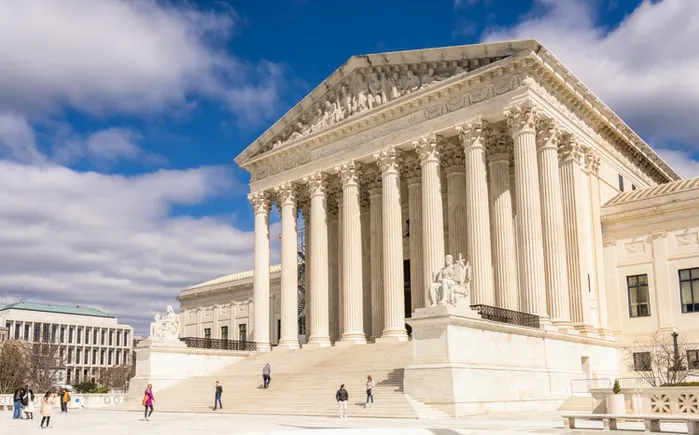
Wyoming-based digital-asset bank Custodia has petitioned the Supreme Court to review aMarch rulingby the 10th Circuit Court of Appeals that upholds a barrier preventing the lender from accessing a Federal Reserve master account.
The case hinges on an “exceptionally important question,” Custodia wrote in the petition Friday,seen by Banking Dive: “whether regional Federal Reserve Bank presidents possess unbounded, unreviewable discretion to deny disfavored banks access” to such payment services.
Custodia’s petition cites the Supreme Court’sJune opinioninTrump v. Cook, which acknowledges a boundary to executive power.
“Given the Federal Reserve’s unique independence from presidential control, it is particularly important for the court to ensure that the power the Fed claims to possess has in fact been authorized by Congress,” Custodia wrote.
The cryptocurrency bank’s fight for a master account – which would enable it to settle transactions, hold reserves and send payments directly through the Fed’s system without an intermediary bank – has stretched years.
The Wyoming lendersued the Fedin June 2022, noting that it had been waiting 19 months for its master account application to be processed – even though central bank materials indicated the process typically takes “5-7 business days.”
Custodia’s rancor was further inflamed when theFed approved BNY– in short order – to take custody of clients’ crypto assets. The Feddisputed Custodia’s allegationsthat the central bank showed favor toward BNY.
The Fed and its Kansas City regional bank thendenied Custodia’s applicationin January 2023, arguing the crypto firm’s business model relied too heavily on volatile crypto markets and lacked sufficient controls to manage risk of intrusion by illicit finance. The Fed also cited Custodia’s limited experience in traditional risk management and the potential systemic implications of granting direct access to a crypto-centered institution.
Custodia argued the central bank and the Kansas City Fed hadillegally coordinatedto reject the application.
The Fed thenrejected Custodia’s requestto reconsider the application, detailingthree waysin which the bid fell short.
Custodia’s argument, however, found backing from at least one judge along its journey. JudgeTimothy Tymkovichof the 10th Circuit Court of Appeals wrote a dissenting opinion last October, criticizing his bench-mates for “endors[ing] a reading of federal law that allows unappointed bank officials to exercise significant yet unreviewable executive authority.”
“I doubt our Constitution allows that,” Tymkovich wrote. “By claiming unreviewable discretion over access to the nation’s financial system, the Fed has gone too far.”
Reserve bank presidents are not officers of the United States, Tymkovich wrote. They are not elected or appointed by the executive or legislative branches but rather are chosen by a board of directors composed of private citizens selected, in part, by private member banks, he wrote.
Custodia recapped that point Friday to the Supreme Court.
“The Fed’s aggregation of such enormous power in its unappointed reserve bank presidents flouts statutory text and has stark implications for its power vis-à-vis the President; for the constitutionality of the Fed’s appointment structure; and for the continueds and regulate local banking,” the company said in its filing
Custodia illustrated what it saw as a divide between state and federal regulation.
“Wyoming has long strived to become the center of the nation’s crypto industry and has enacted a robust regulatory scheme that authorizes banks” like Custodia to be chartered, the lender wrote. “But the president of the Kansas City Fed disagreed with Wyoming’s policy choice.”
The Supreme Court is on a three-month recess and will reconvene in October.
In its petition, Custodia labeled the case’s importance as “monumental.”
“It is a massive undertaking for a bank laboring under a death sentence to litigate the issue all the way to the [Supreme] Court, and there is unlikely to be another opportunity like this one in the foreseeable future,” Custodia wrote in its petition.
Over the past several months, other avenues for crypto-centric lenders have opened, including a“skinny” master accountfrom the Fed.
“Without the Court’s intervention here, the Fed’s flouting of the statutory constraints on its authority will continue indefinitely,” Custodia wrote Friday. “The Court should not let the Fed’s power grab go unchecked.”
Filed Under:Regulations & Policy,Fintech


