


It’s been nearly three weeks since 18-year-old Onke Komsana from the rural village of Sithebe in Ngcobo in the Eastern Cape left home for initiation school – the rite of passage for Xhosa boys transitioning to manhood.
Onke’s father, Abonga Komsana, has faith that his son is in safe hands under the guidance of a trusted ikhankatha (traditional nurse). But the 41-year-old father of three still finds himself waking up at all hours of the night.
Onke is among thousands of adolescent boys and young men undergoing this rite of passage during the summer initiation season. The ritual lasts three weeks to a month, during which initiates camp in forests outside the villages. Once the process is complete, families welcome them back with big ceremonies where cows and sheep are slaughtered to celebrate their coming of age.
”Taking your son to the mountain is a scary moment for any father. I have had sleepless nights in the days leading up to his initiation. And even to this day, I worry a lot, although I make a point of visiting his ibhoma (traditional hut which serves as a home for an initiate) every day,” Komsana tells Health-e News.
Celebrations marred by death
But a dark cloud hangs over the fanfare; headlines of initiates dying or losing their penises due to botched circumcisions have become commonplace. The Eastern Cape health department has already confirmed the deaths of nine initiates this summer. At least five deaths were recorded in the winter initiation season in July. In 2024, a total of 28 initiates lost their lives.
Eastern Cape House of Traditional and Khoisan Leaders chairperson, Nkosi Mpumalanga Gwadiso, tells Health-e News that illegal initiation schools continue to be a major problem and calls on communities to be vigilant and report them to authorities. He says bogus traditional surgeons, who see this ritual as a money spinner, take boys who are desperate to become men and circumcise them without the consent of their parents.
“Nine deaths are quite disappointing, especially given the ‘Mabaye Bephila babuye Bephila’ (Let them go to initiation schools alive and come back alive) awareness campaigns undertaken through training of traditional surgeons and iimbizos. But monitoring teams shouldn’t be discouraged, but should rather soldier on and mitigate risks until the end of the season,” says Gwadiso.
Steps to protect initiates
To ensure the safety of initiates across the country, the government introduced the Customary Initiation Act of 2021. According to the Act, prospective initiates need to undergo medical tests and then obtain a certificate of good health, which must be presented to the ingcibi (traditional surgeon). Prospective initiates also need a consent form signed by a traditional leader.
Eastern Cape Co-operative Governance and Traditional Affairs MEC, Zolile Williams, tells Health-e News that monitoring teams are scattered throughout the province.
Subscribe to our newsletter
“So far, 21 people have been arrested for illegal circumcision. We commend our teams and the police for stamping out the authority of our government against lawbreakers,” says Williams.
In addition to illegal initiation schools, Gwadiso says dehydration is also a major cause of death.
“We have to deal with the mindset of our people. There is still the belief that, as an initiate, you should not drink water. As a result, some initiates stop drinking water a week before going to initiation school,” he explains. “The myth is that if you drink water, it will take longer for an initiate to heal.”
Tradition vs. medical circumcision
Parents have been divided on whether to continue taking their boys to traditional initiation schools or have them circumcised in hospitals.
The Komsanas say they had no choice but to take their son to a traditional initiation school; they feared that he would be isolated by the community if he got circumcised in a hospital.
One man from Ngcobo, who asked not to be named, tells Health-e News that initiates who get a medical circumcision are ostracised and sidelined from various traditional activities, including sacred rituals at the ibhoma.
“It is sad because this ritual has long lost its traditional significance. Back in the days, the initiates were taught many valuable lessons while in the mountain, such as how to behave and how to treat women,” the man bemoans. “But now they come out of initiation schools as tsotsis who smoke weed, take drugs and terrorise communities. So, to be honest, there is no longer a need to criticise medical male circumcision. Our children are dying in the name of tradition.”
Ingrained tradition
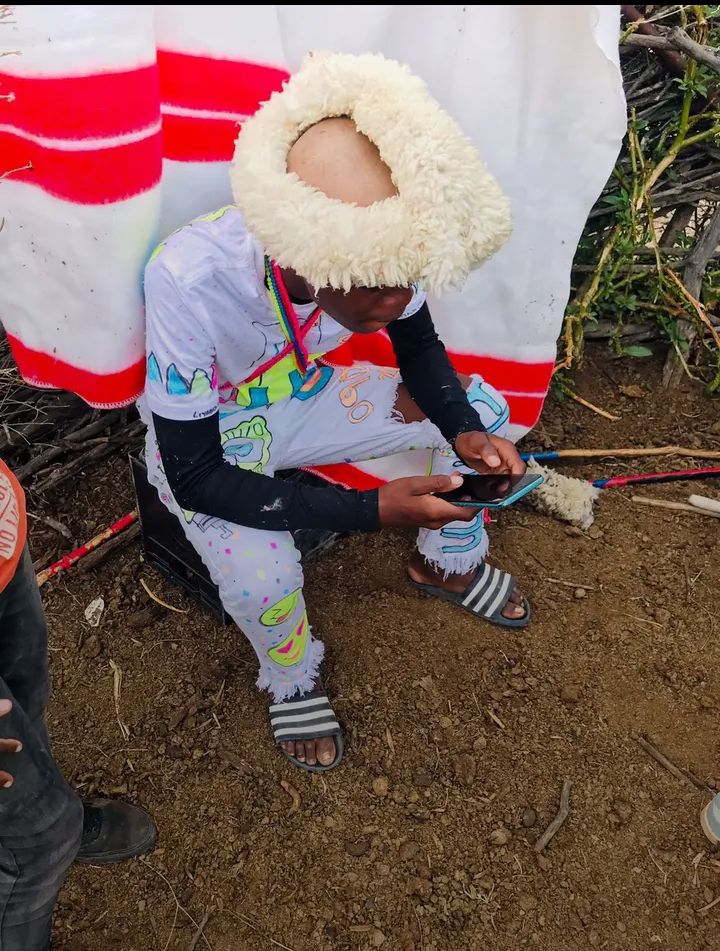
On a gravel road leading to an initiation school in Dutywa, a bakkie is busy loading young boys from various villages who are ready to make the transition from boyhood to manhood. Dressed in torn clothing, they are singing traditional songs and blowing whistles, seemingly oblivious to the life-changing journey that lies ahead.
One of them is 19-year-old Somila Valo, in high spirits, he says he’s been waiting for this moment all his life. A first-year education student, Valo says, despite all the horrific stories of his peers dying, he is raring to go.
“I’m fully ready. As a tertiary student, this has been a hard year for me because, as a boy, my peers who are already men gave me a hard time. I couldn’t take a shower with them or engage in certain men’s topics. But I had to persevere because my parents weren’t ready last year,” he says.
“Now my time has come, and I am very much excited. I hear some boys say that doing it in the hospital is the safest, but I want to do it the right way, just like how my father did it. I can’t wait to finally become a man.” – Health-e News

