



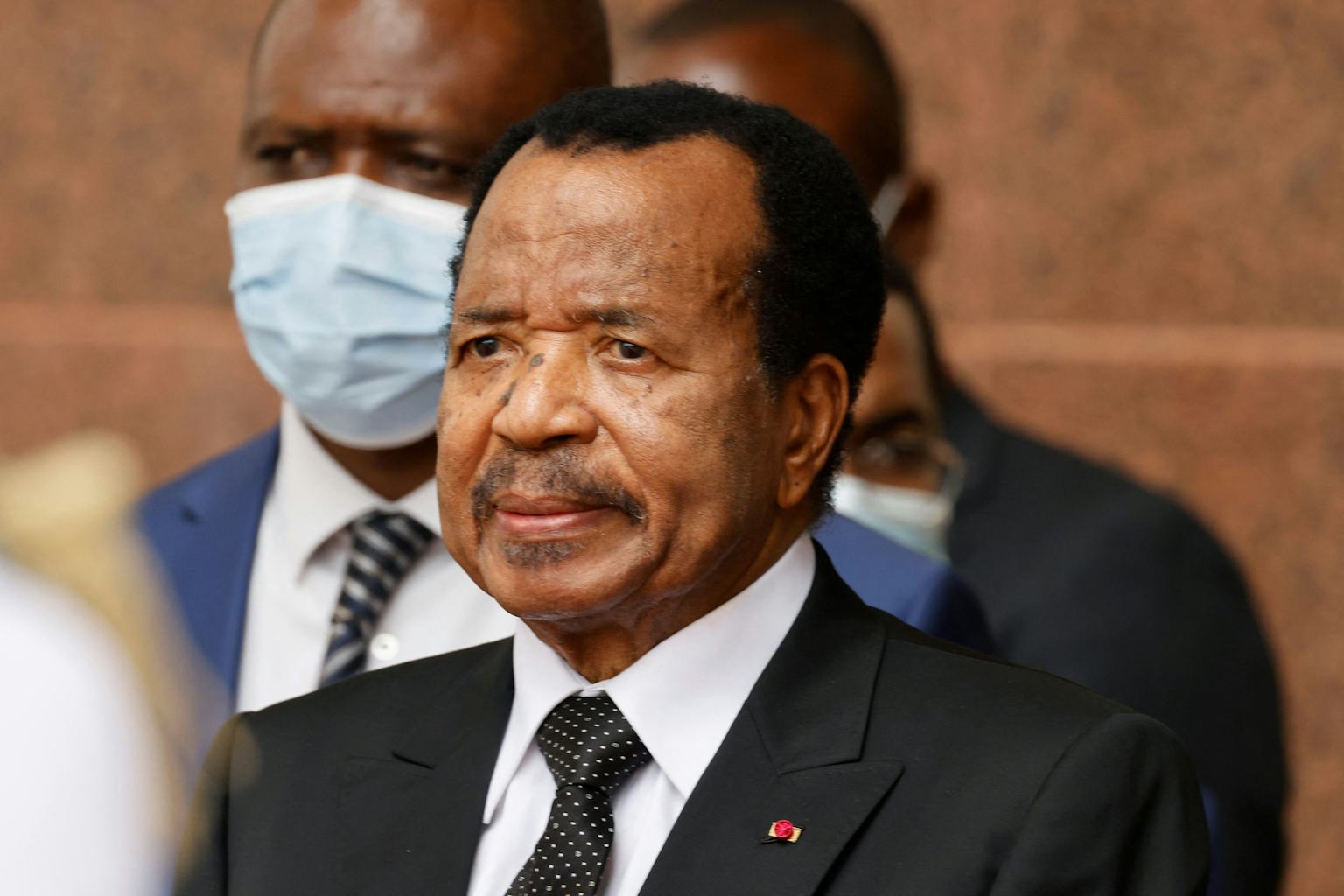
Eight months after Cameroon’s deeply disputed October 2025 presidential election, the country remains trapped in one of the most unusual political silences in its modern history. Paul Biya, now 93 years old and still officially the world’s oldest sitting head of state, has yet to form the government he personally promised Cameroonians on New Year’s Eve last year.
And that silence is no longer being interpreted as ordinary political delay.
It is now increasingly being viewed as evidence of something much deeper: a regime quietly struggling with the realities of succession, internal power rivalries, and the uncertain future of a political system built almost entirely around one man for more than four decades.
On December 31, 2025, in what many observers described as an unusually direct commitment, Paul Biya told Cameroonians that improving living conditions would become the priority of “the Government that I will form in the coming days.”
The phrase sounded simple at the time.
But those “coming days” have now turned into nearly eight months.
And Cameroon still has no new government.
That is extraordinary even by Cameroon standards.
This is a country where political decisions have historically been tightly controlled from the presidency, where cabinet reshuffles often come without warning, and where ministers themselves frequently learn of their appointments or dismissals through state television. Yet today, the entire political establishment appears suspended in uncertainty.
Ministries operate in caretaker mode. Policy momentum has slowed. Rumors dominate political conversation. And the longer the silence continues, the louder the central question becomes:
What exactly is delaying the formation of government?
The answer increasingly appears tied not simply to governance, but to succession.
Earlier this year, Cameroon’s parliament approved one of the most politically significant constitutional changes in decades: the reintroduction of the office of Vice President, a position abolished in 1972. Under the revised framework, the Vice President would automatically assume power and complete the presidential term if the sitting president dies, resigns, or becomes incapacitated.
That amendment changed everything.
Because for the first time in years, the Cameroonian state appears to be openly preparing for the possibility of political transition in the Biya era.
And that explains why many analysts believe the cabinet delay is not accidental at all. It is strategic.
The ruling system is likely trying to stabilize itself before unveiling a new political structure that could determine who controls Cameroon after Biya.
Within the regime itself, succession tensions are believed to be intensifying. Power blocs, regional loyalties, business interests, military networks and influential figures around the presidency are all believed to be maneuvering carefully around the uncertainty of what comes next.
At 93 years old, Paul Biya is no longer merely governing a country. He is governing a succession crisis.
And that reality hangs over every delayed decision.
The official explanation for the delay has never been fully articulated. But the context speaks loudly. Biya’s rare public appearances, longstanding reports about his health, and the highly centralized nature of Cameroon’s presidency mean major decisions often require direct presidential approval.
That raises another uncomfortable possibility: that governance itself may increasingly be operating through layers of advisors, insiders and competing influence networks rather than through a fully functional presidential system.
And ordinary Cameroonians are beginning to feel the effects.
The country remains burdened by economic hardship, insecurity in multiple regions, and unresolved political crises. In The Southern Cameroons-Ambazonia, the armed conflict continues with no political breakthrough in sight. In the north, insecurity remains persistent. Meanwhile, frustrations over alleged electoral fraud from the October 2025 election have never fully disappeared.
Yet the state itself appears frozen in prolonged transition.
What makes this moment especially dangerous is not merely the delay itself, but what it symbolizes.
Cameroon increasingly looks like a country preparing for the end of an era without openly admitting it. And history shows that systems built heavily around one dominant political figure often struggle most during moments when succession becomes unavoidable but remains politically sensitive to discuss openly.
That is now Cameroon’s dilemma. The cabinet delay is no longer just administrative. It has become psychological. Symbolic. Political. It reflects a state cautiously attempting to manage uncertainty while pretending normalcy still exists.
But the longer the silence lasts, the harder that becomes. Whether acknowledged publicly or not, Cameroon is already entering the politics of the post-Biya era.





