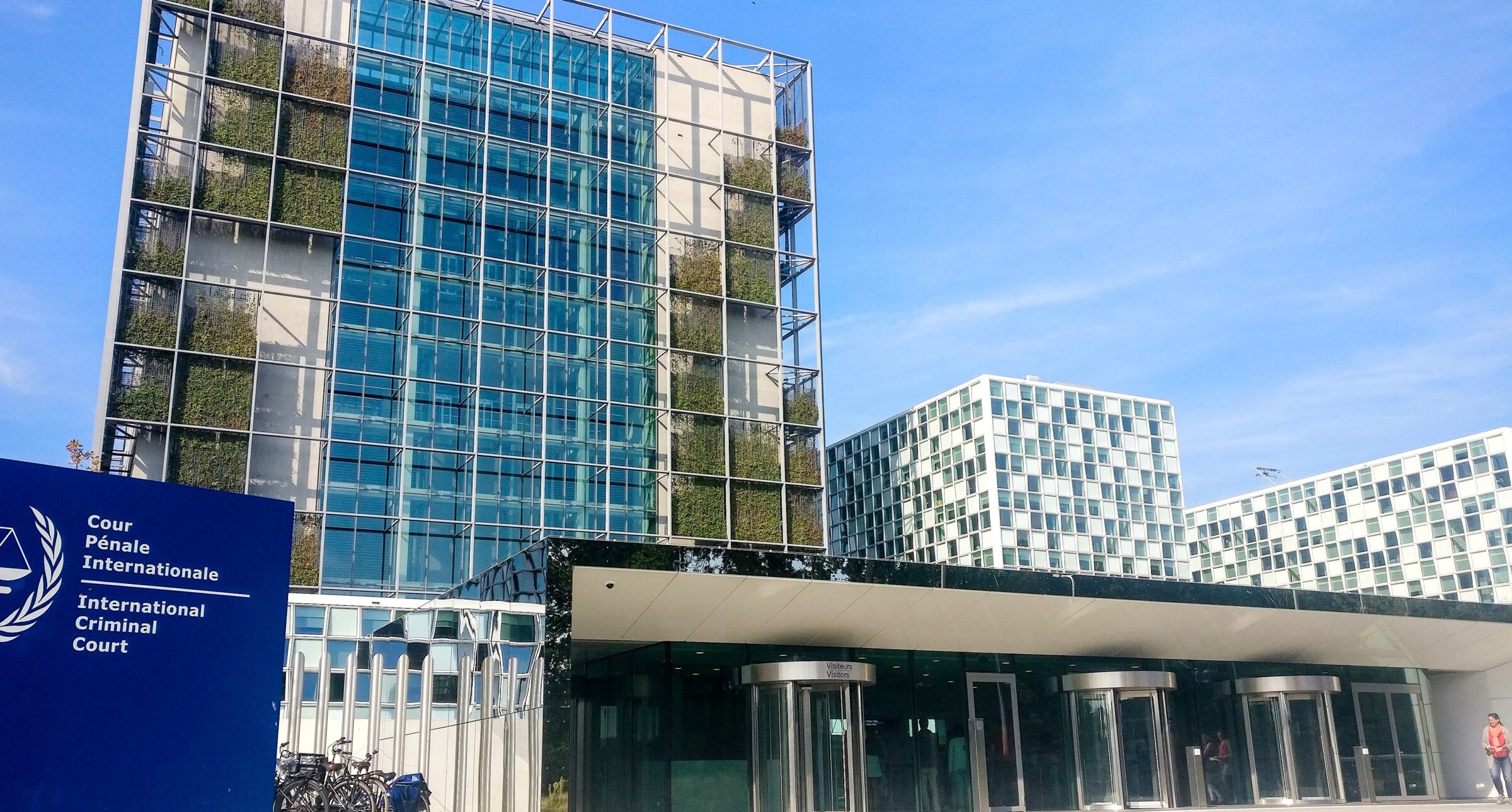
On 16 July, the International Criminal Court’s (ICC) 28th anniversary, I wrote in these pages about the court’s deepest crisis yet — a crisis to which Europe’s own double standards, and its own governing bodies, contribute significantly.
A week later, the vote I described as pending took place: on 24 July, member states removed chief prosecutor Karim Khan, overriding the conclusions of the independent judicial panel they themselves had commissioned. That panel had found no misconduct established. The Assembly set its own process aside anyway.
I return to this now because a second institution, built to work alongside the ICC rather than instead of it, is moving from paper to practice at the same moment — and it deserves the same scrutiny before it is too late to fix.
The Special Tribunal for the Crime of Aggression against Ukraine is no longer a proposal. Since February, an Advance Team has been working in The Hague to prepare its launch.
In May, at the Council of Europe’s ministerial meeting in Chișinău, 36 states and the EU signed the agreement establishing its Steering Committee — the body that will oversee its budget, structure and rules.
The Netherlands has confirmed it will host not just the preparatory phase but full operations, and the European Commission has pledged €10m to get it up and running.
The next steps on the table include appointing judges, adopting procedural rules, and opening the first investigations.
As a matter of legal history, this matters. It would be the first time since Nuremberg and Tokyo that a state’s political and military leadership faces direct accountability for launching a war. I support that goal.
But the institution now taking shape should trouble anyone who cares about consistent, credible international justice — for three reasons.
The gap it creates is worse than the one it closes
The tribunal exists because of a specific carve-out in the Rome Statute’s jurisdiction over the crime of aggression: under Article 15bis, the ICC cannot exercise jurisdiction over aggression committed by a non-party state’s nationals, even when the acts occurred on the territory of a state party such as Ukraine.
No such carve-out applies to war crimes, which is why an arrest warrant already stands against Russian president Vladimir Putin over the deportation of Ukrainian children.
In closing that gap, the tribunal’s founders opened another one that the Rome Statute does not have. After prolonged internal negotiation, the founding states preserved “troika immunity” for a sitting head of state, head of government and foreign minister.
The tribunal’s own prosecutor — a different office from the ICC’s, and not the one at the centre of the Khan case — may investigate and even prepare an indictment against such officials. But once filed, the pre-trial judge must suspend proceedings for as long as the person remains in office and immunity has not been lifted.
In practice, that means Putin is shielded from this tribunal for exactly as long as he stays president — not for lack of evidence, but by design.
The Rome Statute contains no such carve-out: under Article 27, no official capacity, for genocide, crimes against humanity, war crimes, or aggression itself, exempts a sitting head of state from prosecution. That is precisely the principle the ICC was built to establish.
A tribunal created to close a jurisdictional gap on aggression has instead created an immunity gap that aggression, uniquely, did not have to have.
Switzerland — among the states still weighing whether to join — has already said this publicly, stating it regretted that the tribunal would be unable to prosecute individuals while in office.
When a cautious outside observer says this first and openly, it stops being a footnote.
Selectivity, twice over
The double standard I described in July has not gone away; the new tribunal sharpens it. A court built specifically, and only, for Russian aggression against Ukraine — while no comparable mechanism is even discussed for, say, US military action against Venezuela or Iran — hands the court’s critics exactly the argument they already make: that international criminal justice is a selective instrument of Western power, not a universal principle.
Ukraine’s own position adds a second layer: its 2024 ratification of the Rome Statute came with an Article 124 declaration exempting Ukrainian nationals from ICC war-crimes jurisdiction for seven years — a legally available option, but one that sits awkwardly with a demand that Moscow submit unconditionally to a parallel regime Kyiv has not fully accepted itself.
That the ICC’s own states parties, not the court, approved this arrangement does not make the optics easier.
What consistency would actually require
None of this argues against accountability. It argues for the same standard applied consistently — including to the institution meant to deliver it.
The ICC’s credibility problem and the Special Tribunal’s design problem are not separate stories; they are the same story, told twice, about what happens when political convenience is allowed to shape legal architecture.
As the Special Tribunal moves from an Advance Team to sitting judges over the coming months, European governments still have room to act on two fronts I raised in July and repeat now with more urgency: enforce the ICC’s own procedural standards on the Assembly that governs it, rather than letting political majorities override judicial findings when the outcome is unwelcome; and insist that the Special Tribunal’s founding states revisit an immunity clause that the Rome Statute itself never required.
Creating an institution that cannot, by design, reach the one man it was created for is not accountability. It is expensive symbolism — and it costs Europe exactly the credibility it is trying to project.










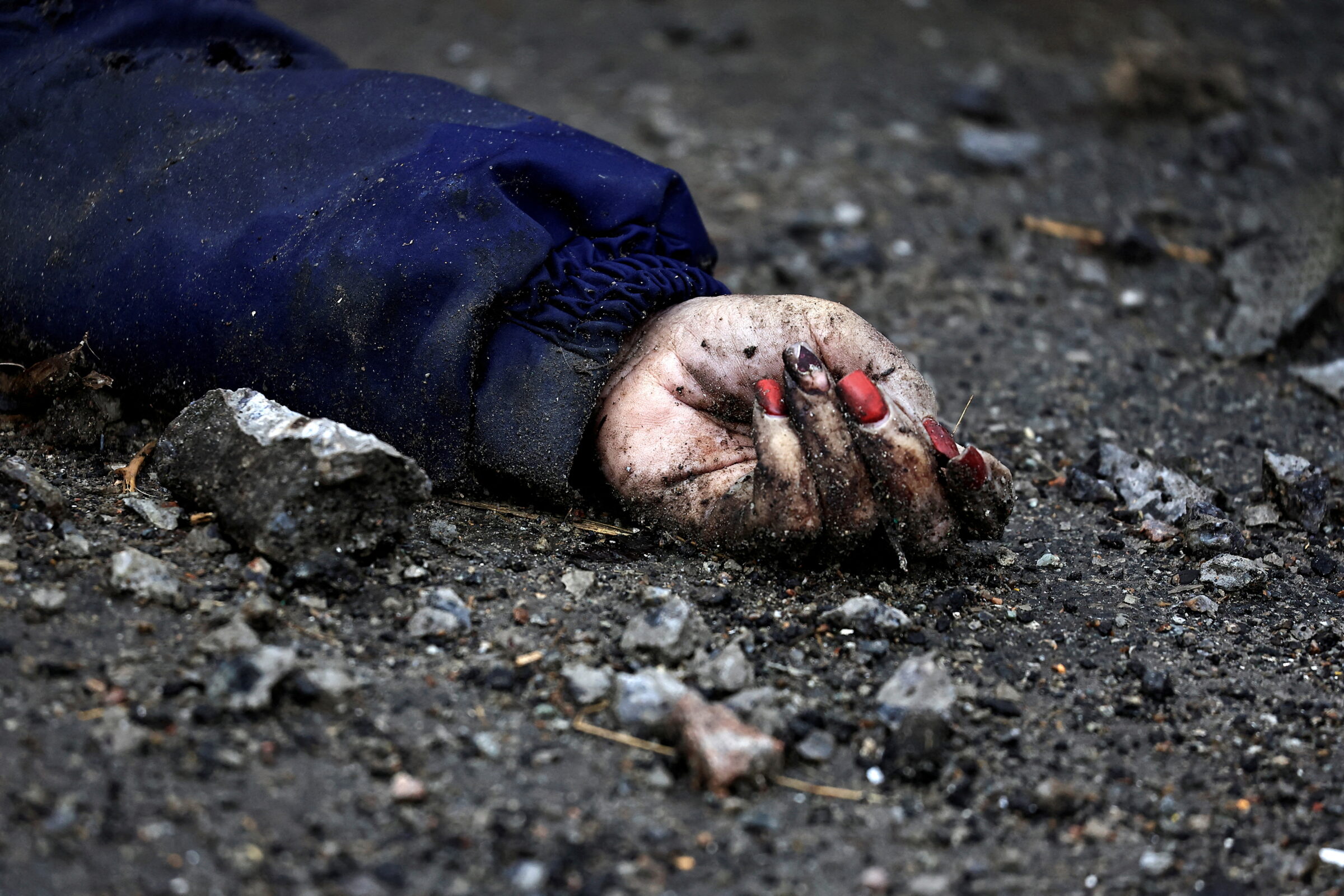
Hand of Iryna Filkina, a woman killed by Russian soldiers, in Bucha, Kyiv region, found on 2 April 2022