Focus on the Sub-Saharan Africa informal economy
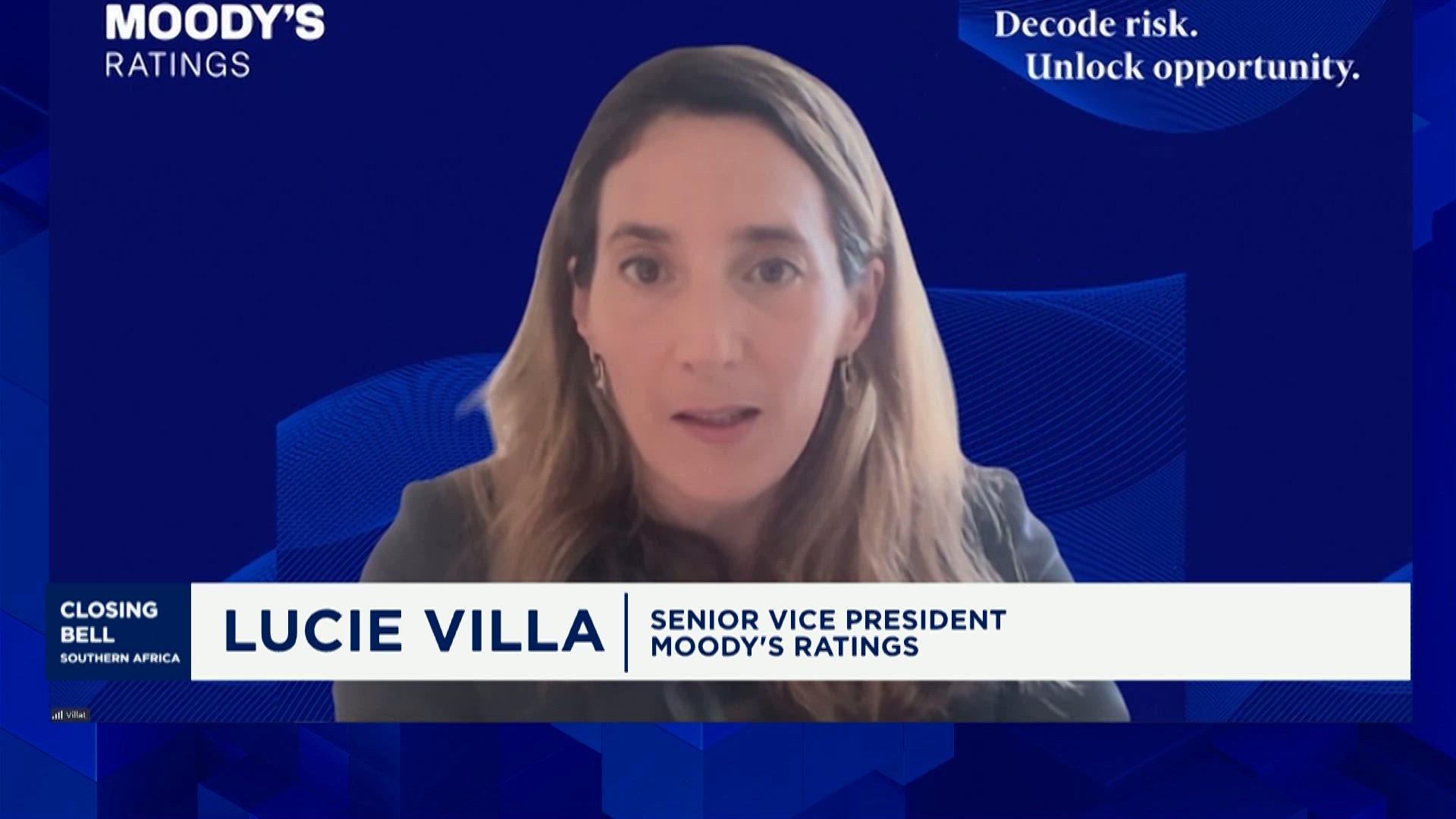
The informal sector in Africa, continues to be, one of contention. In Sub-Saharan Africa; the informal economy is estimated at around 36 per cent of GDP, compared with about 25 per cent globally. According to Moody’s; this affects the quality of sovereign credit; and there should be a reduction of informality. Joining CNBC Africa for more; is Lucie Villa, Senior Vice President at Moody’s Ratings.
Tue, 02 Jun 2026 16:04:24 GMT
Disclaimer: The following content is generated automatically by a GPT AI and may not be accurate. To verify the details, please watch the video
AI Generated Summary
Key Points:
- Moody’s indirectly incorporates informal-sector dynamics into sovereign credit assessments by evaluating taxability and government influence over economic activity.
- Sub-Saharan Africa’s informal economy is estimated at around 36% of GDP, compared with about 25% globally.
- High informality weakens fiscal revenue, increases revenue volatility and reduces governments’ shock-absorption capacity.
- Moody’s argues that higher African risk premiums reflect weaker credit fundamentals rather than a market distortion.
- The ratings agency says informal activity can sometimes serve as a social and economic shock absorber, making careful diagnostics essential.
- Villa said effective formalization strategies rely more on incentives than on enforcement alone.
- Simplifying taxes, improving business conditions, increasing predictability and investing in administrative systems were highlighted as key reforms.
- Cote d’Ivoire and Tanzania were cited as examples of countries that have made progress in encouraging formalization.
- Moody’s said successful reforms can create a positive feedback loop in which stronger revenue supports better governance and improves tax compliance.
- Reducing informality could unlock significant long-term gains in public revenue, economic development and sovereign credit quality across the continent.
Topics
Sub-Saharan Africainformal economyMoody’s Ratingssovereign creditAfrica debt marketsrisk premiumtax revenueformalization reformsCote d’IvoireTanzania
The size of the informal economy across Sub-Saharan Africa is emerging as a key credit consideration for sovereign ratings, according to Moody’s, which says the region’s high level of unreported economic activity weakens state capacity, constrains tax collection and ultimately feeds into higher risk premiums
Speaking in a television interview, Lucy Villa, senior vice president at Moody’s Ratings, said the agency does factor informality into sovereign credit assessments, albeit indirectly, by examining how much economic activity governments can effectively tax and influence through policy
“The informal sector in Africa continues to be one of contention,” the interviewer noted, citing estimates that place the informal economy in Sub-Saharan Africa at around 36% of GDP, versus roughly 25% globally. That gap, Moody’s argues, is not merely a statistical curiosity. It is a structural constraint on public finances and creditworthiness
Villa said the core issue for ratings is not whether every aspect of the informal sector can be measured with precision, but whether governments can capture revenue from economic activity and shape outcomes through institutions and policy frameworks. Where informality is high, both become harder
“What matters for credit is how much economic activity can be taxed by the government and the influence the government can have over it,” Villa said. “Formality improves that; informality reduces both.”
That dynamic has important implications for sovereign credit quality. A broad informal sector tends to reduce government revenue, increase revenue volatility and weaken a country’s ability to absorb shocks, whether they originate domestically or from the external environment. For a region that has had to navigate repeated commodity swings, tighter global financial conditions, currency pressures and climate-related disruptions, the capacity to withstand shocks is central to investor perceptions.
Villa pushed back on the suggestion that African risk premiums are somehow being artificially distorted by informality alone. Instead, she framed the issue as a direct reflection of underlying credit fundamentals. Lower and less predictable revenue means less fiscal flexibility, which in turn can justify higher borrowing costs
“I don’t think it’s necessarily a question of distortion, but it’s more about the fundamentals,” she said, adding that informality “naturally feeds into higher risk premium because it affects creditworthiness.”
For Moody’s, the challenge is broader than tax leakage. Villa argued that widespread informality can weaken the state “at its core,” creating a self-reinforcing cycle in which weak revenue constrains administrative capacity, and weak administrative capacity makes it harder to broaden the tax base or deliver effective economic policy. That can limit governments’ ability to allocate resources efficiently, improve service delivery and build institutional trust.
Still, Moody’s does not advocate a simplistic crackdown on informal activity. Villa acknowledged that the informal sector can serve as a shock absorber, especially in economies where formal employment opportunities are limited and households rely on informal work to cope with hardship. In that sense, she said, the right policy response starts with understanding the specific forms of informality present in each country and sector.
“I guess it’s both, and the understanding comes first,” Villa said, referring to the debate over whether governments should work with the informal sector rather than simply try to eliminate it. Better diagnostics, she argued, are a prerequisite for designing tailored reforms that can gradually encourage formalization without undermining livelihoods
She also made clear that the responsibility for building that diagnostic framework lies primarily with national authorities, not ratings agencies. Moody’s relies on governments’ own assessments, as well as surveys and research from independent and international institutions, to evaluate the scale and nature of informality and whether official reforms are proportionate to the challenge
On the policy front, Villa said the strongest examples of progress in Africa suggest that successful formalization strategies rely less on aggressive enforcement and more on incentives. She pointed to Côte d’Ivoire and Tanzania as countries Moody’s examined for evidence of reforms that have helped bring more economic activity into the formal system
According to Villa, those efforts often center on creating a framework that gives households, small businesses and corporates tangible reasons to enter the formal economy. That can include simplifying tax systems, improving business conditions, increasing transparency and making the rules of the game more predictable. It also requires investment in administrative systems and political backing to sustain reforms over time.
“Too often we see focus on enforcement, and not the incentive,” Villa said. She cited tax simplification and investment in the right administrative systems as measures that have “yielded quite a lot of results.”
That distinction matters because many informal enterprises are small businesses operating outside the formal system less out of deliberate tax evasion than because formal compliance is costly, complex or perceived to offer little benefit. Reforms that reduce those frictions can help create a virtuous cycle: as more firms and households formalize, government revenue rises, public services can improve, trust in the use of tax receipts may strengthen and compliance becomes more self-reinforcing.
Villa described the potential gains for the continent as “massive.” With an estimated 36% of GDP in Sub-Saharan Africa sitting in the informal sector and unreported in official statistics, even partial progress could materially improve revenue performance over time. While she cautioned that change would be gradual, she said it is not unreasonable to expect that countries pursuing sustained reform over a decade could capture a meaningful share of that activity.
The implications go beyond higher tax intake. A reduction in informality could support stronger income growth, deeper economic development and more resilient sovereign balance sheets, all of which are closely watched by investors and rating agencies
For policymakers across Africa, the Moody’s message is that informality should not be treated solely as a policing problem. It is also a governance, administrative and incentive-design challenge. Countries that can simplify compliance, strengthen institutions and demonstrate that tax revenues are used effectively may be better placed to convert informal activity into a broader formal tax base
In a region where access to affordable financing remains critical for development, that transition could eventually lower sovereign risk and improve credit outcomes. But as Villa emphasized, it requires upfront investment, sustained reform momentum and political commitment
The path to formalization may be gradual, but Moody’s suggests the credit payoff could be significant
ChooseCNBC Africaas your preferred source on Google and never miss a moment from the most trusted name in business news.