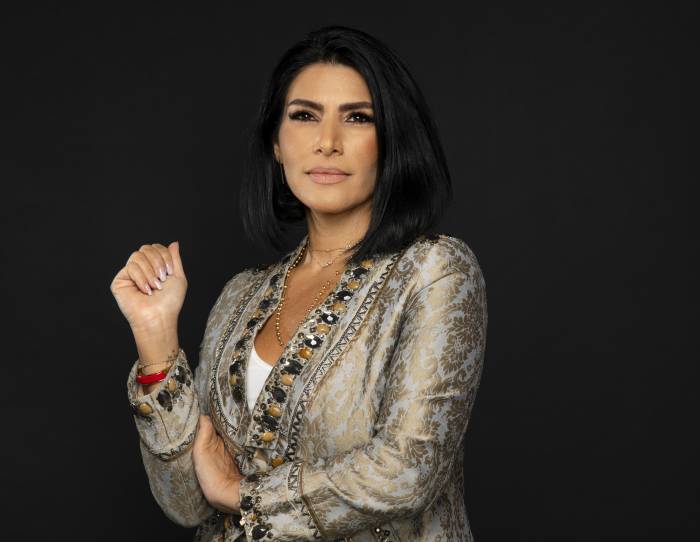
Hala Matar Choufany, President for the Middle East, Africa and South Asia at HVS, is one of the hospitality industry’s most experienced and influential advisers. Over the past two decades, she has advised on more than 5,000 hospitality and mixed-use projects across Europe, the Middle East, Africa and Asia, working with owners, investors and developers on valuations, acquisitions, asset management, strategic investment, development and contract negotiations.
In this interview with Breaking Travel News, Choufany examines the forces reshaping global hospitality, from the shift towards stronger operational performance and asset management to changing guest expectations, talent shortages and the growing influence of artificial intelligence. She also explores the opportunities emerging across the Middle East and Africa, why the next phase of hospitality growth will depend as much on people and execution as new development, and what industry leaders should be discussing as they gather at FHS World in Dubai.
Hala Matar Choufany, President for the Middle East, Africa and South Asia at HVS
Hospitality is entering a new phase in which opening hotels is no longer enough; the real measure of success will be how effectively those assets are operated, positioned and managed over the long term. Hala Matar Choufany argues that operational excellence, asset management and disciplined execution will increasingly determine which hospitality investments create genuine value.
She identifies the Middle East and Africa as among the strongest hospitality opportunities for the coming years, with Saudi Arabia leading large-scale transformation, Egypt emerging as an important growth story and Africa offering significant long-term potential. Beyond headline luxury developments, she sees substantial opportunity in secondary cities, resort destinations, mid-market hotels and the repositioning of ageing hospitality assets.
Changing traveller expectations are also reshaping the sector. Guests are increasingly prioritising experience, authenticity, wellness, privacy and personalisation over traditional displays of luxury. At the same time, talent remains one of hospitality’s most significant constraints, particularly in rapidly expanding markets. Choufany stresses the importance of developing local talent, strengthening analytical and commercial capabilities and offering genuine long-term career pathways.
Technology will play an increasingly important role, particularly through AI-driven forecasting, financial modelling, revenue management and operational efficiency. At HVS, AI and advanced analytics are already helping teams analyse larger datasets and test multiple scenarios significantly faster.
Ultimately, Choufany believes the industry’s biggest opportunity lies in moving its focus from development to performance. As she puts it, opening a hotel may be an event, but successfully operating it for decades is the real business.
BTN: What is the biggest change taking place in hospitality today that the industry is still underestimating?
The shift from building to operating. Opening an asset is no longer the challenge; operating it successfully is.
For years, the story in our region was ambition and new supply, and the industry became very good at delivering buildings. What is still underestimated is that value is now created after the opening, through asset management, operational excellence, and the operating model behind the physical product. That is what will separate the assets that genuinely perform from those that merely open.
BTN: Which region or destination presents the greatest hospitality opportunity over the next five years, and why?
The Middle East and Africa, although for different reasons. The GCC offers scale, capital and greenfield growth opportunities, with Saudi Arabia at the centre of that transformation. Egypt is one of the region’s most compelling growth stories today, while Africa remains the longer-term frontier, with significant depth and diversity that extends far beyond the safari segment to which it is often reduced.
What links them is structural demand growth: national tourism strategies, sustained investment in infrastructure and connectivity, religious tourism, and a genuinely diversifying visitor base. The fundamentals are not cyclical; they are structural and that is what makes the opportunity so compelling.
BTN: Within the Middle East, where do you see the strongest opportunities beyond the most prominent projects and destinations?
Secondary cities, resort markets and the mid-market segment.
Our own performance data makes the point clearly. Through the disruption of this year, mid-market hotels led on occupancy while luxury led on rate because the mid-market sits on a broader base of domestic, regional and corporate demand. There remains a significant gap for quality, well-branded mid-market products in markets where almost all the attention, and much of the pipeline, is concentrated in the five-star segment.
Repositioning existing and ageing hotel stock is another major opportunity. Not every market needs more luxury supply. Many need better-aligned supply.
BTN: What is the most important change you are seeing in customer behaviour?
Guests are increasingly buying experiences rather than products. Luxury used to be defined by opulence, marble, chandeliers and physical scale. Today it is defined by experience, time, privacy, authenticity and personalisation.
Alongside that, the domestic and regional traveller has become far more important than the industry once assumed, and it was precisely that demand base that helped sustain performance during periods of disruption.
BTN: What are guests increasingly willing to pay more for, and what do they no longer value?
They will pay for genuine experiences: authenticity, a sense of place, wellness that extends beyond the spa into longevity and wellbeing, service that feels personal, and the luxury of time and privacy.
What they are increasingly unwilling to pay for is opulence for its own sake, scale without meaning or a brand promise that is not matched by the experience behind it. Signing a luxury brand does not create luxury. Delivering the experience does.
BTN: Which hospitality trend has genuine staying power?
The strongest trends are those rooted in lasting shifts in human behaviour. Wellness, properly understood.
It has evolved from being an amenity into a core component of the value proposition and is now expanding into longevity, preventative health and mental wellbeing. It has staying power because it reflects how people increasingly want to live rather than a temporary design trend.
The same is true of lifestyle hospitality, which at its best is about relevance, connection and community rather than aesthetics.
BTN: What is the biggest challenge facing the hospitality industry, and where is the corresponding opportunity?
The biggest challenge is execution. It is about delivering ambitious pipelines in the right sequence, ensuring infrastructure stays ahead of development and phasing supply so markets can absorb it sustainably.
In an environment where many projects will be announced, disciplined execution becomes a genuine competitive advantage. Vision creates headlines. Execution creates value.
That is why asset management, operational capability and long-term planning are where I would be investing the greatest attention.
BTN: How are talent shortages affecting the industry, particularly in rapidly growing markets such as the Middle East?
Talent is the single biggest constraint in our industry and, if managed well, its biggest competitive advantage. An aggressive development pipeline competes for the same skilled workforce, and building talent takes far longer than building real estate.
The risk is that operators continue to recruit talent from one another rather than expanding the overall talent pool, increasing costs without solving the underlying challenge.
BTN: What skills will hospitality businesses need most over the next five years?
First, commercial and analytical skills, including revenue management, asset management and data literacy, because that is where margins are increasingly won or lost.
Second, service leadership, because hospitality remains a people business and experiences are delivered by people, not buildings.
Third, adaptability and the ability to embrace technology rather than resist it.
Local talent development is also essential, both from a sustainability perspective and because it creates stronger connections between hospitality businesses and the communities they serve.
BTN: How must training and career development change to attract, develop and retain the next generation of hospitality talent?
We need to offer careers, not jobs. That means clear progression paths, structured development programmes and promotion based visibly on merit.
Culture remains the most powerful retention tool. People stay where they feel they are learning, trusted and contributing to something meaningful. That is why role models, mentorship and leadership representation remain so important.
BTN: What is one specific way your business is using AI today, and what measurable difference has it made?
AI and advanced data analytics are now embedded within our underwriting, research and financial modelling processes. We draw on decades of accumulated market intelligence and experience from more than 5,000 projects across the region, allowing us to analyse significantly larger datasets than would have been possible manually only a few years ago.
Rather than relying on a single forecast, we increasingly build scenarios around multiple outcomes and market conditions. We can evaluate more scenarios, test more assumptions and provide clients with better-informed decision-making tools.
The measurable impact is time. Work that once took days now takes hours. But the larger benefit is breadth.
BTN: What is the most promising AI application you are exploring next?
Three areas stand out.
The first is applying AI on the operating side of hospitality rather than only at the investment stage. If value is increasingly created after opening, AI can help improve revenue management, labour productivity, demand forecasting and distribution efficiency.
The second is forecasting. Recent disruption has demonstrated how quickly conditions can change. We are moving from predicting a single future to preparing for multiple futures.
The third is transforming our collective knowledge into a living asset, making decades of project experience, research and market intelligence searchable, connected and instantly usable across our business. For a knowledge-based organisation, that creates a powerful competitive advantage.
BTN: What are you most excited about in hospitality over the next 12 months?
The resilience story.
This year tested the region, yet the fundamentals held. Unlike Covid, most hotels remained operational, revenues continued to flow and recovery resumed once connectivity and confidence returned.
In our survey of GCC owners and investors, representing approximately 160,000 branded rooms, 83% remained positive or neutral about the outlook even during the peak of disruption.
I am encouraged by a market that has demonstrated its ability to absorb shocks, maintain investor confidence and continue creating opportunities amid uncertainty.
BTN: What first attracted you to hospitality, and what has made you stay in the industry?
If I am being completely honest, hospitality was a growth industry when I chose my university path in the mid-1990s. It was attracting investment, creating international careers and offering opportunities that many other sectors could not. That is what initially drew me in.
What made me stay is what I discovered once I entered the industry. Hospitality sits at the crossroads of real estate, finance, tourism, operations and economic development. Few industries allow you to influence investment decisions, create jobs, shape destinations and contribute to a country’s growth all at the same time.
Over the past 25 years, I have moved from operations into finance, strategy and advisory, and have worked on more than 5,000 projects across Europe, the Middle East, Africa and Asia. No two projects are ever the same. One day you are advising investors on capital allocation, the next you are evaluating how to reposition an asset, unlock value and improve performance.
What truly keeps me here is transformation.
I have watched destinations evolve, tourism sectors emerge and economies diversify, particularly across the Middle East. Having the opportunity to help shape some of that journey rather than simply observe it has been enormously rewarding.
BTN: What is the one issue hospitality leaders should be discussing at FHS World in Dubai?
How we move from developing assets to creating high-performing businesses.
For years, the industry’s focus has been on announcements, construction and opening hotels. The more important conversation today is what happens after opening. The real challenge is maximising the revenue, profit and long-term value generated from every square metre developed.
That requires a different mindset, one that begins with the operating model, customer journey and commercial strategy before the design is finalised, not afterwards.
Too often, development and operations still happen in sequence. We design the asset, present the vision in the boardroom, secure approvals and only then focus on how it will perform. The most successful projects reverse that logic. The operating model should shape the asset, not the other way around.
For me, the most important discussion at FHS is how owners, operators, developers and asset managers collaborate earlier and more effectively to create assets that are operationally efficient, financially resilient, and capable of delivering superior returns over the long term.
Opening a hotel is an event; operating it successfully for decades is the business.







_74083.png "Milestone for Urenco USA expansion project")