


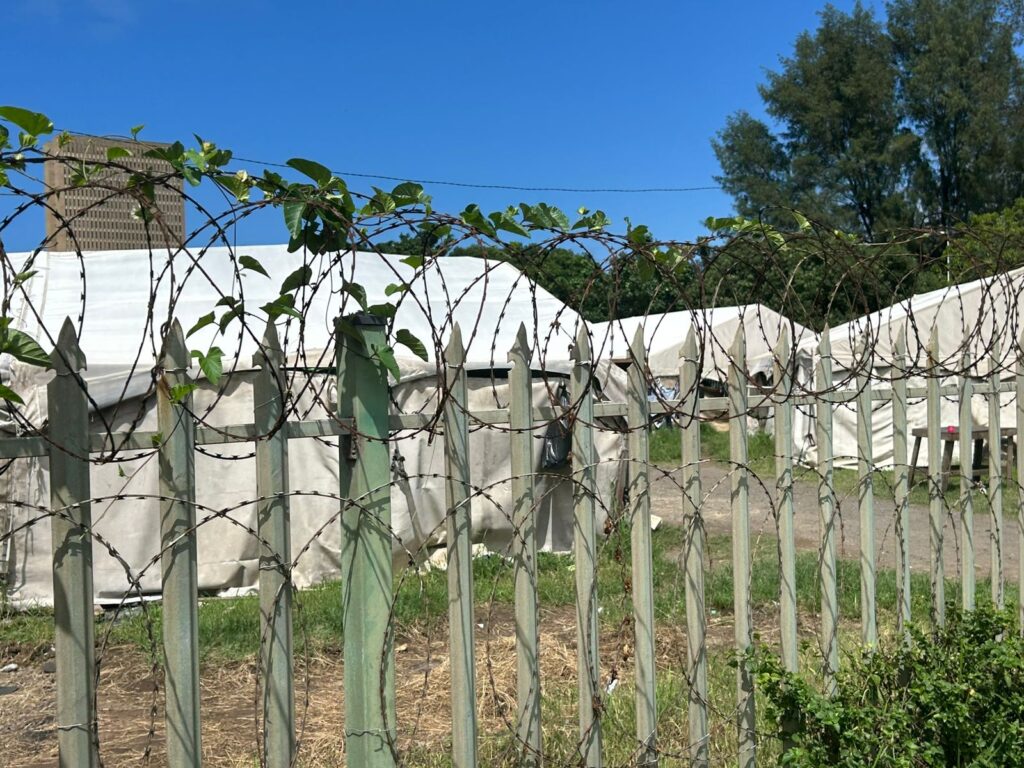
Health authorities have confirmed a tuberculosis (TB) outbreak among homeless people staying in North Beach, Durban. Nearly 200 people who currently live in tents at North Beach tested positive for TB, sparking urgent public health interventions.
The KwaZulu-Natal Department of Health has deployed screening teams to the site to test residents and begin treatment for those who test positive. This is part of the national TB recovery plan to mitigate disruptions caused by COVID-19 lockdowns. Contact tracing is also underway to limit further spread of the infectious disease.
Sandile Zulu, 24, who lives at the camp, describes overcrowded conditions that make infection control difficult.
“There are many people coughing. We sleep in one tent with about 100 people. It is easy for TB to spread in this environment,” he says.
TB spreads from one person to another through the air.
“Most of us go out daily to beg for food. There is a real possibility the infection could spread to the surrounding community,” says Zulu.
A preventable crisis
Overcrowded and poorly ventilated environments significantly increase the risk of transmission. These conditions are clearly present at the North Beach camp.
TB is one of the leading causes of death in South Africa, claiming around 56 000 lives in 2023. Department spokesperson Ntokozo Maphisa stressed that the disease is preventable and curable.
“TB remains a significant public health concern in South Africa and globally. It is important for the public to understand what TB is, how it spreads, and what can be done to prevent and treat it,” says Maphisa.
Common symptoms include a persistent cough lasting two weeks or longer, night sweats, fever, unexplained weight loss, loss of appetite and chest pain.
“Anyone experiencing these symptoms should visit their nearest clinic or healthcare facility immediately. TB testing and treatment are provided free of charge at public health facilities,” Maphisa says.
Treatment
Treatment for TB typically involves a six-month course of antibiotics. But people need to finish their treatment. Incomplete treatment can lead to drug-resistant forms of the disease, which are more severe and difficult to treat.
Subscribe to our newsletter
The department continues targeted outreach in high-risk communities, with community health workers playing a central role in screening, tracing contacts and supporting treatment adherence. — Health-e News

