


Uganda unveils state-of-the-art polio genomics facility to strengthen outbreak detection
The new Regional Polio Laboratory, commissioned on Wednesday, July 22 during celebrations to mark UVRI’s 90th anniversary, will enable scientists to carry out genomic sequencing of polioviruses, allowing health authorities to quickly identify virus strains, track transmission and guide outbreak response across Uganda and neighbouring countries.
(L-R) Kasonge Mwinga, WHO Representative; Andrea Ariik, Deputy Secretary General of East African Community, Diana Atwine, Permanent Secretary, Ministry of Health Uganda, Rebecca Alitwala Kadaga First Deputy Prime Minister of Uganda, Robinah Nabbanja Prime Minister of Uganda, Chris Baryomunsi Minister of Health poses for group Pictures with partner Organization and Ambassadors during Uganda Virus Research Institute celebration of 90 years at Uganda Virus Research Institute on July 22, 2026. (Photo by Mary Kansiime)
_________________
Uganda has unveiled a state-of-the-art polio genomics facility at the Uganda Virus Research Institute (UVRI) to boost the country’s capacity to rapidly detect, sequence and respond to poliovirus outbreaks while strengthening regional efforts to eradicate the disease.
The new Regional Polio Laboratory, commissioned on Wednesday, July 22 during celebrations to mark UVRI’s 90th anniversary, will enable scientists to carry out genomic sequencing of polioviruses, allowing health authorities to quickly identify virus strains, track transmission and guide outbreak response across Uganda and neighbouring countries.
President Yoweri Museveni, who was represented by Prime Minister Robinah Nabbanja, said the facility underscores Uganda’s commitment to science-led solutions in safeguarding public health.
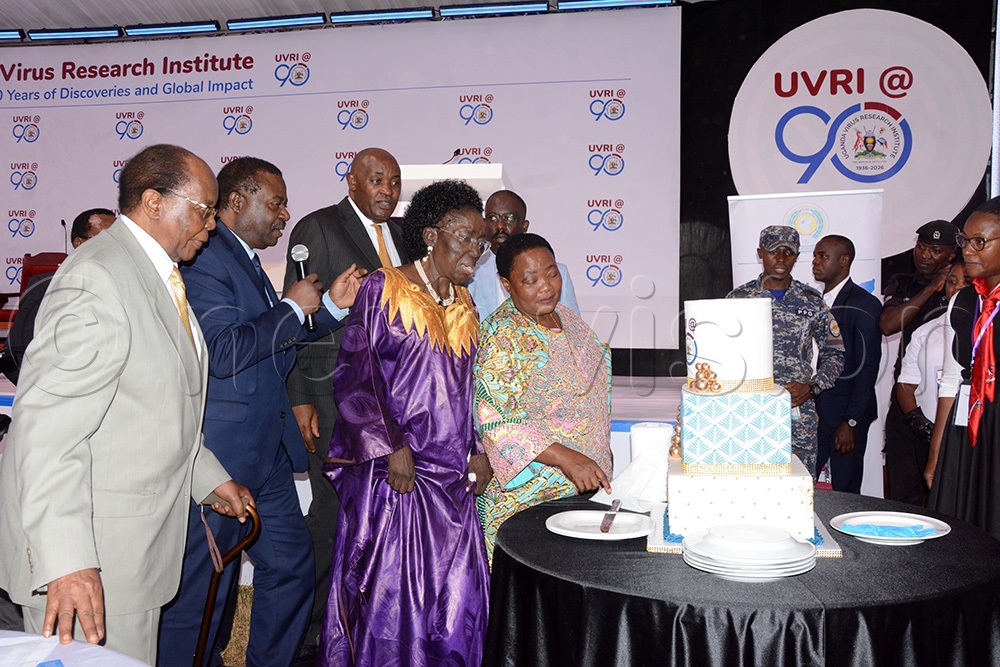

(L-R) Peter Mark Tukei, First Director of Uganda Virus Research Institute (UVRI), Director of the Uganda Virus Research Institute (UVRI) Prof. Pontiano Kaleebu interacting with Rebecca Alitwala Kadaga First Deputy Prime Minister of Uganda, Chris Baryomunsi, Minister of Health and Robinah Nabbanja, Prime Minister of Uganda during Uganda Virus Research Institute celebration of 90 years at Uganda Virus Research Institute on July 22, 2026. (Photo by Mary Kansiime)
“I am pleased on this celebration to open the new Regional Polio Laboratory at UVRI to enhance sequencing of polioviruses in our region as we move towards polio eradication. With this centre in place, coupled with our committed scientists, we cannot afford to be late in detection or action if we are to save our people,” Museveni said in a message read by Nabbanja.
The President said Uganda would continue investing in scientific research and innovation, noting that countries capable of studying and sequencing their own pathogens are better prepared to respond to emerging health threats.
“We have seen and learnt that a nation that studies its own pathogens is a sovereign one, and one that can sequence its own viruses is a self-reliant nation,” he said.
He pledged continued government support for research institutions such as UVRI, saying science remains central to achieving a self-sustaining economy.
Boosting outbreak preparedness
The facility comes at a time when countries are increasingly relying on genomic surveillance to monitor infectious diseases, including vaccine-derived polioviruses, and prevent outbreaks from spreading across borders.
Health Minister Dr Chris Baryomunsi said the laboratory would significantly strengthen Uganda’s ability to respond to current and future disease threats.
“When you look at the disease pattern in Uganda, communicable diseases remain a major challenge, and viruses play a very big role. The work of UVRI is far from over because viruses are not about to go away,” Baryomunsi said.
He cited the emergence of HIV, Ebola and COVID-19 over the past decades as evidence that countries must continue investing in disease surveillance and laboratory science.
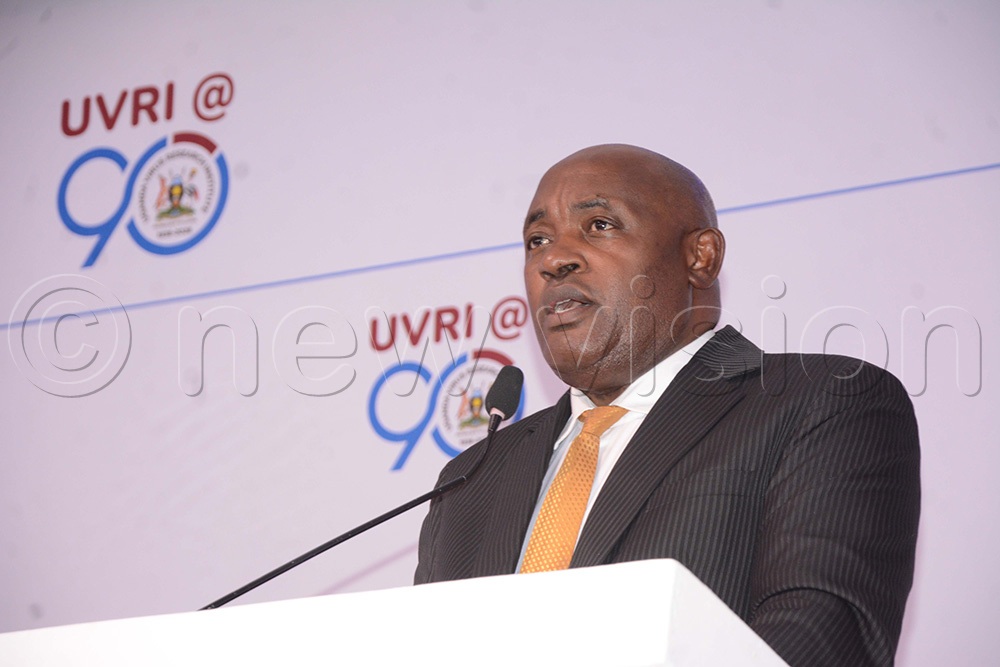
Chris Baryomunsi, Minister of Health, speaking during the celebration of Uganda Virus Research Institute’s 90th anniversary on July 22, 2026. (Photo by Mary Kansiime)
“There is still a high risk of emerging viruses given our ecological setting. Therefore, the work of UVRI is cut out for us. We still have work to do, and we need to support this institution,” he said.
The laboratory complements the launch of the East African Community (EAC) Centre of Excellence in Virology at UVRI, positioning Uganda as a regional hub for virus research, laboratory training and disease surveillance.
Speaking on behalf of the East African Community, Deputy Secretary General Hon. Andrea Ariik said the genomics facility will strengthen regional capacity to detect and respond to viral outbreaks.
“The establishment of this centre comes at a time when infectious disease threats continue to challenge our region and the world,” she said.
He explained that the centre forms part of the EAC Health Investment Priority Framework (2018-2028), under which seven regional medical diagnostic centres of excellence are being established.
According to Ariik, the facility will support advanced virology research, specialised laboratory training, disease surveillance, diagnostics and scientific collaboration among East African partner states.
She noted that the laboratory builds on achievements made through the EAC Regional Network of Reference Laboratories for Communicable Diseases.


Robinah Nabbanja, the Prime Minister of Uganda speaking during the celebration of Uganda Virus Research Institute’s 90th anniversary on July 22, 2026. (Photo by Mary Kansiime)
“Through the EAC Mobile Laboratory Network established in 2017, laboratory turnaround time during outbreaks has reduced from about 72 hours to eight hours, enabling faster public health decisions,” she said.
The new genomics laboratory is expected to further improve the speed and accuracy of outbreak investigations while strengthening the region’s One Health approach linking human, animal and environmental health
World Health Organisation Director-General Dr Tedros Adhanom Ghebreyesus congratulated Uganda for commissioning the new facility, describing it as an important investment in global health security. In a recorded message played during the celebrations, Tedros said UVRI has been one of Africa’s leading public health research institutions for nine decades.
“It has played a leading role in the fight against polio by strengthening surveillance and immunisation, contributing to the elimination of wild poliovirus in Africa,” he said.
Beyond polio, he noted, UVRI continues to support surveillance for measles, rubella, yellow fever, influenza, Ebola and Marburg virus disease. Tedros said WHO remains proud of its longstanding partnership with UVRI in strengthening laboratory systems, immunisation programmes and outbreak preparedness.
“As we celebrate 90 years of achievement, we also look ahead. Continued investment in science, research and public health capacity will be critical to meeting future health challenges,” he said.
Founded in 1936 as the Yellow Fever Research Institute, UVRI has grown into one of Africa’s premier virus research institutions, contributing to scientific discoveries on HIV/AIDS, Ebola, COVID-19, influenza and other infectious diseases.
UVRI Executive Director Prof. Pontiano Kaleebu said the new laboratory represents another milestone in the institute’s long history of supporting disease control in Uganda and beyond.
He said the facility was established under the third phase of the East African Community Regional Network of Reference Laboratories for Communicable Diseases project, funded by the Federal Republic of Germany through KfW.
“The project is strengthening regional laboratory capacity for pandemic prevention and response under the One Health approach, and one of its key components is operationalising this Regional Polio Laboratory and the Centre of Excellence in Virology,” Kaleebu said.
He thanked the Government of Uganda and international partners, including the United States, the United Kingdom, Germany, the European Union, WHO, CDC, NIH and other research institutions, for supporting UVRI over the past 90 years.
Help us improve! We’re always striving to create great content. Share your thoughts on this article and rate it below.
Tags:
HealthUganda Virus Research InstitutePoliovirus

