


Through the first two weeks of the 2026 Tour de France, the average temperature of 87.4°F has far exceeded the previous record of 78.6°F in 2022. While this figure will decrease as the race heads into its final phase this week and gains altitude in the French Alps, there is no doubt this year’s conditions are abnormally high. Several areas of France were under a red heat alert and wildfires have put stages at risk of cancellation.
XDS-Astana Team sport director Yvon Ledanois said on July 12before stage nine: “I’ve done more than 30 Tours and I’ve never seen weather conditions this hot every single day. It isn’t a case of having one extremely hot day and then returning to normal conditions the next.”
The conditions have affected athletes’ health and how they prepare for and recover from the multi-stage race. This includes 27-year-old Tadej Pogačar, who is strengthening his claim as cycling’s greatest of all time at the Tour de France and remains on course for a record-equalling fifth victory in the sport’s showpiece event, taking place from July 4 to July 26.
Despite his otherworldly talent, the Slovenian phenom revealed that he suffered through the record-breaking, deadly European heat wave that has marred this year’s Tour. Pogačar said on July 7 after stage four’s 104°F heat that he “had a full headache” because of the conditions, warning that it becomes “dangerous if you don’t keep your body temperature down.” According to Climate Central, an <a href="https://absafricatv.com/us-start-ups-seabed-mining-plan-flouts-international-law-critics-say/” title=”US Start-Up’s Seabed Mining Plan Flouts International Law, Critics Say”>international group of scientists and journalists, the heat on July 7 was five times more likely to occur as a result of climate change.
Stage four’s winner, 2019 world champion Mads Pedersen, said “you have to adapt and keep racing” in extreme heat. Experts, however, warn there are clear health risks to doing so, such as heat stroke. XDS-Astana Team medical director Emilio Magni described the condition as “like a short circuit” on the body.


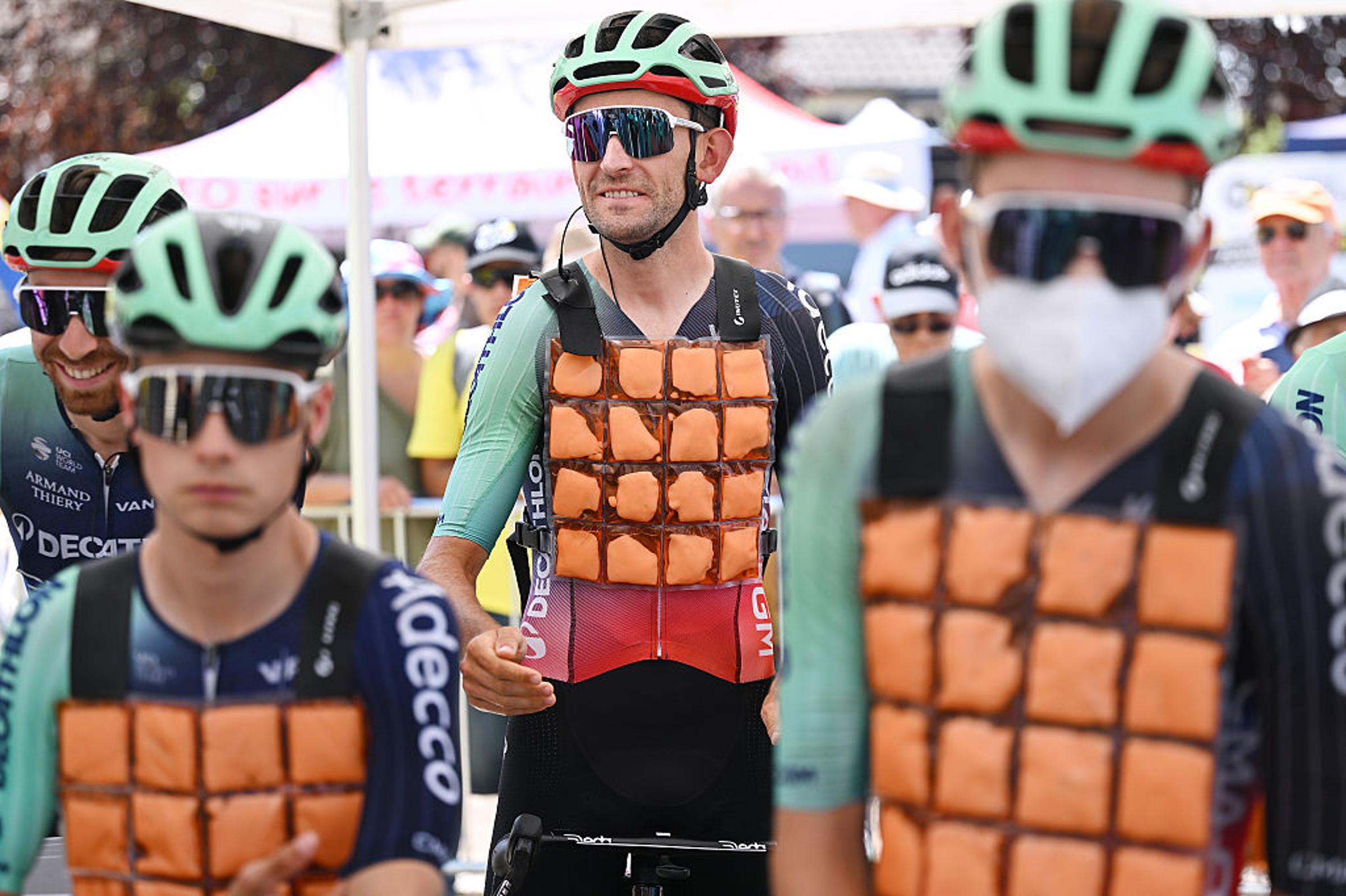
In an effort to protect athlete health and recovery after pushing their bodies through extreme heat, some teams prepared ice baths and paddling pools at stage finishes, while others resorted to more novel preventative measures; Netcompany-INEOS riders prepared for the first stage team time trial in Barcelona with their forearms resting in 47.8°F water, lowering their core temperature without affecting warmed-up leg muscles.
Research published in the journal Nature in February this year found that the frequency and severity of heat stress events across France has risen over the past five decades because of climate change. Lead author Ivana Cvijanovic, climate scientist at the French National Research Institute for Sustainable Development, said in February that Tour de France organizers were “lucky” these events have rarely coincided with the race. That is, until this year.
“My co-authors and I have been following the heat during this Tour with horror,” says Cvijanovic. “This summer is clearly extreme—there was simply no opportunity to be lucky as France and Spain have been under heat wave warnings for weeks.”
Cycling’s governing body, the Union Cycliste Internationale (UCI), relaxed its hydration rules due to the heat, allowing riders to take on extra water bottles. Team Picnic-PostNL coach Matt Winston said each rider in the team was going through 28 bottles per stage to stay hydrated, more than triple the usual total.

In 2024, the UCI added a High Temperature Protocol to its Extreme Weather Protocol centered on Wet-Bulb Globe Temperature (WBGT), a measure calculated using temperature, humidity, wind speed, sun angle, and cloud cover that is used by other sports governing bodies. If the WBGT surpasses 82.4°F, the protocol suggests organizers modify the race start time, adapt the course to remove hazardous segments, or cancel the race entirely.
This year, spectators were advised not to attend the final 40km (25 miles) of stage three due to a wildfire threat, and stage nine was shortened by 30km (18 miles) because of the extreme heat wave, but no stages were canceled. The UCI does not publicize its WBGT calculations, meaning it cannot be verified when the 82.4°F threshold is crossed. “Making these data publicly available is very important, both to increase transparency and to help protect spectators,” says Cvijanovic.
Pogačar advocated for stages starting and finishing earlier in the day. “[On July 11] there was a proposal to start at 10 [a.m.], but it doesn’t change anything because then you finish in the heat. You need to start at eight or nine, or even before.”
Broadcasters seeking peak viewing hours in the afternoon are unlikely to support such a change. Both Tour de France general director Christian Prudhomme and technical director Thierry Gouvenou have also suggested that changing the start time at such short notice is impossible due to the Tour’s complex logistics planned months in advance, while reliable heat forecasting is only available days before racing.
If organizers do not have the flexibility to move start times or cancel stages in extreme heat, Cvijanovic says every potentially risky stage should be scheduled early in the morning, adding there are vast, publicly-available climatological datasets that could be used for this purpose.
But beyond stage start times, a warming world is making the Tour’s traditional July calendar slot increasingly untenable. “If I had the power I would change all the calendar and not race in July and August in hot places,” said Pogačar, “but it’s not something I can do.” Prudhomme dismissed the Slovenian’s suggestion because “the Tour de France is July,” but acknowledged that climate change “is drawing nearer. At some point, it will be inescapable. But is that in two years? 10 years? We don’t know.”
Scientists, though, note that Europe is warming at more than double the global average rate, making extreme events like heat waves and wildfires more likely. People around the world, including those at the Tour de France, are experiencing the impacts of climate change now. “We need to think as humans,” said Team Cofidis sport director Bingen Fernández. “We are creating this. We’re burning petrol. Climate change is here.”
Amid the ongoing challenges created by this year’s record temperatures, cycling’s organizational bodies have been criticized by riders, journalists and activist groups for accepting advertising from fossil fuel companies responsible for contributing to climate change. XRG, the gas and chemicals subsidiary of UAE state oil company ADNOC, is a title partner of Pogačar’s UAE Team Emirates. The UCI did not reply to requests for comment ahead of publishing, but when previously asked about fossil fuel sponsorship in cycling said that “fossil fuels is not a category which is restricted for any stakeholders” in its regulations.
“We need to face up to the problem seriously, not superficially,” said former European champion Matteo Trentin. “We need to all sit around a table and talk about how climate change is impacting our sport.”
It’s a sentiment echoed by Fernández, who said: “We‘re doing things to cool down the body, but we should do things to cool down the planet.”
“Sadly, this [year’s Tour] is a glimpse of the future if we do nothing to reduce our greenhouse gas emissions,” says Cvijanovic. “This is what a warming world looks like, and it is not fun at all.”

