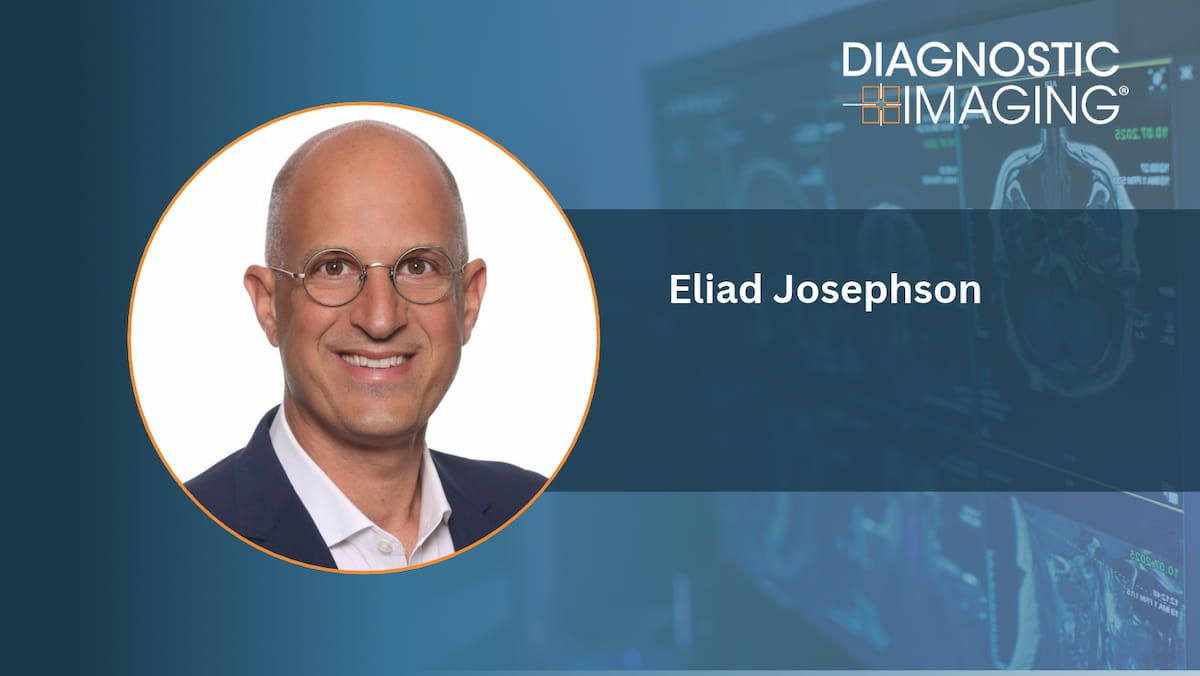
In a recent interview with Diagnostic Imaging, Eliad Josephson discussed key attributes of the HLTH USA conference, AI trends and an ongoing shift of emphasis on the development of predictive technologies with diagnostics at center stage.
Eliad Josephson says a core strength of the upcoming HLTH USA conference is an ecosystem approach to nurturing, developing and implementing technological advances in health care.
Emphasizing the fundamental truth that no innovation is developed in a silo, Josephson noted that in addition to the sponsors, exhibitors and speakers one would see at regular conferences, other key stakeholders at the (Nov.15-18 in Las Vegas) include those with IT infrastructure expertise, executives, payers as well as leading representatives from the Food and Drug Administration (FDA).
“When you come to , you have the opportunity to see technology, talk to payers, talk to providers, talk (with different) health systems, and that really gives you the opportunity to have this holistic approach of how things can advance,” explained Josephson, the subject matter expert in diagnostics for HLTH, Inc.
In a recent interview with Diagnostic Imaging, Josephson noted that artificial intelligence (AI) is a major theme of the HLTH USA conference. Josephson said the dialogue around AI has shifted significantly in recent years to more of a focus on scaling the technology and ongoing assessment of its impact on patient care as well as the bottom line at health-care facilities.
“The challenge now is to move from pilot to full implementation workstreams, and … make sure there is really value that from a clinical point of view and from an economics point of view. Everything has to come together. I believe that’s top of mind for people now,” added Josephson, a founder and principal of Natel, a consultancy focused on diagnostics and digital health.
For Related Content
• “Mammography Study Shows Dynamic Changes of AI Risk Scores Years Before Breast Cancer Diagnosis”
• “Could a Deep Learning Model for Mammography Improve Prediction of DCIS and Invasive Breast Cancer?”
• “What New CT and MRI Research May Reveal About Bone Loss, Diabetes and Cognitive Decline”
Calling diagnostics “the intelligence layer of health care,” Josephson maintained that in addition to diagnostics being a key driver in clinician decision-making, the continued emergence of prognostic technologies and predictive models are taking diagnostics to another level in patient care.
“There is like this momentum for diagnostics to get the spotlight and to have the seat at the table that it never had,” posited Josephson.
(Editor’s note: For additional content about the HLTH USA conference, click .)