



India emerges as Africa’s arena for economic future: Report
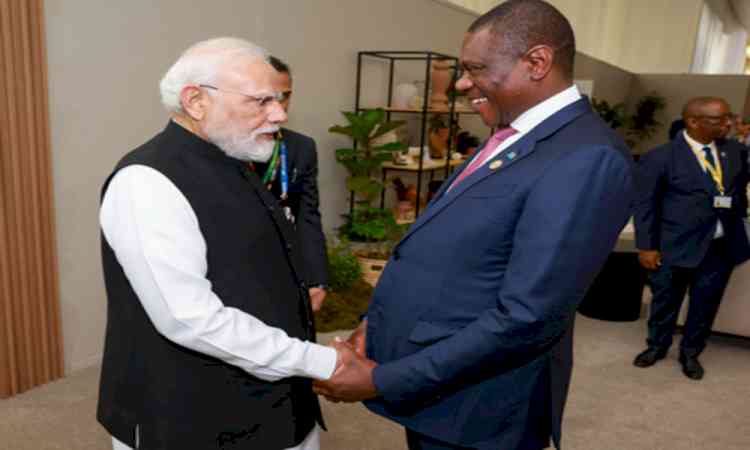
A report released on Monday indicated that the six-day working visit by South African Deputy President Paul Mashatile highlighted India’s growing role as a crucial platform where Africa will shape its economic trajectory, strategic independence, and influence within an increasingly fragmented global system.
During discussions in New Delhi, Mashatile and his counterparts clearly positioned their conversations as an initiative to “advance the priorities of the Global South,” encompassing reforms to multilateral lending regulations and enhancing the participation of developing nations in global governance. Abebe Bikila, a Senior Research Fellow at the Global Trade and Economic Council (GTEC), writing for the India Narrative, observed that South Africa has previously supported India’s push for the African Union to gain full G20 membership, a significant yet symbolic move praised by President Cyril Ramaphosa during the Indian prime minister’s visit last year.
In recent financial years, two-way trade between India and South Africa amounted to between 15 and 18 billion dollars, establishing South Africa as India’s primary trading partner across the African continent. Furthermore, total India-Africa trade surpassed the 100-billion-dollar threshold in 2024-25, a substantial increase from 56 billion dollars recorded only five years prior. India additionally ranks among the top five investors throughout the continent.
Against this backdrop, Mashatile’s engagements, which included meetings with Indian business associations and corporations, delivering a keynote address at the Global Trade and Technology Council of India, and interacting with technology and pharmaceutical companies in Hyderabad, extended beyond mere bilateral transactions. The report emphasized that these efforts represented a strategic push to establish South Africa as India’s “gateway into Africa” within the framework of the African Continental Free Trade Area (AfCFTA), a designation Pretoria has increasingly championed.
The India-South Africa Critical Minerals Symposium, convened in March 2026 at the University of Pretoria’s Future Africa campus, gathered policymakers, geologists, and industry representatives to investigate collaborative opportunities concerning minerals like manganese, chromium, rare earths, and platinum group metals. Such metals are vital for electric vehicles, battery production, and renewable energy innovations.
Bikila stated that during Mashatile’s visit, both South Africa and India emphasized their desire to broaden cooperation in the mining sector, encompassing critical minerals as well as established areas such as coal and gold. He pointed out that India, with its energy transition strategies reliant on consistent access to these materials, views South Africa not merely as a source but also as a prospective collaborator in processing and value-addition. Consequently, the two governments have proposed concepts for joint ventures and technology transfers in mining and beneficiation.
Bikila suggested that the scheduling of Mashatile’s journey was deliberate. Worldwide economic upheavals, ranging from conflicts disrupting oil supply chains to tariff adjustments altering manufacturing strategies, have enhanced the appeal of South-South collaborations as a safeguard against reliance on any sole economic bloc. Bikila observed that, as India’s junior foreign minister recently informed a business gathering, trade between India and Africa now competes with India’s commercial exchanges with certain developed economies, and New Delhi is overtly asserting its ambition to become one of Africa’s foremost long-term allies.





