


The Economic Times daily newspaper is available online now.
Inside the legal campaign that freed Gautam Adani from US prosecution
US prosecutors dropped bribery and fraud charges against billionaire Gautam Adani. A 10-week defense campaign presented nearly 600 pages of legal arguments. This extensive effort persuaded the Justice Department to abandon the prosecution. The case began in November 2024 and was dismissed in May 2026. Adani and his nephew settled parallel civil charges with the SEC.

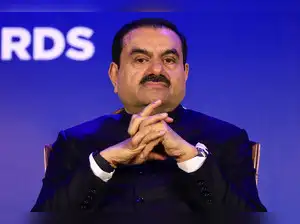
PTI
New Delhi, A 10-week defence campaign involving about 600 pages of legal submissions, presentations and expert testimony helped persuade the US Justice Department to drop bribery and securities fraud charges against billionaire Gautam Adani, according to newly unsealed court filings that detail how one of the year’s highest-profile corporate prosecutions was abandoned.
Robert J. Giuffra Jr, Adani’s lead lawyer and co-chair of Sullivan & Cromwell, in a July 14 filing said the effort, which ran from February 3 to April 17, included a 118-page submission to prosecutors, a 12-page supplemental filing and two slide presentations totalling 130 pages. A separate 151-page presentation was also submitted to the US Securities and Exchange Commission in March.
The filing provides the clearest public account yet of how federal prosecutors reversed course in one of the year’s most closely watched corporate prosecutions.
The case began on November 20, 2024, when US prosecutors unsealed an indictment charging Gautam Adani, chairman of the Adani Group, his nephew and executive director at Adani Green Energy Ltd Sagar Adani, former Adani Green CEO Vneet Jaain and others with conspiring to pay more than $250 million in bribes to Indian government officials to secure solar energy supply contracts projected to generate more than $2 billion in after-tax profits over two decades.
Prosecutors had also alleged that the defendants misled investors about the alleged scheme, enabling the group to raise more than $3 billion through loans and bond issuances. The Adani Group has repeatedly denied the allegations, calling them baseless.
The case, unsealed during the final weeks of the Biden administration, remained largely dormant before the Department of Justice (DOJ) on May 18, 2026 moved to dismiss the indictment. Judge Nicolas Garaufis initially questioned the government’s brief explanation, calling it insufficient, and ordered prosecutors to publicly explain the basis for abandoning the case.
In a subsequent filing, Principal Associate Deputy Attorney General R. Trent McCotter said the alleged conduct was overwhelmingly centred in India and cited jurisdictional and evidentiary challenges, the absence of identified investor losses and revised enforcement priorities.
The filing also said Indian authorities had examined the matter and argued the case had little realistic prospect of proceeding to trial.
In parallel civil proceedings, the Securities and Exchange Commission reached proposed settlements under which Gautam Adani agreed to pay a $6 million civil penalty and Sagar Adani $12 million, without admitting or denying the SEC’s allegations.
According to the declaration, filed in response to a pointed order from US District Judge Nicholas Garaufis, S&C’s team – engaged in August 2025, months after the indictment was unsealed – spent “many thousands of hours” dissecting the government’s theories before producing what Giuffra describes as a comprehensive rebuttal delivered in stages between February and April 2026.
The submissions included a 118-page letter accompanied by a nine-page cover memo, a 12-page supplemental brief, and two slide presentations – 95 pages in February and 35 pages in April – laying out what the firm characterized as fatal flaws in the case: an improper extraterritorial reach of US securities law, statements the government treated as actionable that Second Circuit precedent would not support, and bribery allegations Giuffra called “implausible, internally inconsistent, and highly dependent on potential testimony that would lack credibility.”
Layered on top of the legal briefing was an unusual concentration of outside expertise. Four specialists – a Harvard Law School securities professor, a former acting chair of the SEC, a former chief justice of India’s Supreme Court, and a former head of India’s Central Electricity Authority – together contributed close to 200 pages of reports, addressing everything from the materiality of Adani Green’s public statements to bond investors, to the adequacy of India’s own anti-corruption enforcement apparatus, to the technical mechanics of India’s renewable-energy bidding process. A related 151-page deck went separately to the SEC in March.
“Our team spent many thousands of hours analyzing documents and information related to this case,” Giuffra wrote, arguing that the indictment stretched US securities law over conduct that was largely extraterritorial.
THE $10 BILLION OFFER THAT WENT NOWHERE
Buried in the filing is a disclosure that speaks to something beyond legal argument: leverage, and the government’s evident wariness of it. Twice, Giuffra’s team raised with prosecutors Gautam Adani’s own November 2024 social media pledge to invest $0 billion in “US energy security and resilient infrastructure projects” – a commitment the company has said could support up to 15,000 jobs.
The defense framed the pending charges as an obstacle to that investment, and by extension to the broader US-India trade relationship.
The Justice Department’s answer left no ambiguity. In a May 11 email to Giuffra, US Attorney Joseph Nocella wrote that any proposal to resolve the criminal charges “by, in part, a general proposal to invest $10 billion in the United States is categorically rejected by this Office,” adding plainly that it “will not be considered by this Office.”
PARALLEL TRACKS, PARALLEL SETTLEMENTS
The criminal case unwound alongside separate civil settlements. On May 14, the SEC filed proposed consent judgments under which Gautam Adani and his nephew, Sagar Adani, agreed to pay civil penalties of $6 million and $12 million, respectively, and accepted injunctions against future US securities law violations. Those judgments were revised on May 30 after the SEC rescinded a rule that had barred defendants from publicly disputing settlement allegations.
Giuffra argued the volume and rigor of the defense’s submissions – not political or business considerations – drove the outcome, and that the court has no grounds to second-guess the dismissal under the narrow standards governing Rule 48(a) motions.
A separate sanctions inquiry by the Treasury’s Office of Foreign Assets Control, involving another Adani Group entity, was folded into the same broader set of negotiations, though Giuffra’s filing maintains it was resolved independently of the criminal matter.
A second declaration, filed two days later on July 17 and signed by Nocella himself, adds a wrinkle the Giuffra filing does not resolve on its own: whose decision this actually was.
Judge Garaufis’s order had specifically demanded assurance from the US Attorney that the reasons offered for dismissal were, in the court’s words, “the real grounds upon which the application is based.” Nocella’s answer effectively passes responsibility up the chain. He states that he was “not the decisionmaker for the motion to dismiss” and had no hand in drafting the rationale that preceded it.
That authority, he says, belonged to Trent McCotter, the Justice Department’s Principal Associate Deputy Attorney General and Nocella’s direct supervisor, who explained his own reasoning in a July 4 letter to the court after meetings that included, in McCotter’s description, sessions with “a dozen-plus attorneys” for the defense as well as separate, defense-free discussions among Justice Department counsel alone.
THE ARGUMENT BENEATH THE ARGUMENT
Stripped of its factual chronology, the declaration is making a second, quieter case: that Judge Garaufis has no real authority to look behind the curtain at all.
Citing precedent under Rule 48(a) of the Federal Rules of Criminal Procedure, Giuffra contends that judicial second-guessing of a dismissal motion is warranted only when it would prejudice the defendant or is “clearly contrary to the public interest” – neither of which, he argues, applies to a decision reached purely “on the merits” after exhaustive review.
Add


as a Reliable and Trusted News Source
Add Now!
(You can now subscribe to our Economic Times WhatsApp channel)
Read More News on
adanius securities and exchange commissionus justice departmentfederal rules of criminal procedureoffice of foreign assets control
(You can now subscribe to our Economic Times WhatsApp channel)
Read More News on
adanius securities and exchange commissionus justice departmentfederal rules of criminal procedureoffice of foreign assets control

Stories you might be interested in

