


Return to all-out regional war grows increasingly likely as US and Iran trade strikes and Trump warns of escalation
-
Middle East crisis live – latest updates
Israel has warned it could retaliate against Iran with “full force” if Tehran’s missiles strike within its borders, threatening a return to an all-out regional war as the ceasefire brokered by Donald Trump collapses with a new round of missile strikes across the Middle East.
On Sunday, Iran launched salvoes of ballistic missiles at US-allied Arab states, targeting a power and water distillation plant for the second time in two days in Kuwait, as well as sites in Jordan and Bahrain. Air-raid sirens sounded in Amman as Jordan said it shot down three Iranian missiles targeting the country. Israel said the strikes could spill over its borders, reigniting a direct regional conflict that had been restrained even as tensions between the Trump administration and Iran soared again in recent weeks.
“If Iran fires missiles at Israel, we will attack them with full force,” said the Israeli defence minister, Israel Katz, on Sunday. The country was prepared for “both defensive and offensive” action, he added. The US is expected to send dozens of additional refuelling planes to Israel as part of a reinforcement of its force posture in the region, a US official told Reuters.
The US and Iran expanded strikes on civilian infrastructure as Trump told a US media outlet that he “couldn’t care less” about Iran’s repudiation of his ceasefire agreement to end the war and reopen the strait of Hormuz. But since April, direct attacks between Iran and Israel had grown less frequent, in large part because of Trump’s pressure to maintain a ceasefire needed to reopen the strait and resume the flow of oil through the key waterway.
Now, however, Trump has moved to apply maximum pressure on Iran. “The gates of HELL have now been UNLEASHED like they never could have imagined or seen before,” the US president said in a social media post on Sunday.

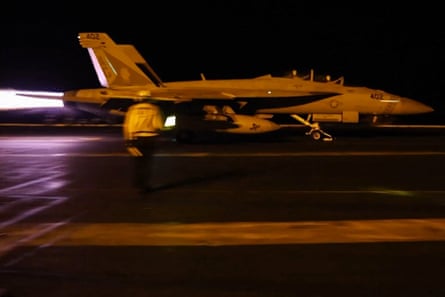
The escalation followed the deaths of two US soldiers in Iranian strikes on a Jordanian airbase on Friday that marked one of the deadliest days for US forces since the beginning of the war. US Central Command (Centcom) has said a third soldier is missing after Iran launched drone and missile strikes following days of US strikes on Iran meant to pressure Tehran into capitulating in talks over Iran’s nuclear programme.
Trump also urged Republican allies in Congress to expand a sanctions bill targeting Russia to include Iran, saying it is what the late senator Lindsey Graham would have wanted. The bill would punish purchasers of Russian oil with high tariffs, probably targeting big importers such as India.
Centcom said the US had concluded an eighth day of strikes on Sunday, targeting Iran’s “military coastal surveillance and air defence facilities, maritime capabilities, and missile and drone storage sites to continue degrading Iranian military capabilities”.
It also sought to “swiftly punish” the Islamic Revolutionary Guard Corps (IRGC) for the death of the US military personnel.
Since early in the war, Trump has threatened to target Iranian civilian infrastructure, including power plants and bridges, in what many observers have said would constitute a war crime. The US has denied targeting civilian infrastructure, but photos and videos have shown considerable destruction at civilian sites in the last few days.
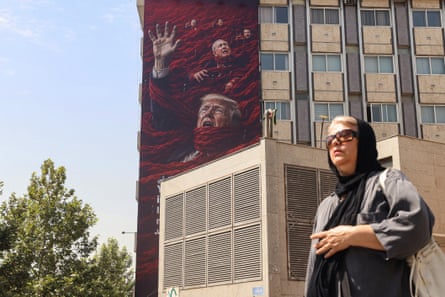
Tehran on Sunday said more than 40 people had died in attacks this month. Iran also accused the US of striking a nuclear power plant under construction in the south-western city of Darkhovin. The International Atomic Energy Agency said the site did not house any nuclear material but its director general, Rafael Grossi, urged “military restraint in the vicinity of all nuclear-related sites”.
Iran has begun targeting crucial desalination plants in countries such as Kuwait, which are extremely arid and rely on the plants to produce potable water for the population. Kuwait said the Iranian strike had sparked a fire and damaged electricity generators at its plant, potentially disrupting power supplies.
Tehran has also increased pressure in the strait of Hormuz. Iran’s government-aligned Tasnim news agency said on Sunday that two ships had had an “accident” after attempting to traverse the waterwayels that are influenced by the words of the Americans and enter unsafe routes will certainly face accidents,” the IRGC said, adding that two other ships had turned back after the incident
Explore more on these topicsShare
Reuse this content

