


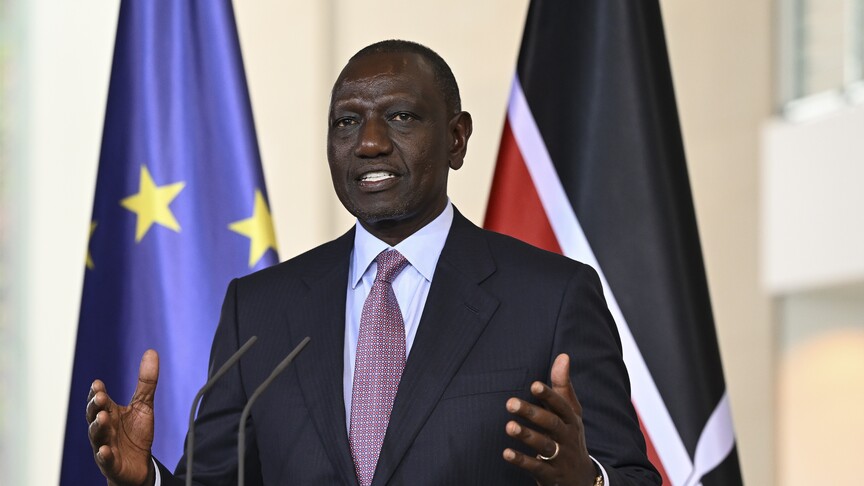
Kenyan president says East Africa’s biggest refinery to move ahead in Lamu
Ruto says project backed by Nigerian billionaire Aliko Dangote will create 60,000 jobs, supply fuel across 8 African countries
Andrew Wasike
10 July 2026•Update: 10 July 2026
Archive
NAIROBI, Kenya
Kenyan President William Ruto said Friday that plans for what is expected to become East Africa’s biggest oil refinery are ready to move forward after talks with Nigerian billionaire Aliko Dangote, adding that the project will create about 60,000 jobs for young Kenyans
Speaking during the launch of the second phase of the government’s Nyota youth empowerment program, Ruto said he had reached an agreement with Dangote to proceed with the refinery project, which will be built in the coastal county of Lamu, about 470 kilometers (292 miles) southeast of the capital Nairobi
“Kenya will now build the East African refinery here in Lamu, where we will need 60,000 young people to work,” Ruto said
“I spoke with investor Aliko Dangote, and we agreed that the refinery will not only serve Kenya, but also Ethiopia, South Sudan, Uganda, Tanzania, Rwanda, Burundi and the Democratic Republic of Congo, while creating employment opportunities for our youth,” he added
Ruto said the refinery would position Kenya as a regional energy hub by supplying petroleum products to markets across East and Central Africa while reducing the region’s dependence on imported refined fuel
The project follows Dangote Industries’ decision to establish the refinery in Lamu, ending months of speculation over whether it would be built in Kenya or Tanzania
The planned 700,000-barrel-per-day refinery is expected to become East Africa’s largest and support industrial growth around the Lamu Port-South Sudan-Ethiopia Transport (LAPSSET) corridor, a major regional infrastructure project linking Kenya’s coast with neighboring countries
The company has said construction is expected to take about 30 months once work begins
Lamu was selected because of its strategic location on the Indian Ocean, deep-water port and proximity to transport corridors serving several landlocked countries in East and Central Africa


